The fifteenth day of the second month — exactly one month after leaving Egypt. Israel has moved from Elim and the twelve springs into the Wilderness of Sin, the wide flat plain between Elim and Sinai. And the whole congregation grumbles against Moses and Aaron: Would that we had died by the hand of YHWH in the land of Egypt, when we sat by the meat pots, when we ate bread to the full. You have brought us out into this wilderness to kill this whole assembly with hunger.
The complaint reaches back to the fleshpots of Egypt — a longing not for freedom but for the reliable degradation of slavery. The Wilderness of Sin is the first test of whether the freed people can trust God to provide what Egypt once provided. YHWH does not rebuke them. He answers: Behold, I am going to rain bread from heaven for you.
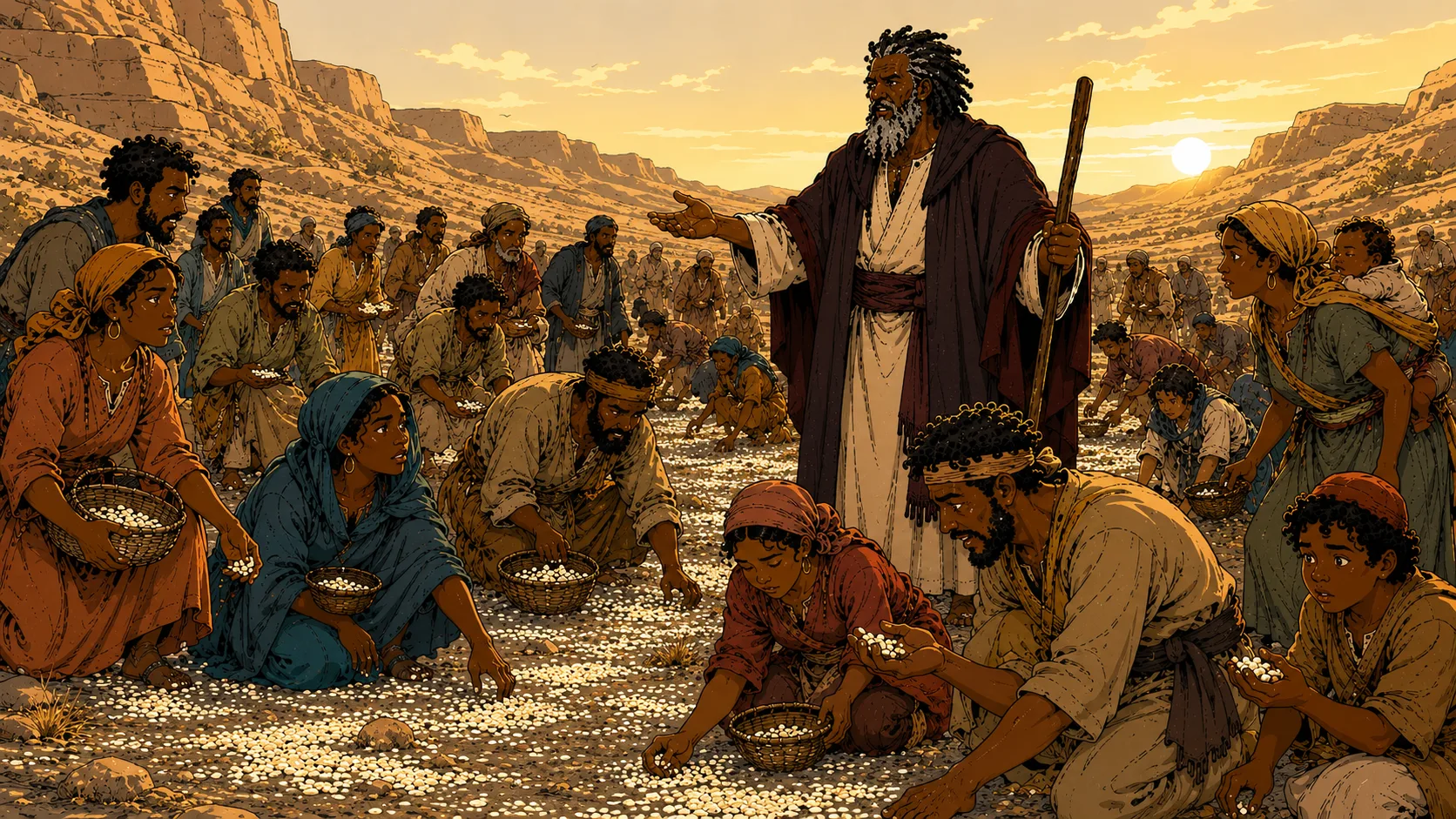
That evening quail come and cover the camp. In the morning, dew falls around the camp. When the dew lifts — there on the ground is a fine, flake-like thing, as fine as frost. The people see it and say to each other: Man hu — what is it? Moses tells them: this is the bread YHWH has given you to eat.
The bread that falls from heaven has no name in the text. The people name it by their question. Man hu — what is it? — becomes the food itself. This is manna: the bread that has no prior category, no precedent in Egypt or anywhere else. It arrives before they know what to call it. It arrives before they understand what they are receiving. They gather it daily — an omer per person — and it is enough. Those who gather much have nothing over. Those who gather little have no lack. The measure is exact for each person.
The manna will sustain Israel for forty years in the wilderness — until the day they cross into the land of Canaan (Joshua 5:12). The bread stops the day they eat of the fruit of the land. For forty years, each morning, this question was answered before it was asked: what shall we eat?