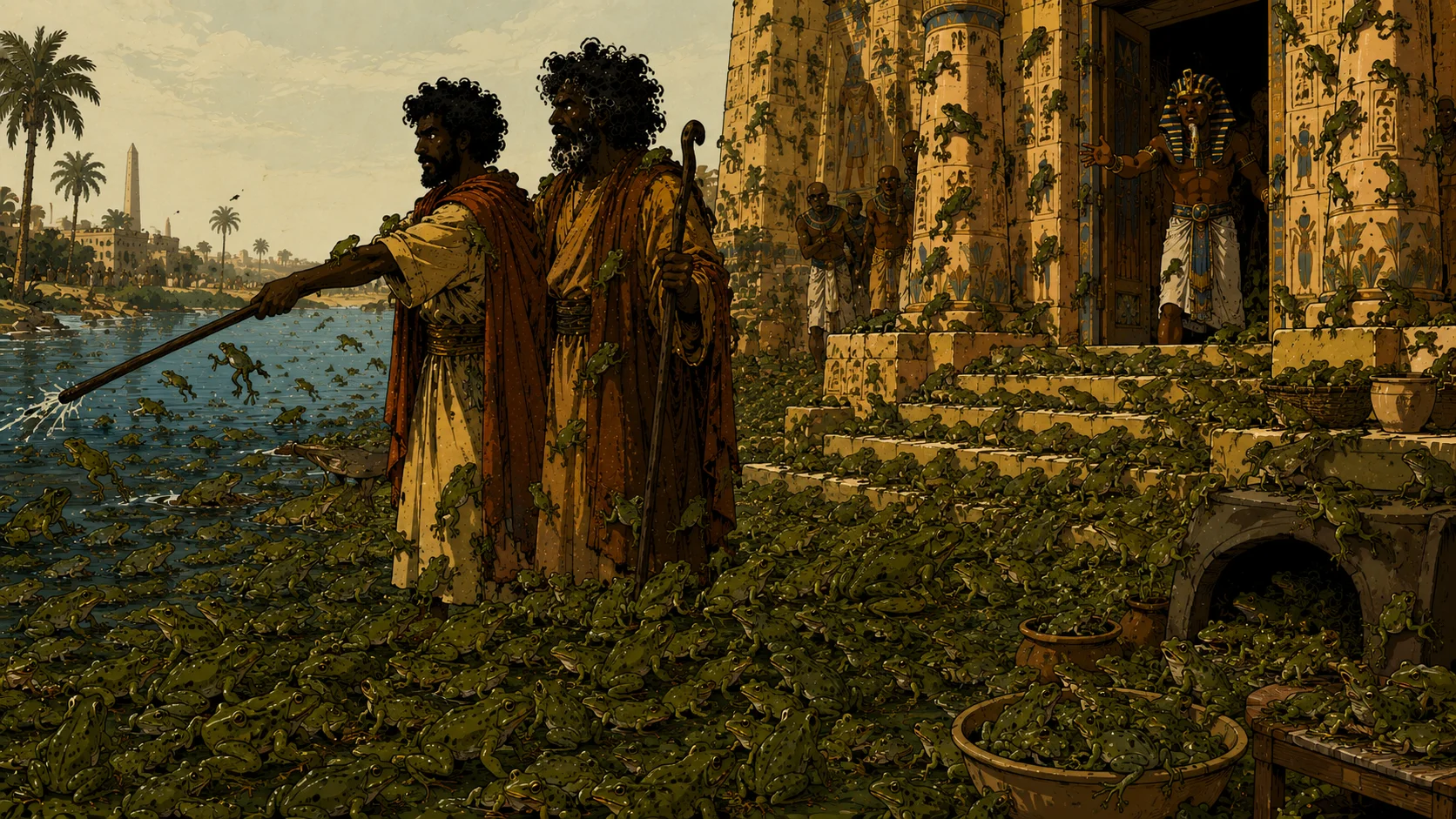
God commands Moses: go to Pharaoh and say — Let my people go. If he refuses, the entire land will be struck with frogs. They will come up from the Nile and cover Egypt — into the palace, into every bedroom, onto every bed. Into ovens. Into kneading bowls. Against the bodies of every Egyptian. The second plague is total saturation.
Aaron stretches his hand — and the frogs ascend. One creature, called up in singular and plural at once, multiplied until it covered the land. Egypt had a frog goddess, Heqet, who presided over birth and fertility. Now her image fills every corner of the empire. The gods of Egypt cannot protect Egypt from themselves.
Pharaoh's magicians replicate the plague — they too bring up frogs. But they cannot take them away. That is the difference: anyone can multiply a curse; only God can lift it. So Pharaoh, for the first and only time in the early plagues, calls for Moses and Aaron. He asks Moses to pray on his behalf. "Entreat the Lord, that he may take away the frogs" — and he promises to let Israel go.
Moses grants the reprieve. He cries out to God and the frogs die — in the houses, in the courtyards, in the fields. They are gathered into massive heaps. The land stinks. And then: Pharaoh sees the respite and hardens his heart. He does not let the people go. The pattern of the plagues is established here — pressure, concession, relief, reversal. Pharaoh's hardening is the engine of the story.
