Shemot · שְׁמוֹת · Exodus

Plague Three — The Finger of God

אֶצְבַּע אֱלֹהִים הִוא
Exodus 8:16–19
Exodus 8:19
וַיֹּאמְרוּ הַחַרְטֻמִּים אֶל-פַּרְעֹה אֶצְבַּע אֱלֹהִים הִוא
"Then the magicians said unto Pharaoh, This is the finger of God."
Plague Three — The Finger of God — Exodus 8:16–19

In the Hebrew

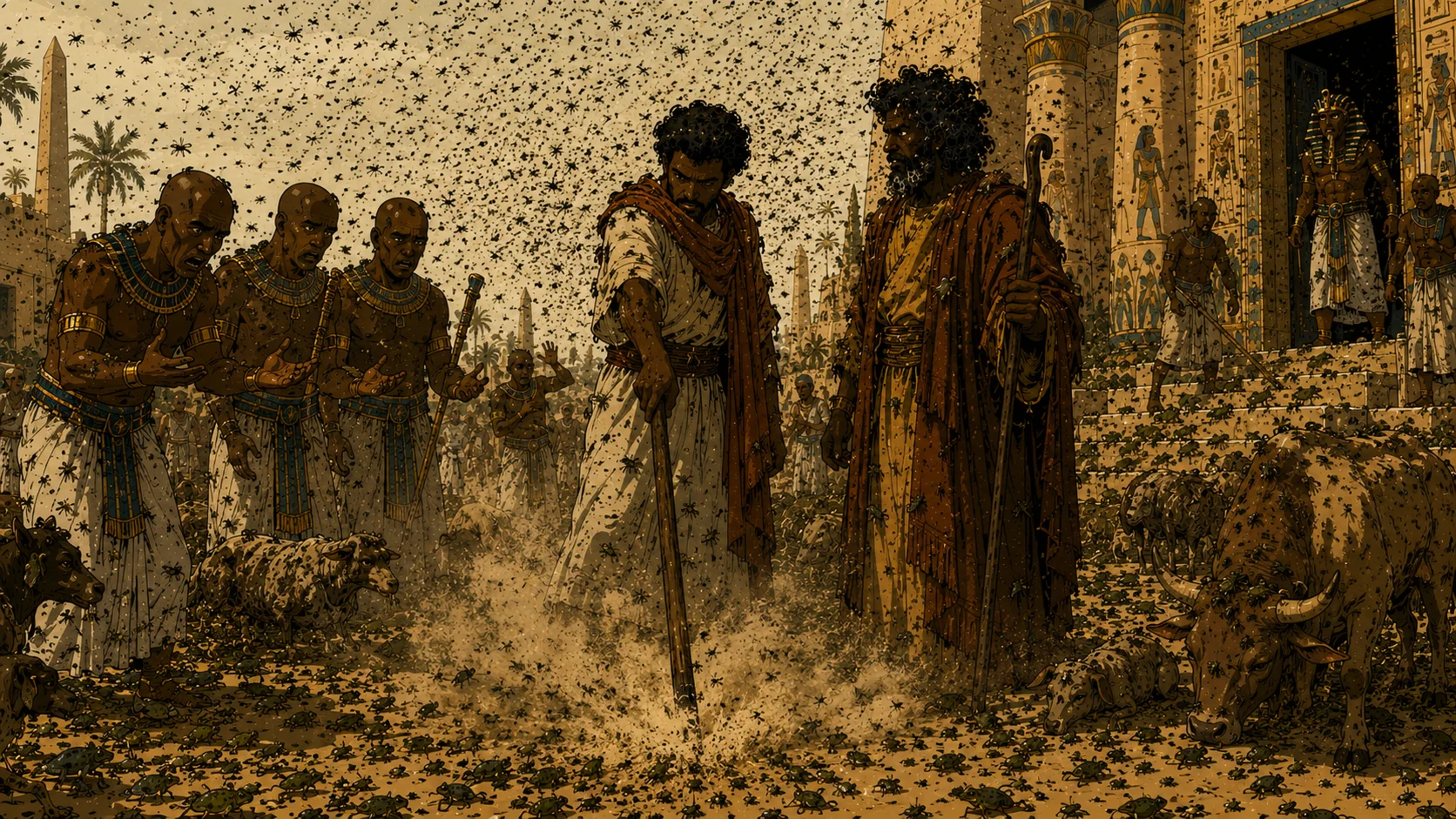
God tells Moses: stretch out your staff and strike the dust of the earth. It will become gnats throughout all the land. Aaron does so — and the dust of Egypt becomes swarming gnats. Every grain of soil becomes an affliction. The plague comes not from the river but from the land itself.

Pharaoh's magicians attempt what they have done twice before. They cannot. The plague will not obey them. It is here, for the first time, that they turn to Pharaoh with a confession that changes the tone of the entire narrative: "This is the finger of God."

They do not say it is a trick. They do not say it is coincidence. They say it is divine. Pharaoh's own experts — the men charged with explaining away the plagues — admit that this one is beyond their power. And yet Pharaoh's heart is hardened. He will not listen. Even testimony from his own court cannot move him.

Key Hebrew Word
כִּנִּים
kinnim — gnats / lice. The third plague arises from the dust of the earth itself — Aaron strikes the ground and dust becomes gnats across all of Egypt. The word כִּנִּים has been variously translated as lice, gnats, or mosquitoes. What matters is the origin: not water, not the Nile, but the very soil — the ground that God created.
Key Hebrew Word
אֶצְבַּע
etzba — finger. The magicians' declaration — "the finger of God" — is the first admission from Pharaoh's own court that what is happening is beyond human power. They cannot replicate this plague. They do not say "a god," they say "the finger of God" — singular, sovereign, unmistakable.
Save to Pinterest Compartir en WhatsApp
← PreviousPlague Two — The Frogs Ascend All↑ Breakdowns