Shemot · שְׁמוֹת · Exodus

Plague Four — Flies and the Goshen Distinction

וְהִפְלֵיתִי בַיּוֹם הַהוּא אֶת-אֶרֶץ גֹּשֶׁן
Exodus 8:20–32
Exodus 8:22
וְהִפְלֵיתִי בַיּוֹם הַהוּא אֶת-אֶרֶץ גֹּשֶׁן אֲשֶׁר עַמִּי עֹמֵד עָלֶיהָ לְבִלְתִּי הֱיוֹת-שָׁם עָרֹב
"And I will sever in that day the land of Goshen, in which my people dwell, that no swarms of flies shall be there."
Plague Four — Flies and the Goshen Distinction — Exodus 8:20–32

In the Hebrew

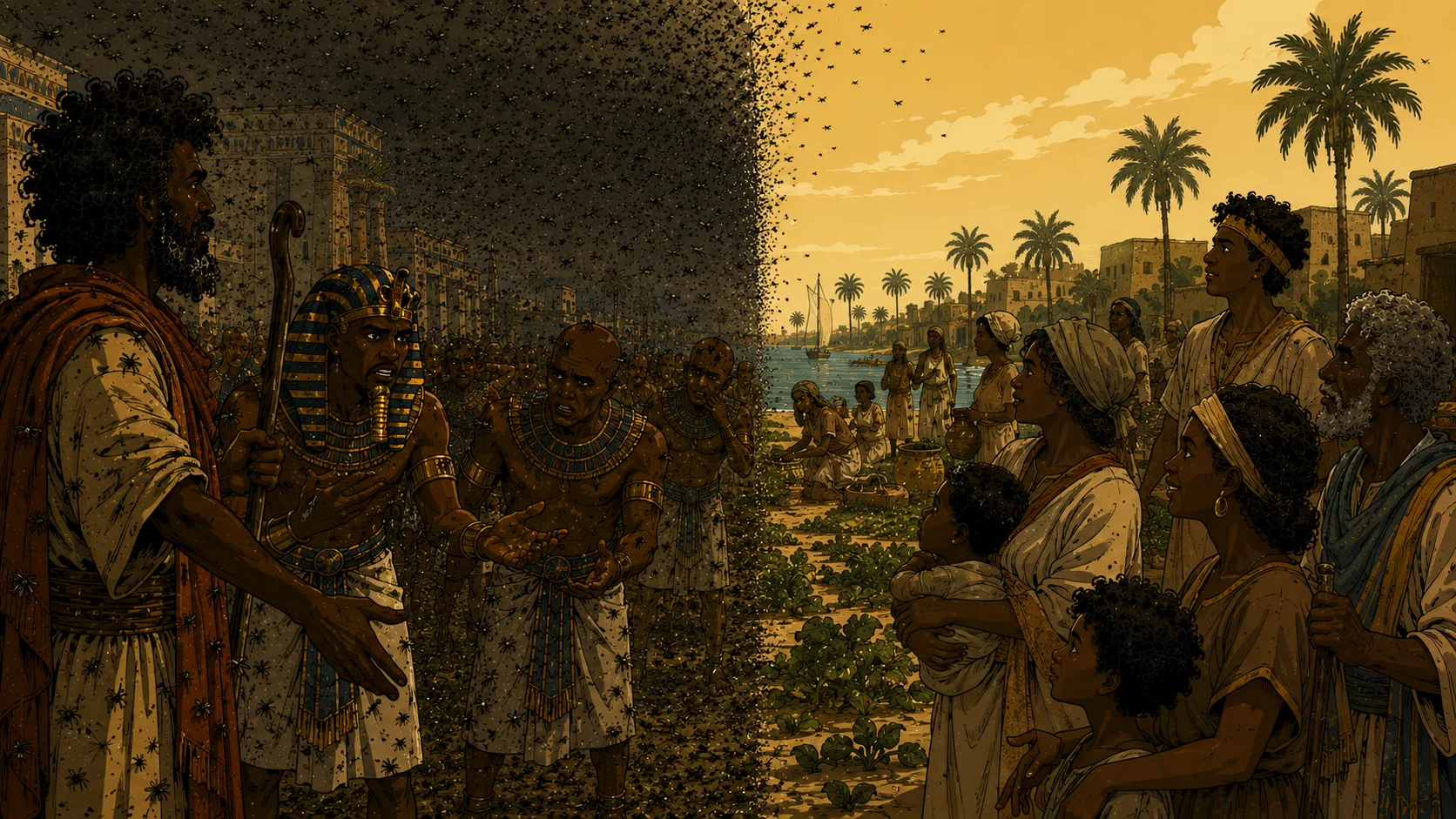
God warns Pharaoh through Moses: the next morning, swarms will arrive. They will fill the houses of the Egyptians, the ground itself. But Goshen — the region where Israel lives — will be untouched. God declares the separation before it happens, so that Pharaoh will know it is intentional.

The swarms come. Egypt is ruined by them. Pharaoh calls Moses and makes his first offer of compromise: worship here, within Egypt. Moses refuses — the sacrifices Israel must offer are an abomination to Egyptians; they cannot be performed in Egypt. Pharaoh counters: go, but not far. Moses pushes back again. Only a full three-day journey into the wilderness will do.

Pharaoh relents — provisionally. Moses prays, and the flies leave entirely, not one remains. And then the familiar conclusion: Pharaoh hardens his heart again. The negotiation was tactical, not sincere. He will not let the people go.
Key Hebrew Word
עָרֹב
arov — swarms. Translated variously as flies, wild beasts, or mixed swarms. The Hebrew root suggests mixture or mingling — a chaotic invasion of every kind of flying, biting creature. The land of Egypt is ruined by it.
Key Hebrew Word
הִפְלֵיתִי
hifleti — I will set apart. From the root פלה — to distinguish, to separate, to make remarkable. God does not merely protect Goshen. He declares the separation publicly and in advance. The distinction is theological: Israel belongs to God, and God marks what is His.
Save to Pinterest Compartir en WhatsApp
← PreviousPlague Three — The Finger of God All↑ Breakdowns