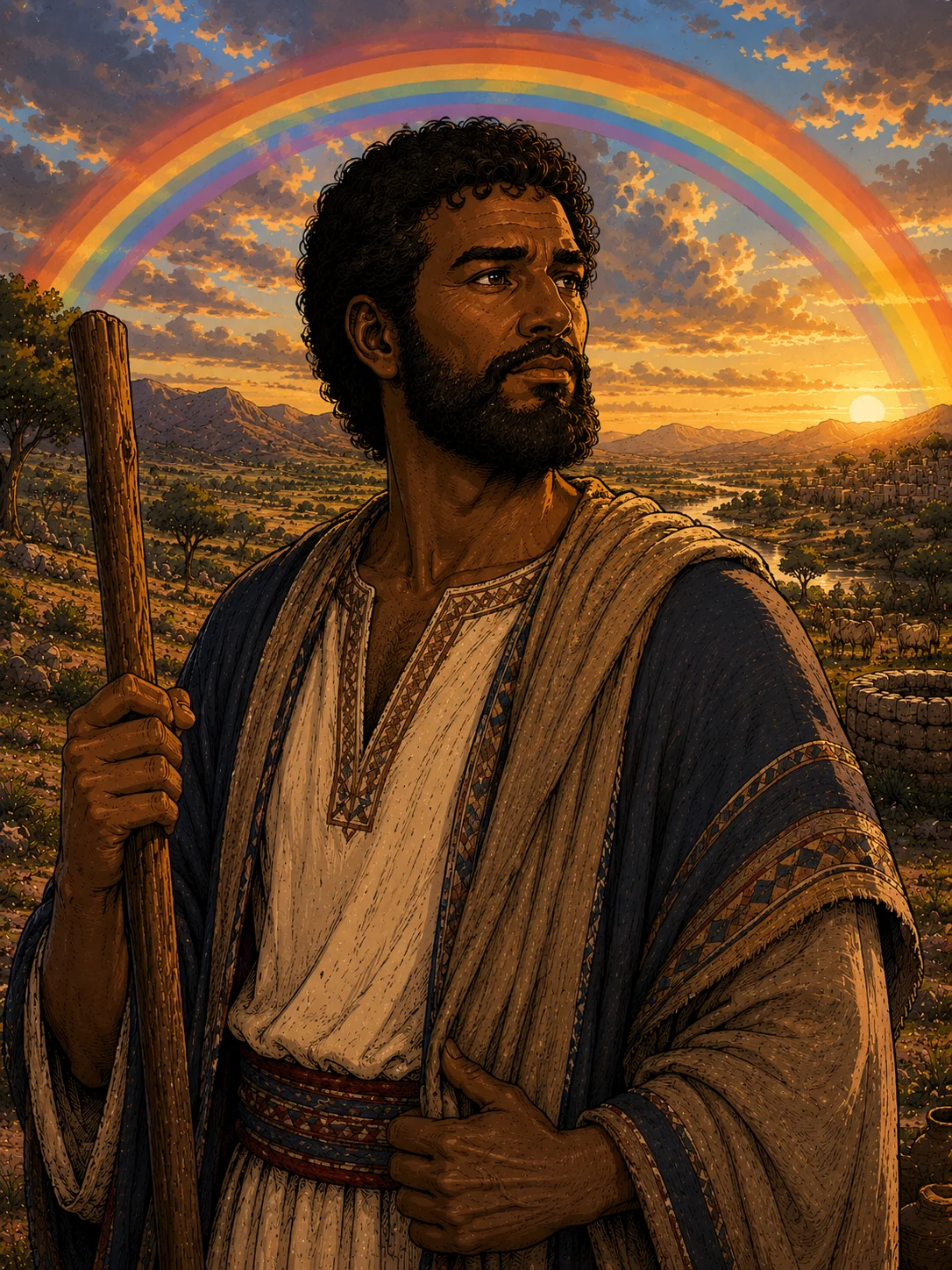
Shem's line is reserved for last in the Table of Nations — not because he was born last, but because the text is building toward its climax. Genesis 9:24 places Ham as the youngest, while the birth order of Japheth and Shem remains debated: the KJV reads Genesis 10:21 as "the brother of Japheth the elder," suggesting Japheth was firstborn and Shem the middle son. Regardless of sequence, Shem receives a distinction no other son is given: "the father of all the children of Eber." This anticipatory identification — given before Shem's genealogy is even listed — signals what the reader will discover as the text unfolds: that among all seventy nations, one line is being traced with extraordinary care. Arphaxad → Shelah → Eber → Peleg → Reu → Serug → Nahor → Terah → Abram. The entire Table of Nations exists, in part, to place Abraham in his cosmic context.
Shem's five sons give rise to 26 named peoples: the great empires of Assyria and Elam, the Aramean peoples whose language would become the lingua franca of the ancient world, the Lydians of western Anatolia, and the South Arabian kingdoms of Sheba and Hadramaut. The word "Semitic" — applied to the family of languages that includes Hebrew, Aramaic, Arabic, and Akkadian — derives from Shem's name.
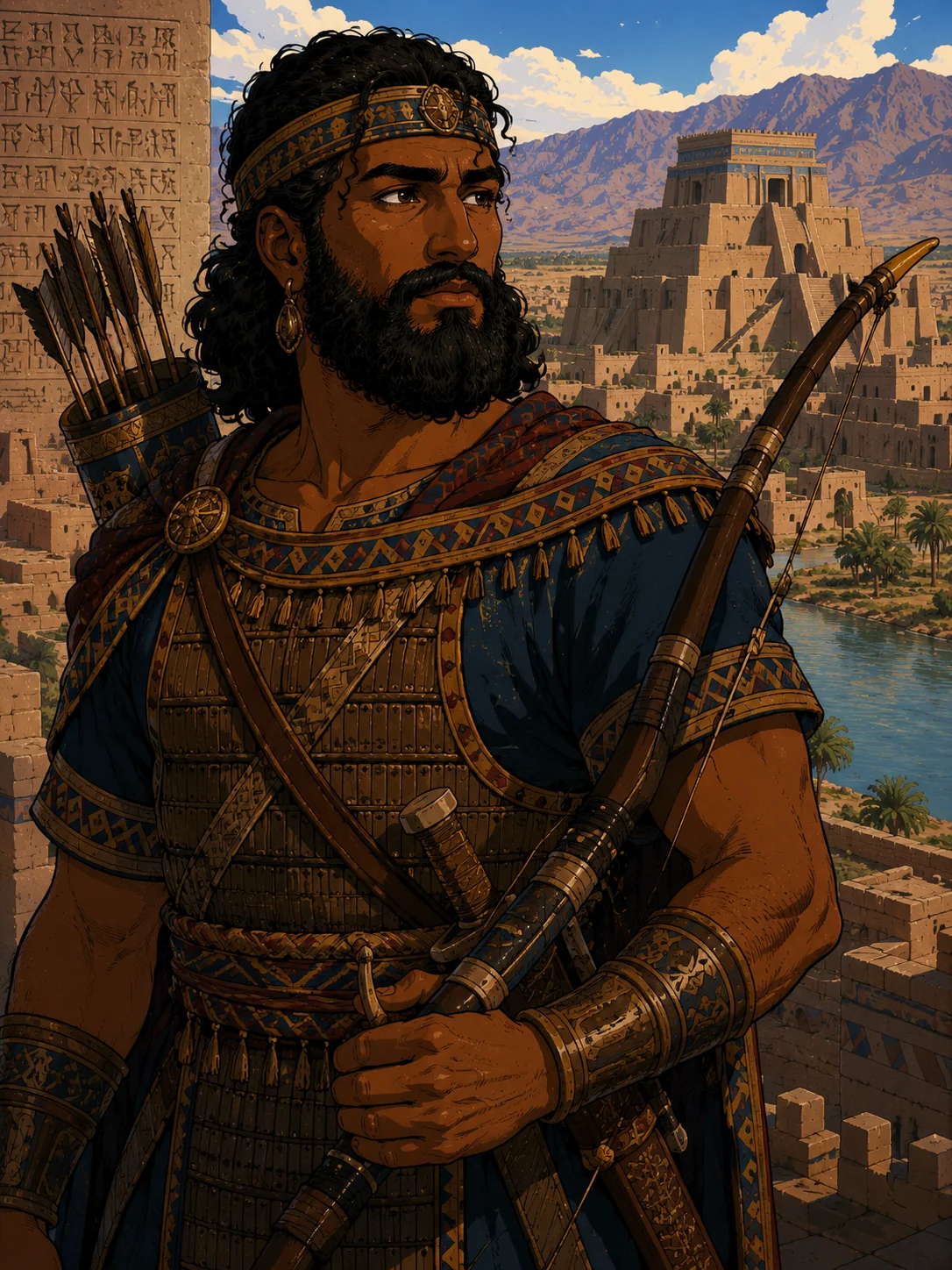
Elam was one of the world's earliest civilizations — proto-Elamite script predates Sumerian cuneiform and is among the oldest writing systems yet discovered. Their capital Susa (Shushan) became one of the most important cities of the ancient world, serving as an administrative center for the Achaemenid Persian empire and the setting of the book of Esther (Esther 1:2). The Elamite language was unrelated to any other known language family — a linguistic isolate — which complicates the identification of Elamites with a Semitic people descended from Shem, suggesting ancient migrations and admixture.
Chedorlaomer king of Elam led the coalition of four kings that fought against Sodom, Gomorrah, and their allies in Genesis 14 — making Elam the first foreign power to appear in Abraham's story. Daniel's vision in chapter 8 is set "beside the Ulai canal" in Susa — Elam's heartland. Acts 2:9 lists Elamites among those who heard Peter's Pentecost sermon in their own language, suggesting a Jewish Elamite diaspora had persisted into the first century.
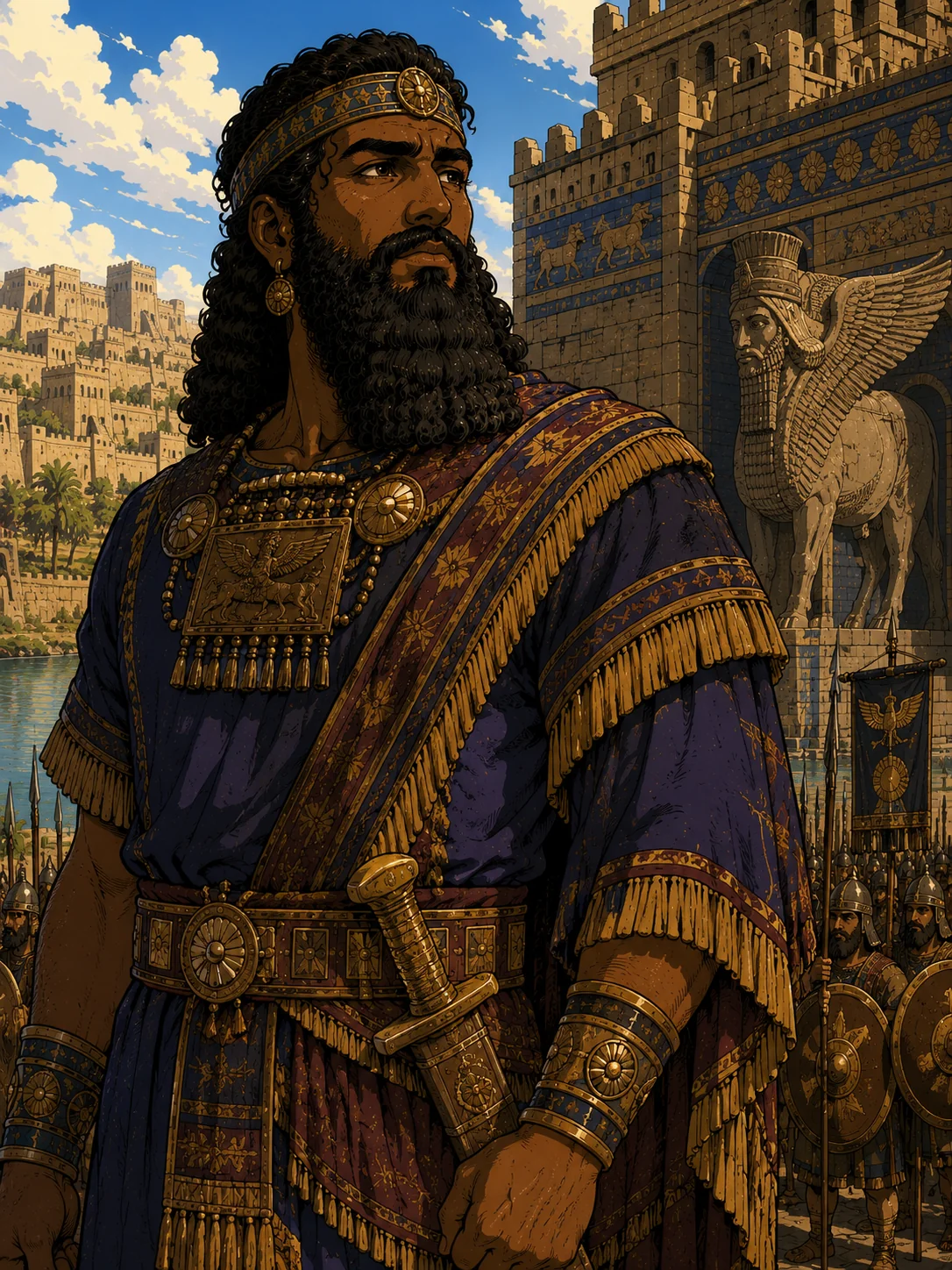
Asshur is the Assyrians — and Asshur is also the name of their oldest city and their chief deity. The Assyrian empire, centered on the Tigris River in northern Mesopotamia, became the dominant military power of the ancient Near East from approximately 900–612 BCE. Their annals record in graphic detail the conquest of Israel's neighbors and ultimately Israel itself. In 722 BCE, Sargon II captured Samaria, deported the ten tribes, and resettled the north with peoples from other conquered territories — the origin of the "Samaritan" people.
The fall of Nineveh in 612 BCE — predicted by the prophet Nahum with breathtaking specificity ("the gate of your river is opened," 2:6) — ended the Assyrian empire. The Babylonian-Median coalition destroyed it completely. Today, the Assyrian Christian community — scattered across Iraq, Syria, Turkey, and the diaspora — are the direct descendants of the ancient Assyrians. They still speak Aramaic, the language that replaced the Assyrian tongue but preserved its essential Semitic character. They are among the oldest continuous Christian communities on earth, tracing their faith to the first century.
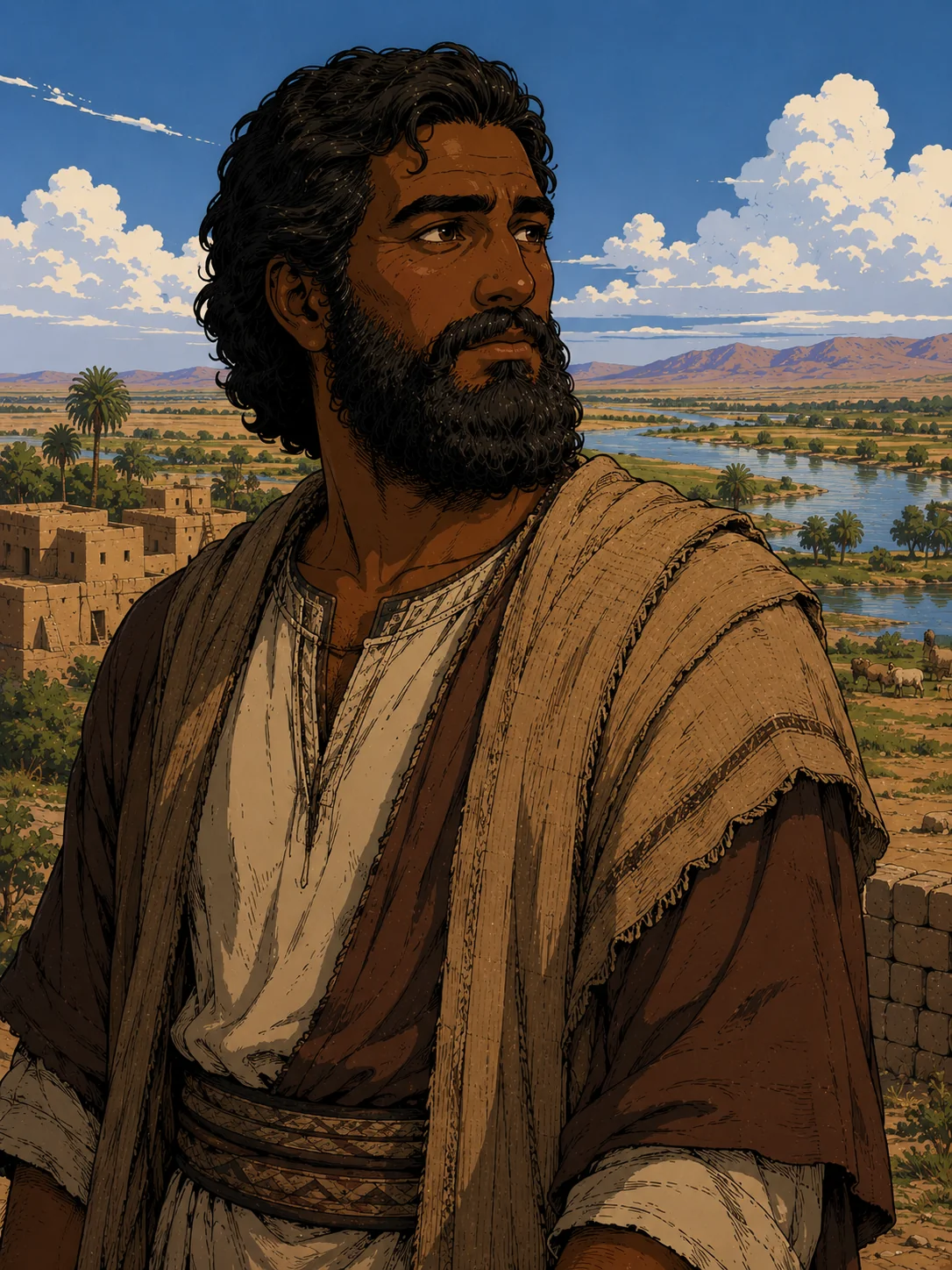
Arphaxad is the most theologically critical figure in the Table of Nations. His is not the most dramatic story — Nimrod builds empires, Asshur raises armies, Aram gives language to a civilization — but Arphaxad's line is the one the text follows with relentless precision: Arphaxad → Shelah → Eber → Peleg → Reu → Serug → Nahor → Terah → Abram. Every other nation in the Table of Nations exists, in the narrative architecture of Genesis, as the frame around this single line.
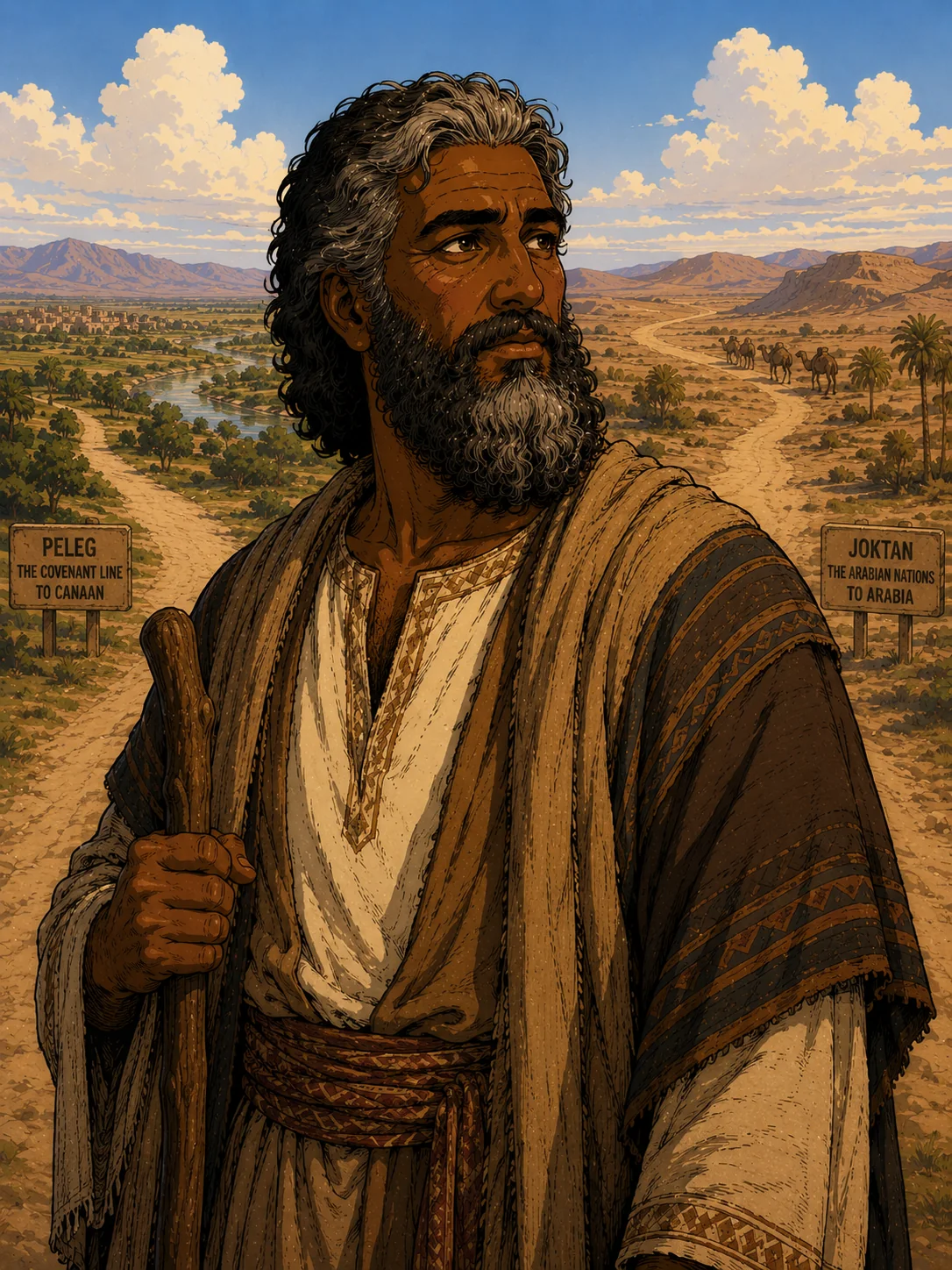
Through his grandson Eber, Arphaxad gives the Hebrew people their name. Through Eber's son Joktan, he fathers the thirteen South Arabian peoples. Through Eber's son Peleg, he stands as the patrilineal ancestor of Abraham, Isaac, Jacob, the twelve tribes, David, and — through the Davidic line — the Messiah. The Septuagint (and Luke 3:36) insert an additional Cainan between Arphaxad and Shelah, but the Hebrew text of Genesis runs straight from Arphaxad to Shelah.
Lud (Shem's son) is identified with the Lydians of western Anatolia — distinct from the Ludim of Mizraim's line (who were North African). The Lydian kingdom reached its apex under Croesus (r. 560–547 BCE), who was so fabulously wealthy that "rich as Croesus" became a lasting proverb. The Lydians are credited with inventing coined money — the world's first true monetary economy emerged from Lydia's electrum coins minted in the 7th century BCE.
Isaiah 66:19 mentions Lud as a people of archers who would be sent to declare YHWH's glory among the nations. Ezekiel 27:10 and Jeremiah 46:9 mention Ludim as skilled warriors in foreign armies. Croesus fatally misread the Oracle of Delphi's prophecy and attacked Cyrus of Persia in 547 BCE — losing his kingdom and his gold to the Persian empire in a single campaign.
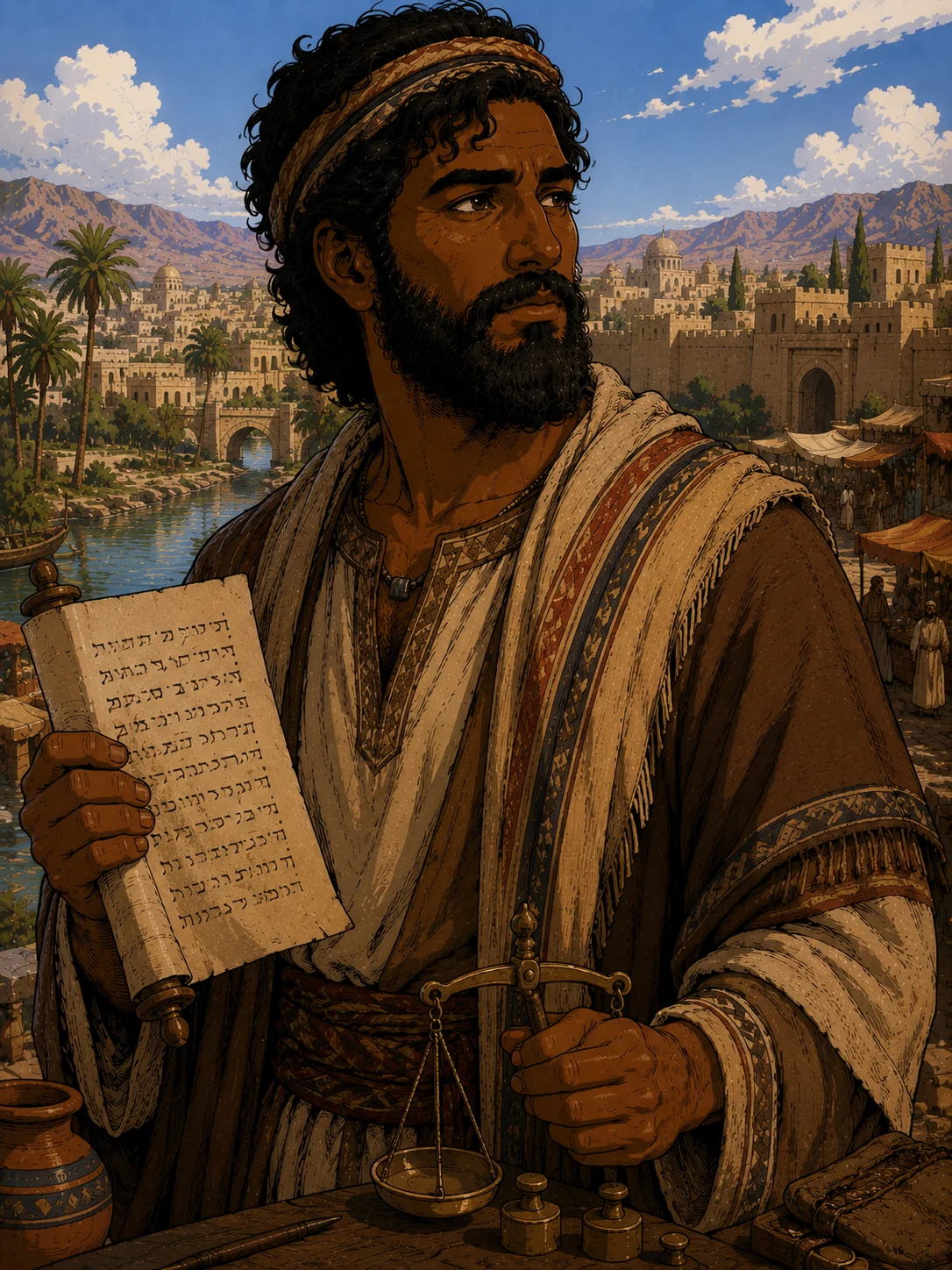
Aram gave the ancient world its most consequential language. Aramaic displaced all other Semitic languages as the administrative and trade language of the Near East by the 8th century BCE — first adopted by the Assyrian empire for administrative convenience, then carried by Babylon, Persia, and finally into the Hellenistic world where it competed with Greek. Sections of Daniel and Ezra are written in Aramaic. Yeshua of Nazareth spoke Aramaic as his primary language. The Talmud is written in Aramaic. Aramaic survived the collapse of every empire that adopted it.
The Aramean kingdom of Damascus was Israel's most persistent northern rival from the time of David through the Assyrian period. "A wandering Aramean was my father" (Deuteronomy 26:5) — the Passover confession that every Israelite recited before YHWH — identifies the patriarchs as Aramean by ethnic origin. Rebekah was an Aramean from Padan-Aram (Genesis 25:20). Laban, Jacob's father-in-law, was an Aramean (31:20,24). The identity of Israel was forged in the context of Aram.
The modern Aramaic-speaking communities — Assyrian Christians in Iraq, Syria, and the diaspora, as well as Syriac-speaking communities in southeastern Turkey — are the living descendants of Aram's world.
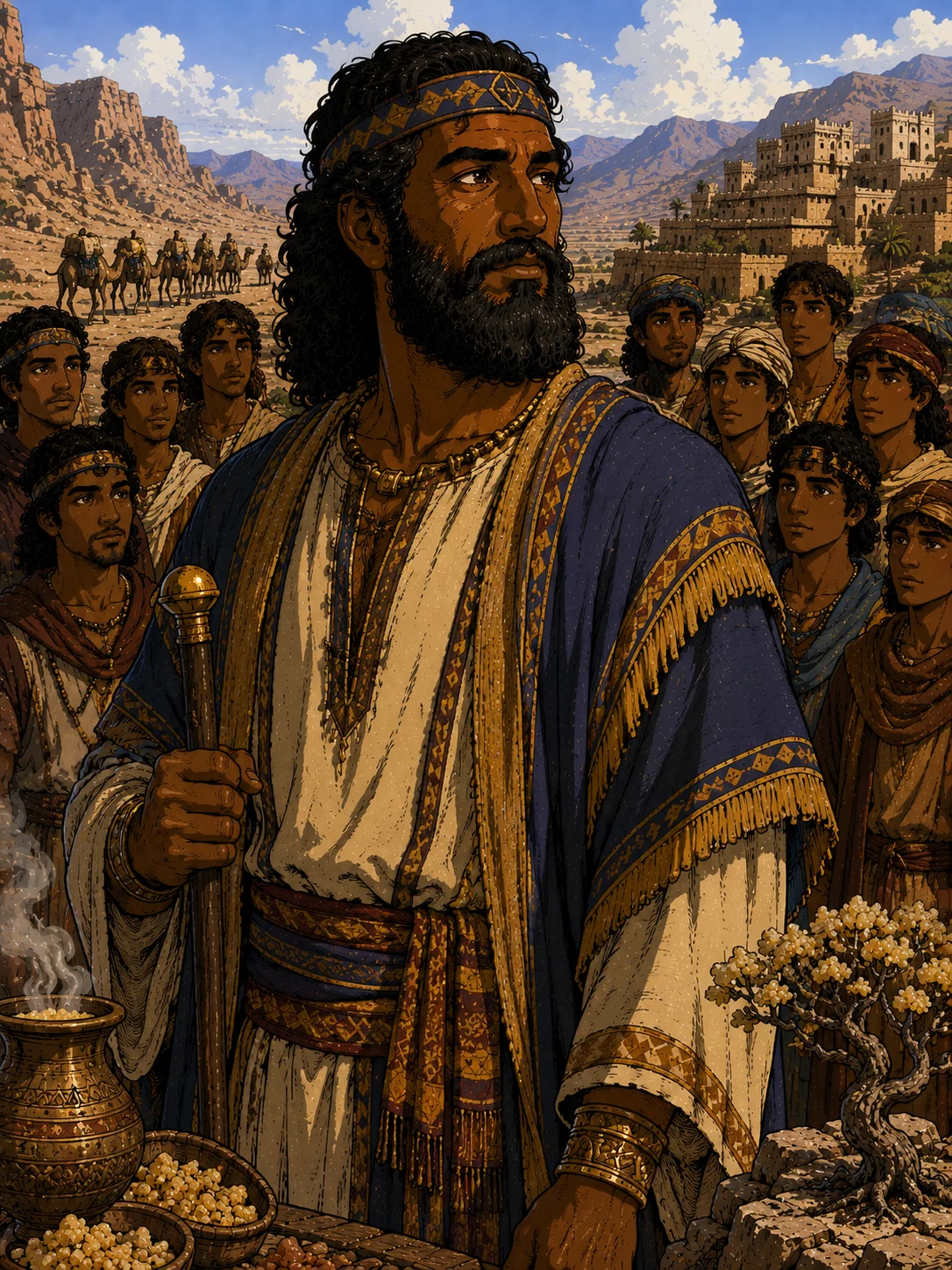
Joktan — Eber's second son, Peleg's brother — is the father of 13 peoples who settled the Arabian Peninsula. These are among the most geographically specific entries in the Table: several can be identified with confidence to actual locations in Yemen, Oman, and southern Arabia that still bear versions of the same names today.
Hazarmaveth (חֲצַרְמָוֶת) = Hadramaut — one of the most secure identifications in biblical geography. The name Hazarmaveth (literally "court of death") is preserved in the Arabic Hadramaut virtually unchanged across three thousand years. The Hadramaut valley of eastern Yemen was the heartland of the ancient frankincense trade and one of the most prosperous regions of the pre-Islamic Arabian world. Diaspora Hadhrami traders spread across the Indian Ocean world from East Africa to Southeast Asia.
Uzal (אוּזָל) = Sanaa — the capital of Yemen today was known in antiquity as Azal. Ezekiel 27:19 mentions Uzal as a trading partner of Tyre, confirming it as a historically active commercial center.
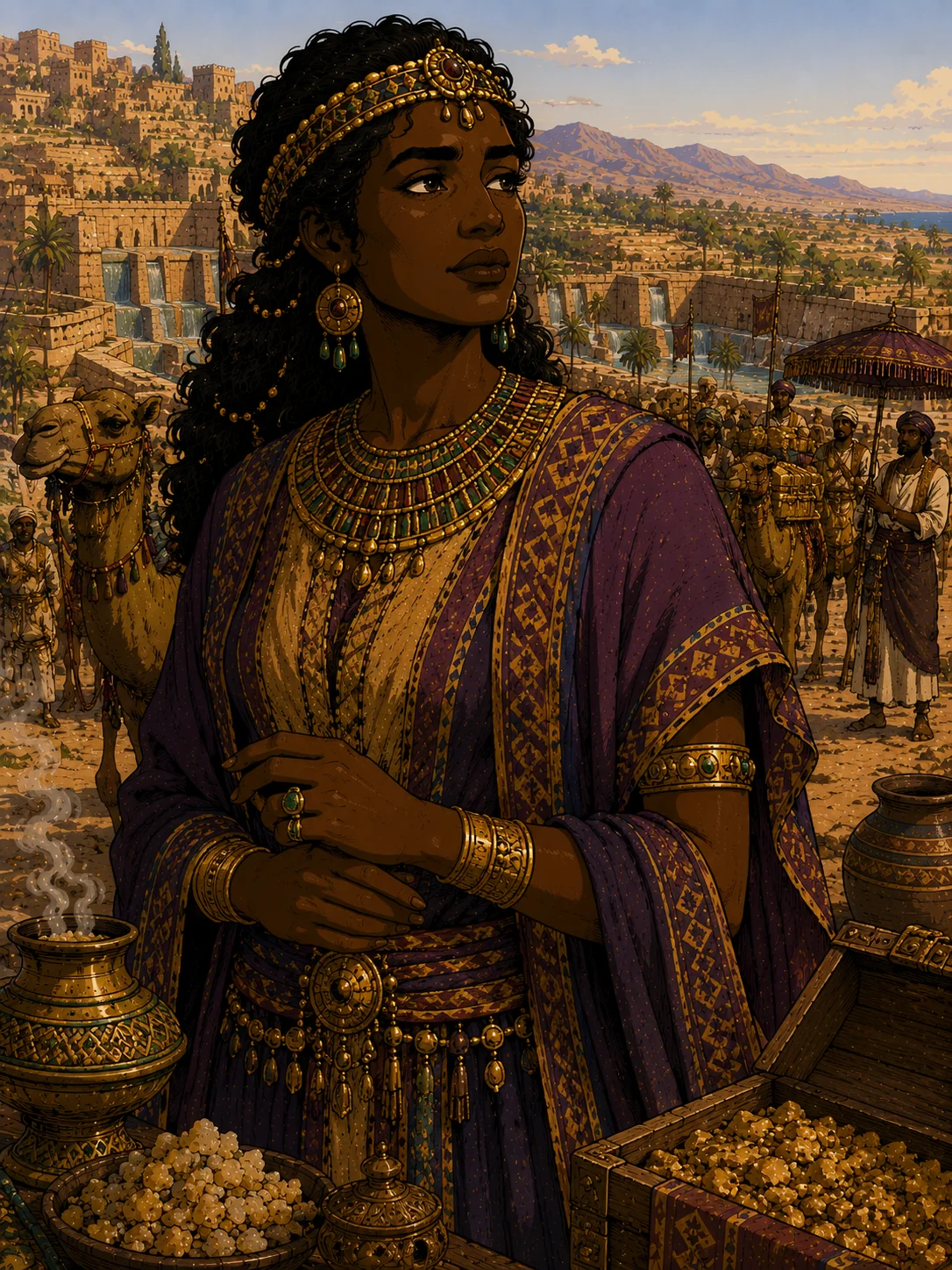
Sheba (שְׁבָא) — one of the most famous names in the ancient world. The Sabaean kingdom of Yemen, with its capital at Marib, was famous for gold, frankincense, and spices. The Queen of Sheba who visited Solomon (1 Kings 10) represents this civilization at its height. Ethiopian tradition identifies her as Makeda, ancestor of the Solomonic dynasty. Psalm 72:15 speaks of "gold of Sheba given to the king"; Isaiah 60:6 of camels from Sheba bringing gold and frankincense.
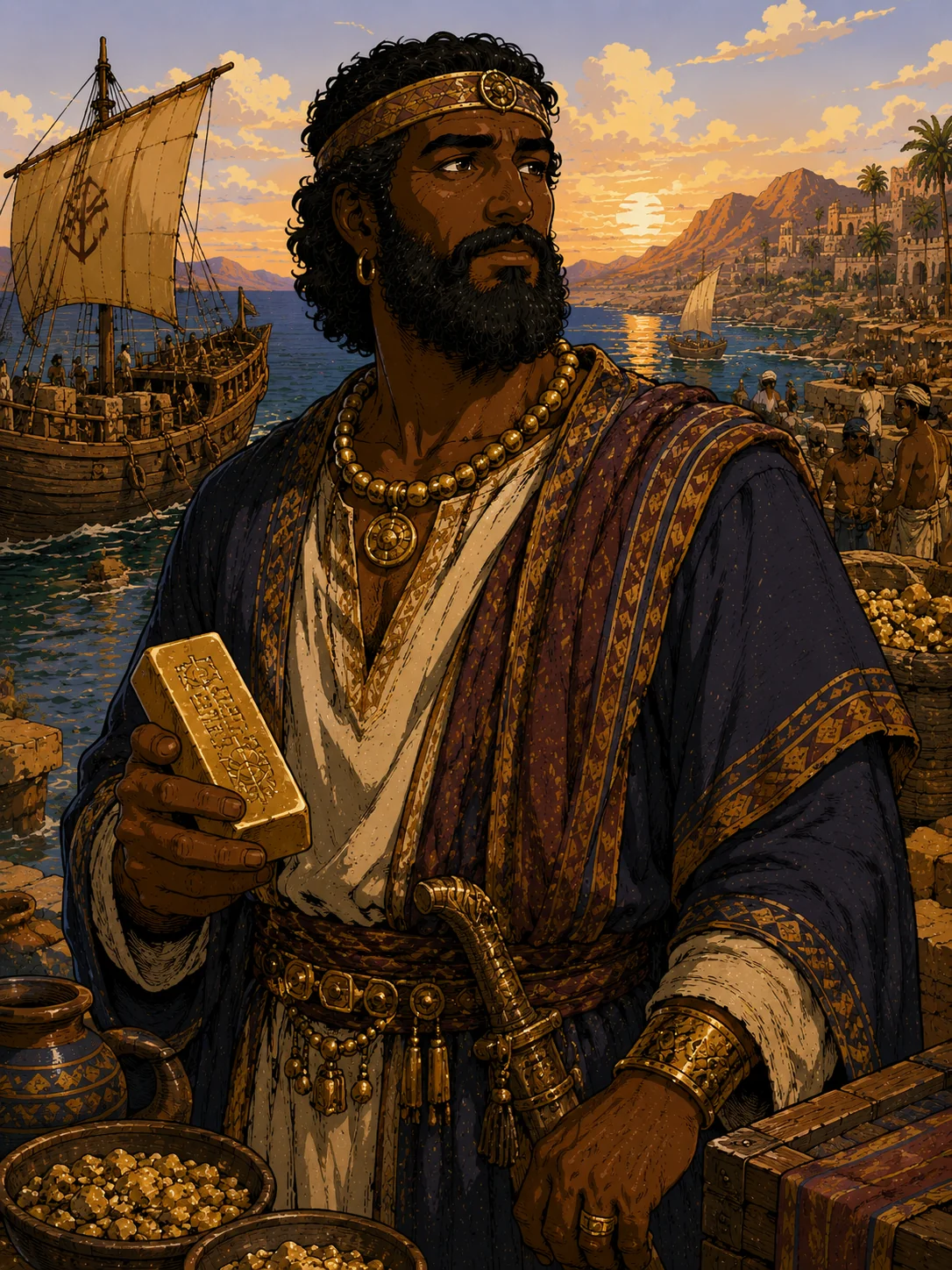
Ophir (אוֹפִיר) — the legendary source of Solomon's finest gold. Solomon sent a fleet with Hiram of Tyre every three years; it returned with 420 talents of gold, plus silver, ivory, apes, and peacocks — suggesting a distant tropical location. Oman's Wadi Suq culture is the current strongest archaeological candidate. An ancient ostracon found at Tel Qasile reads "gold of Ophir for Beth Horon — 30 shekels," confirming that Ophir was a real, historically active trading source.
The Table of Nations ends with Joktan's thirteen sons settling "from Mesha in the direction of Sephar to the hill country of the east" — the Arabian Peninsula described from its northern to southern reaches. Seventy nations in all (72 in the Septuagint). The number seventy is not accidental: the rabbis identified seventy nations with seventy bulls offered on Sukkot (Numbers 29) and seventy elders of Israel. The Babel dispersion and the Table of Nations together form the universal context into which the particular story of Abraham will be set just two chapters later.
Genesis 12:3 — "in you all the families of the earth shall be blessed" — is the divine response to the Table of Nations. Not one nation. Not seventy minus one. All of them. The story the Torah tells from Genesis 12 onward is not the story of one people replacing others but of one people becoming the conduit through which the Creator would call all nations back to himself. The Table of Nations is the stage. Abraham is the next scene.