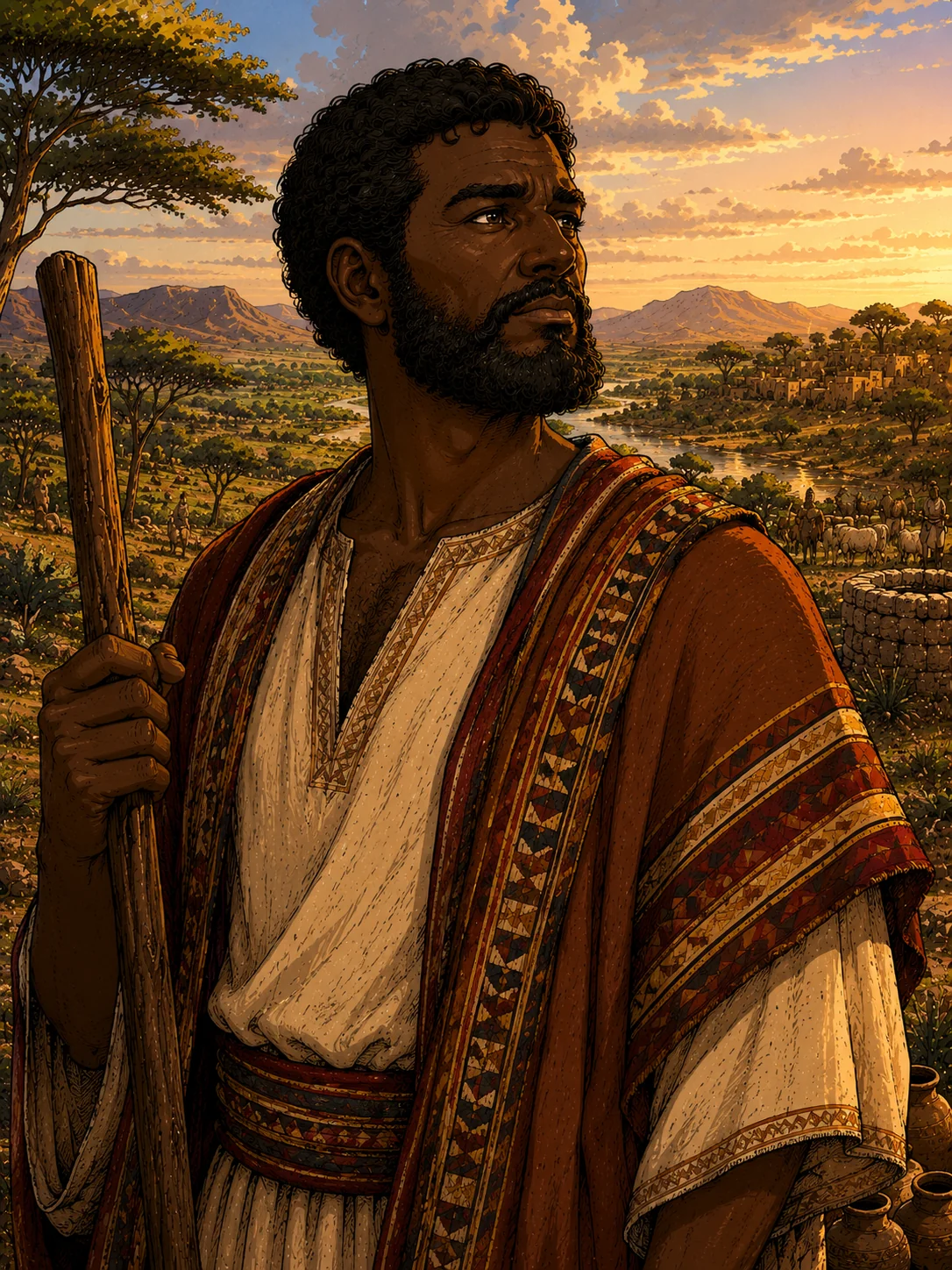
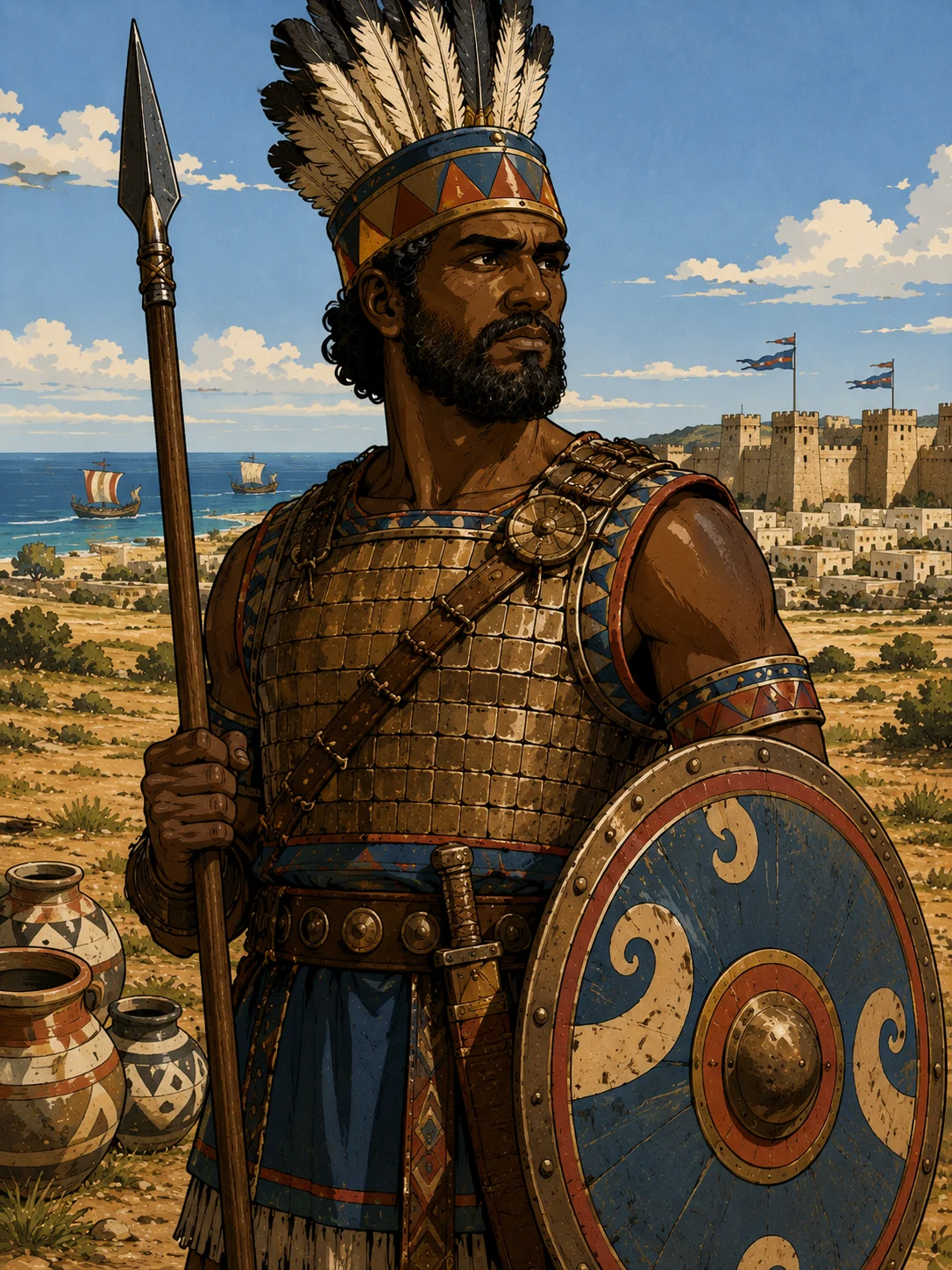
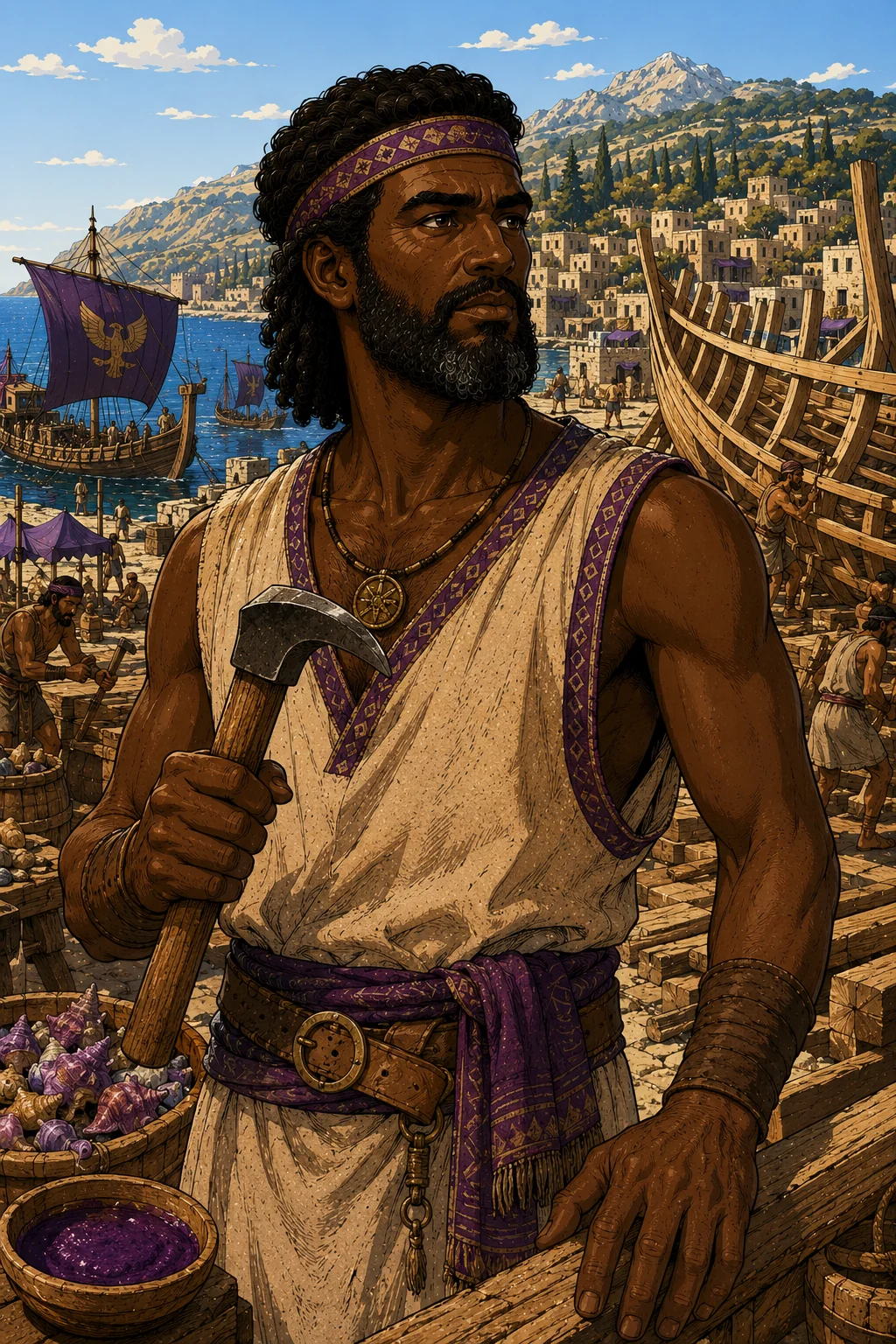
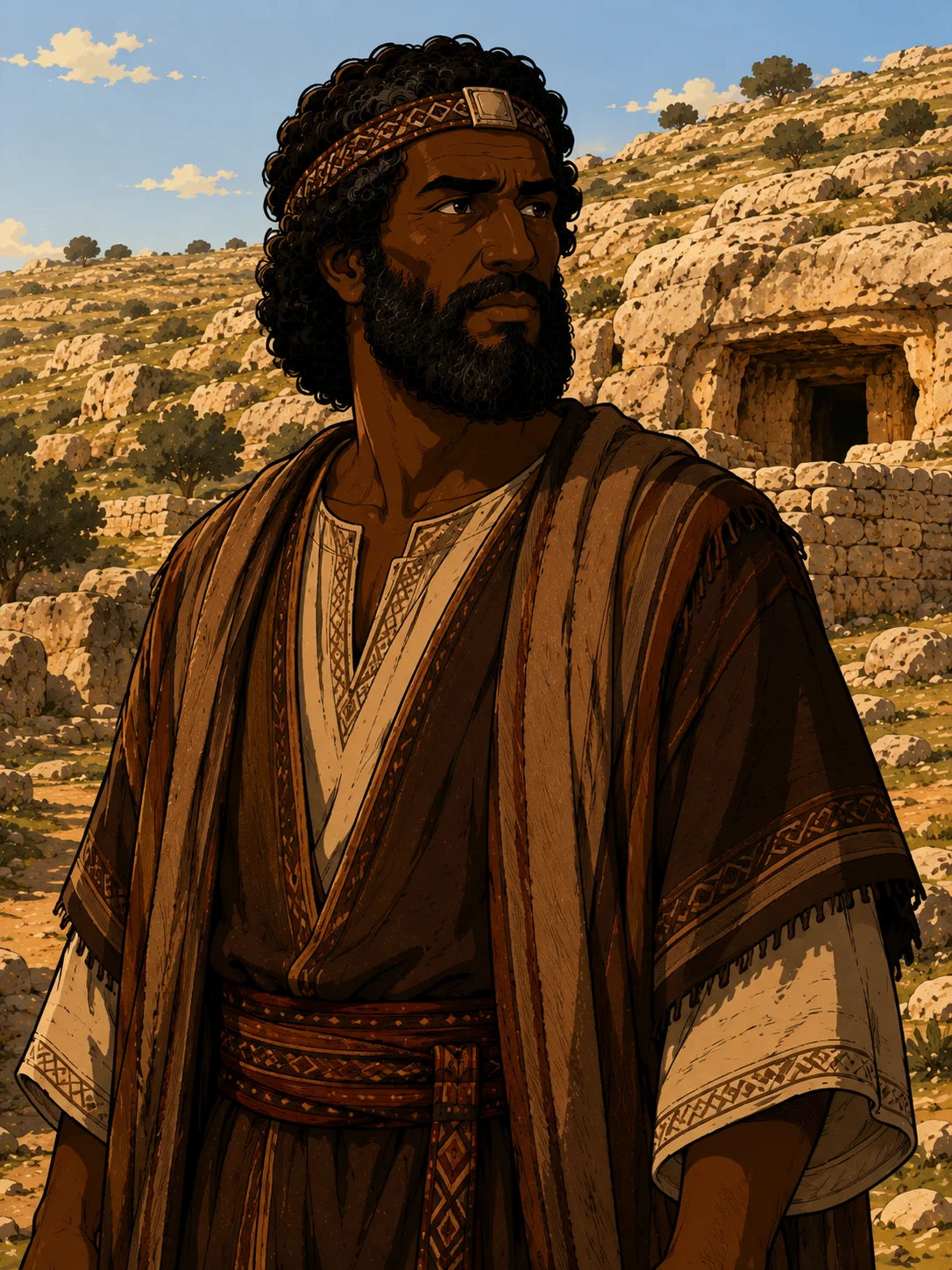
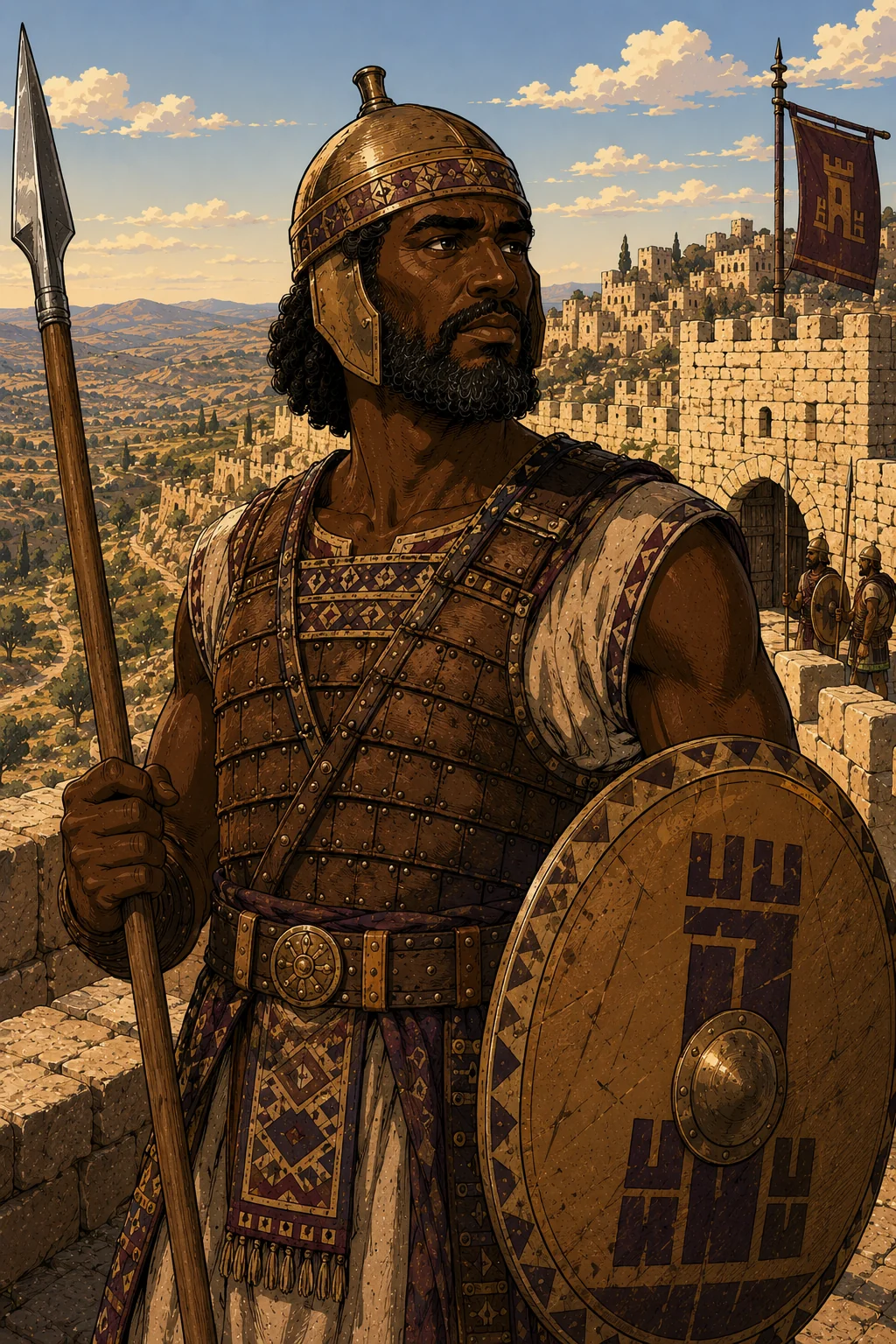
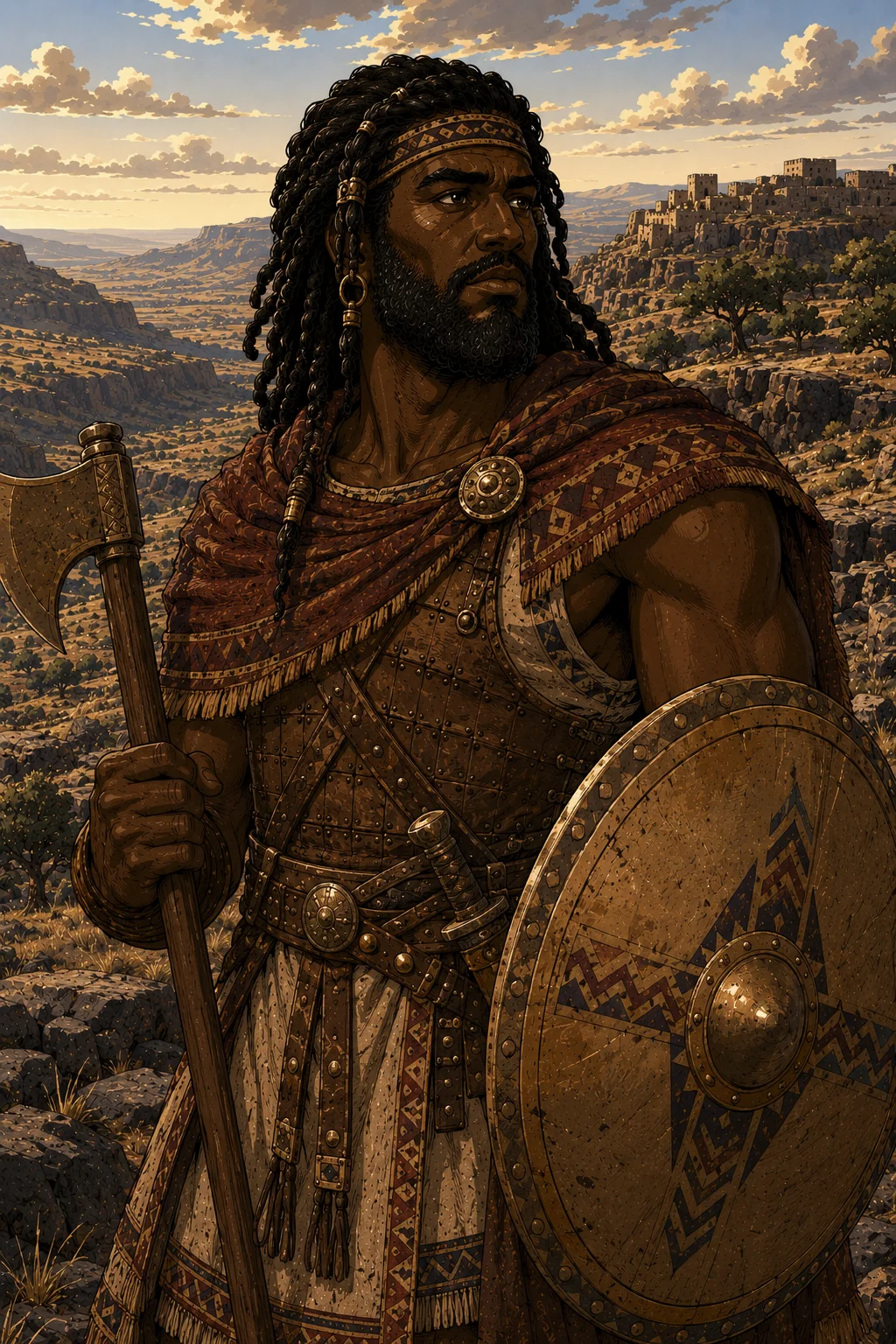
Ham is the youngest son of Noah. Genesis 9:24 explicitly names him the youngest (קָטָן, katan) of the three brothers, making Japheth and Shem the elder two. His four sons are among the most historically significant in the entire Table: Cush (Ethiopia/Sudan), Mizraim (Egypt), Put (Libya/Somalia), and Canaan (the promised land's inhabitants). Between them they encompass the Nile Valley civilization, the earliest Mesopotamian empires, the Phoenician cities, and the seven nations that Israel would dispossess. Ham's line is the densest cluster of historically verifiable peoples in Genesis 10.
The curse of Genesis 9:25 must be understood carefully: it fell specifically on Canaan — Ham's fourth son — not on Ham himself, and not on Cush, Mizraim, or Put. For centuries this passage was weaponized to justify the enslavement of African peoples — a catastrophic theological error that the text itself refutes. The curse applied to the specific Canaanite peoples of the promised land, whose iniquity had reached fullness (Genesis 15:16). It has no reference to African peoples.
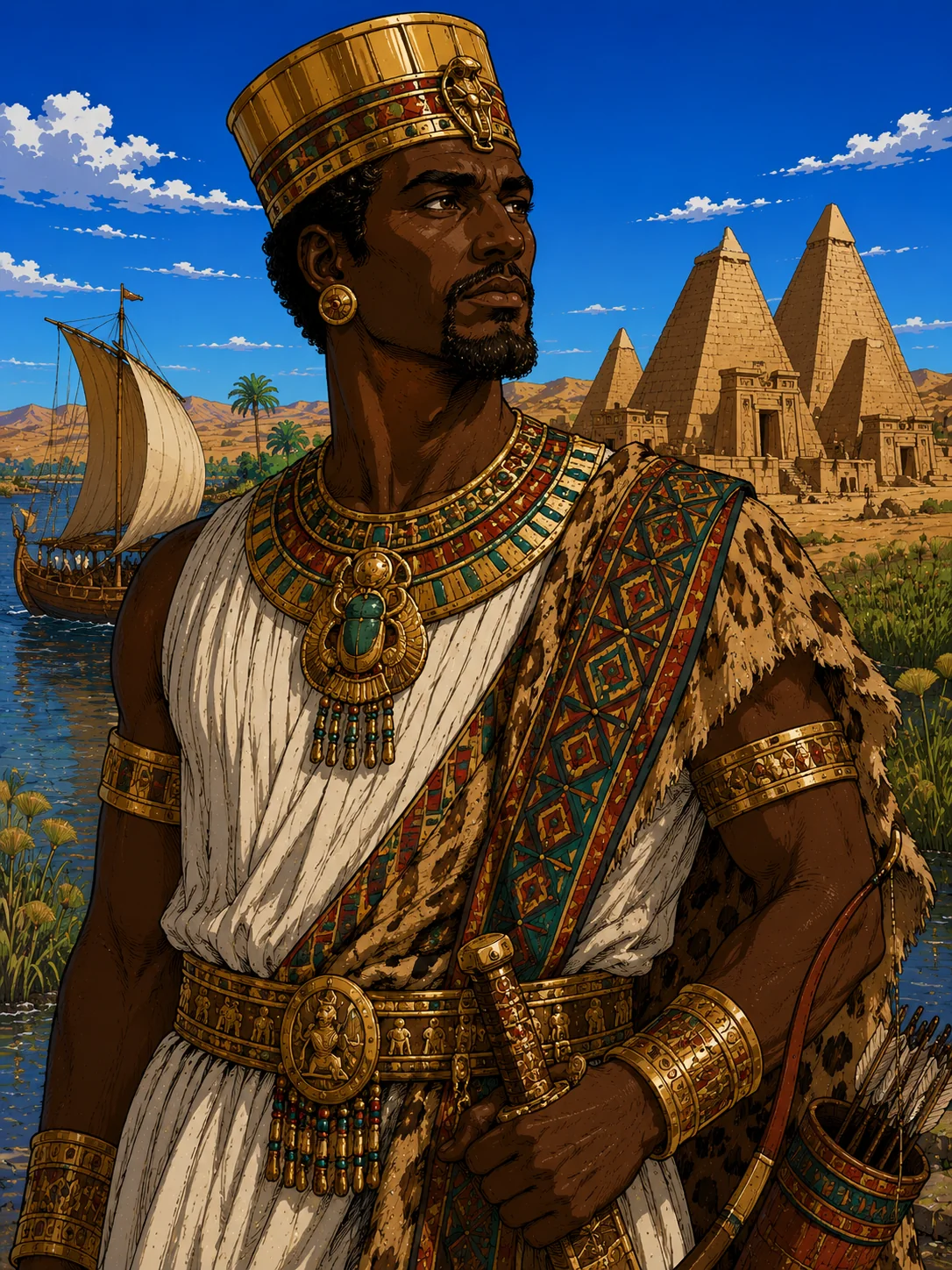
Cush is the firstborn of Ham and the ancestor of the Cushite peoples — centered on the region of modern Sudan, Ethiopia, and the Nile Valley south of Egypt. In biblical geography, Cush consistently refers to the lands south of Egypt, corresponding to the ancient kingdom of Kush (Nubia), which at its height in the 8th–7th centuries BCE actually conquered Egypt and ruled as the 25th Dynasty of Egypt's pharaohs — the only period when an African dynasty ruled the entire Nile Valley.
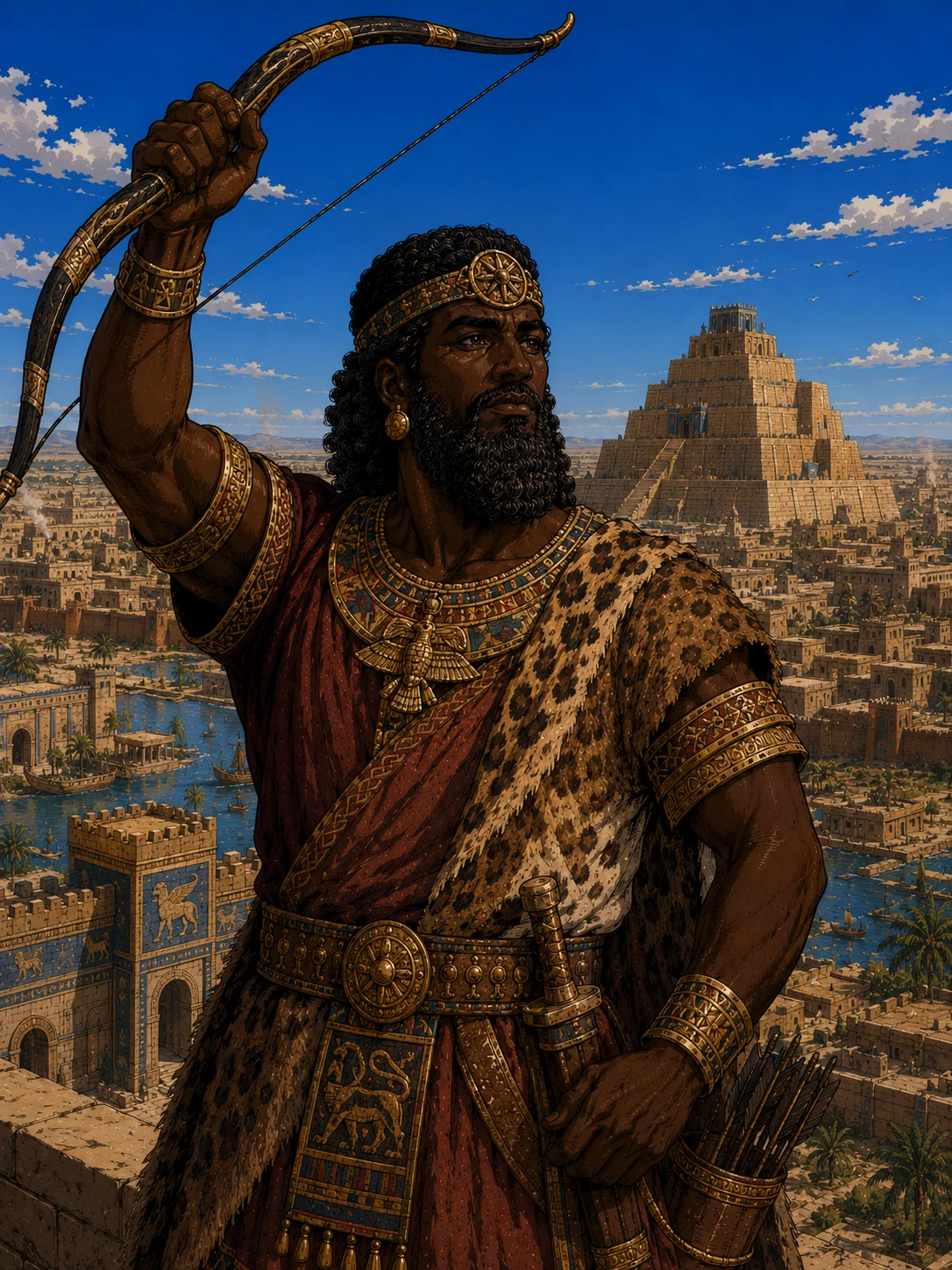
Cush is the father of Nimrod — the first empire-builder in human history (Genesis 10:8–12). This makes the Cushite line the progenitor of Babylon, Nineveh, and the entire complex of Mesopotamian city-states. The identification of a Nile Valley African people as the ancestor of Mesopotamian civilization is one of the more striking geographic complexities of the Table — suggesting either ancient migrations along the Arabian coast or a more complex ethnic memory than simple geography implies.
Cush's daughter Zipporah married Moses. The Cushite woman Moses married (Numbers 12) was the subject of Miriam and Aaron's complaint — a complaint for which Miriam was struck with leprosy. The text pointedly does not condemn the marriage.
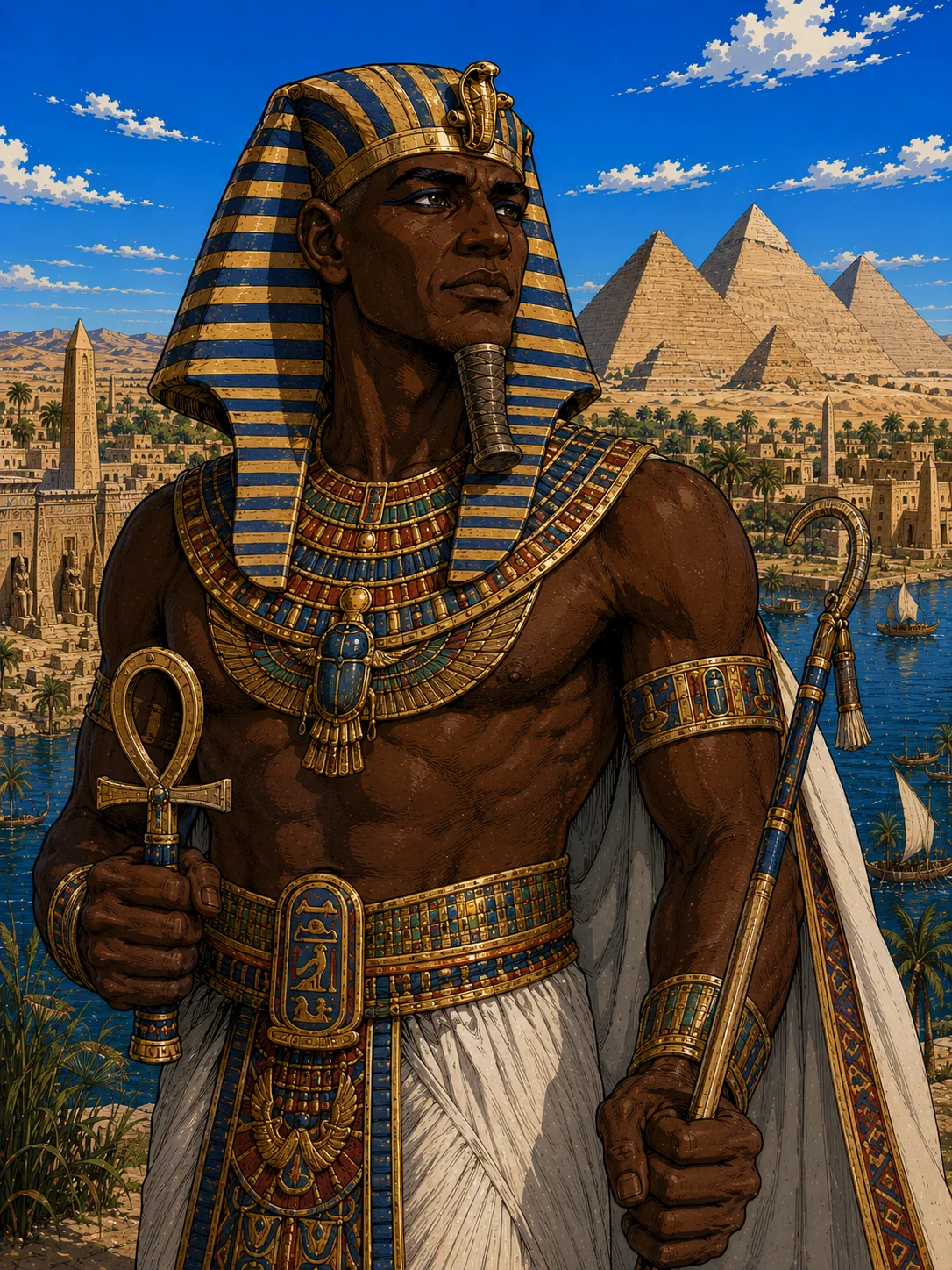
Mizraim is the Hebrew name for Egypt — still used in Modern Hebrew and Arabic today (Misr, مصر). The dual form of the name (the -ayim suffix) may refer to the Two Lands of Egypt — Upper and Lower — the geographic and political duality that defined Egyptian identity from the earliest dynasties. Egypt is the second most mentioned nation in the Hebrew Bible after Israel itself.
Mizraim's seven sons are all peoples associated with North Africa and the northeastern Mediterranean: the Ludim (Libyan or Nile Delta peoples), Anamim (possibly the oasis peoples of the western desert), Lehabim (Libya proper), Naphtuhim (the people of the Delta/northern Egypt, possibly Memphis), Pathrusim (the people of Pathros/Upper Egypt), Casluhim (from whom the Philistines came — a detail Genesis explicitly notes), and Caphtorim (Crete/the Aegean peoples known as the Sea Peoples).
The mention that the Philistines came from Casluhim (with Caphtorim also noted in Amos 9:7 as their origin) reflects the historical Sea Peoples migration of the 12th century BCE, when Aegean and Anatolian peoples resettled the eastern Mediterranean coast, establishing the Philistine pentapolis that would become Israel's greatest adversary.
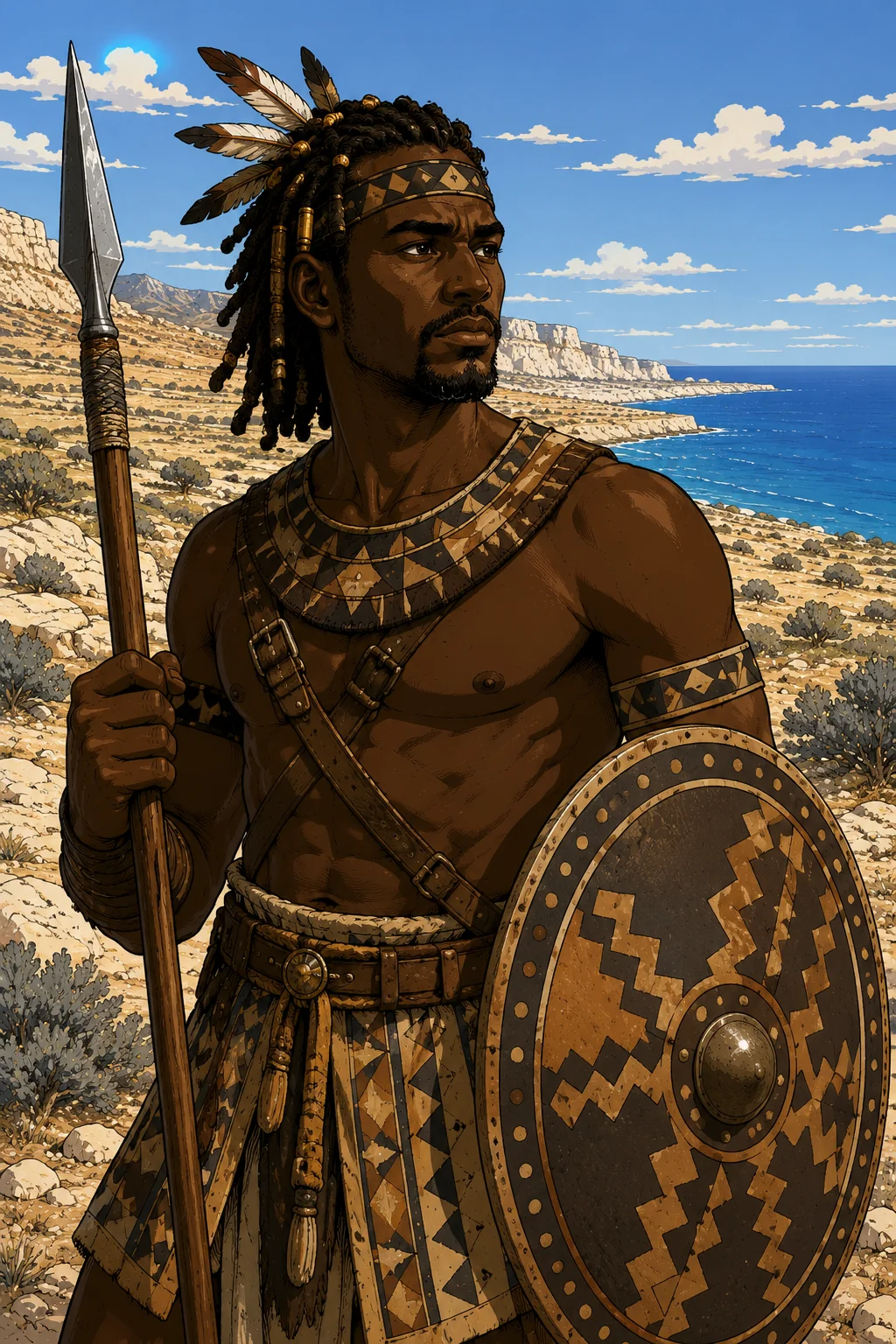
Put is consistently identified in the prophetic literature as a major military people — soldiers and mercenaries — associated with North Africa west of Egypt, broadly corresponding to Libya and possibly extending into the Horn of Africa or Somalia. Ezekiel 27:10 mentions Put as warriors serving in Tyre's army alongside Lud and Persia. Nahum 3:9 pairs Put with Cush as supporters of Thebes (No-Amon): "Cush and Egypt were her strength, Put and the Libyans were your helpers."
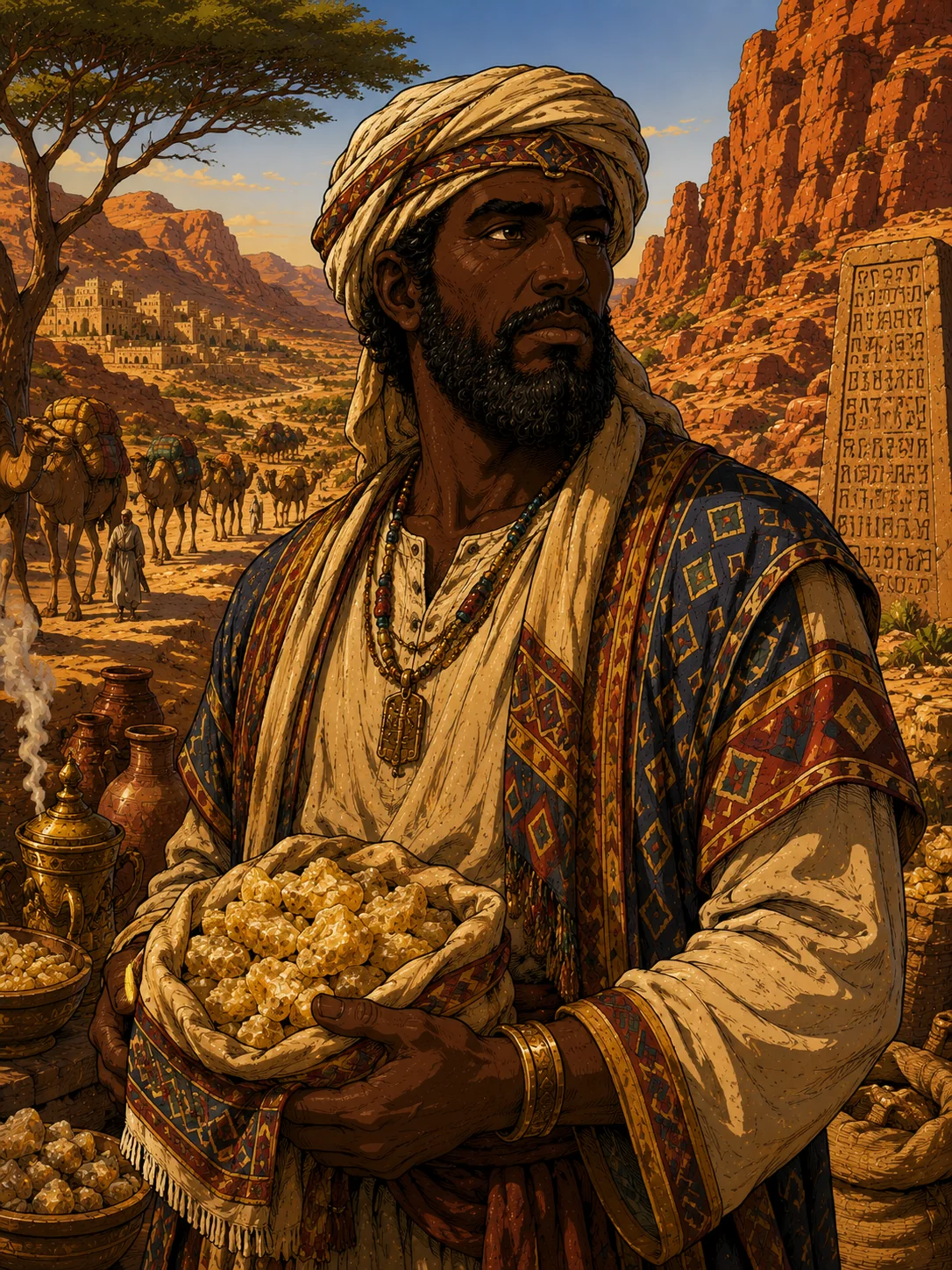
No sons are listed for Put in Genesis 10, suggesting either that his descendants merged into the broader Libyan identity or that the Table is simply less detailed for the western African peoples. Some scholars connect Put with the ancient Egyptian term pwnt (Punt) — the fabled land of myrrh, ebony, and exotic animals that Egyptian expeditions sought. If so, Put's territory may have extended along the East African coast as far as modern Somalia and Eritrea.
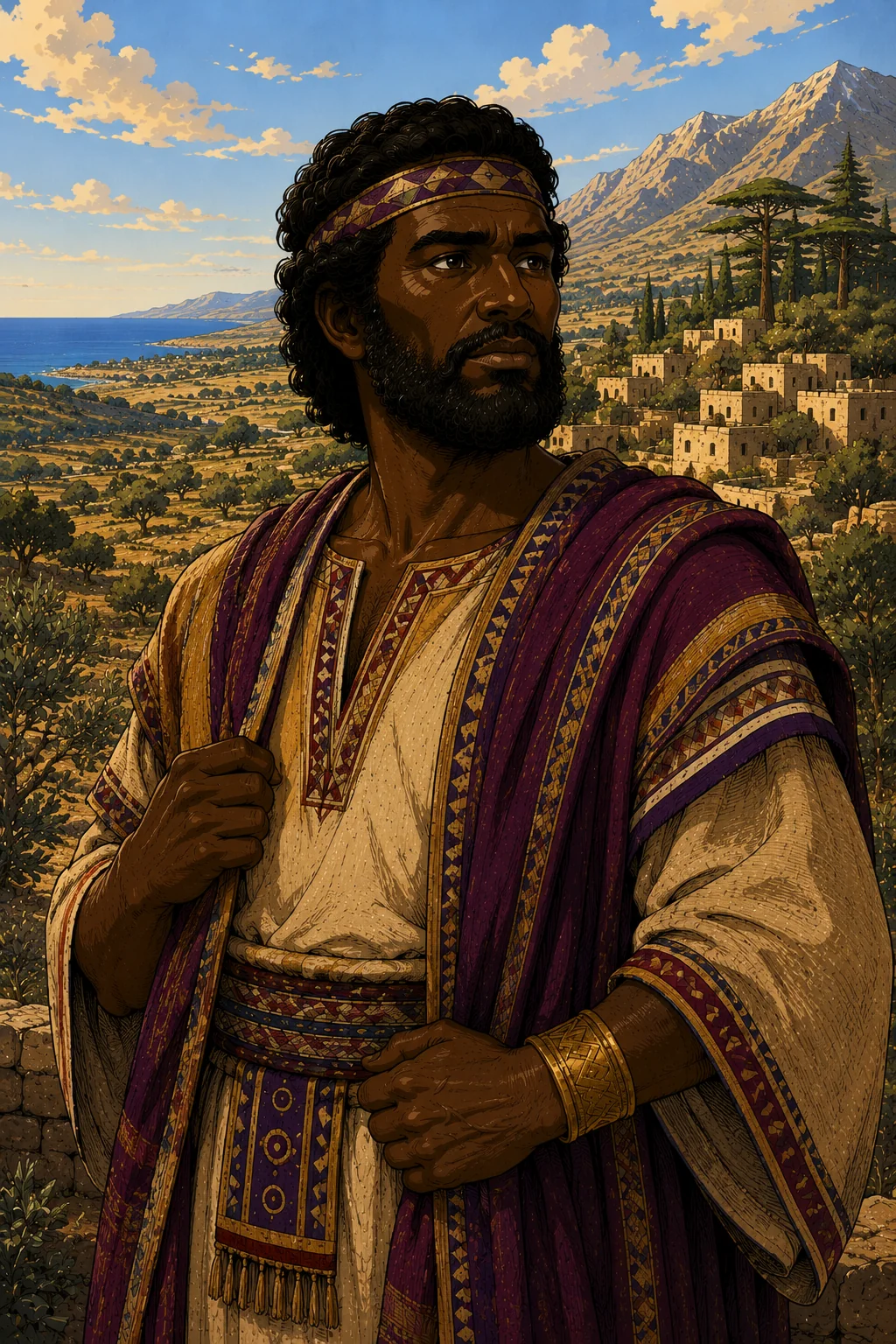
Canaan is the fourth son of Ham and the ancestor of the peoples who inhabited the promised land before Israel's arrival. His territory is described with precision in Genesis 10:19: "from Sidon in the direction of Gerar as far as Gaza, and in the direction of Sodom, Gomorrah, Admah, and Zeboiim, as far as Lasha." This is the land Israel was called to inhabit — a land already full of peoples descended from Noah's grandson.
Canaan's eleven sons account for most of the "seven nations" that Deuteronomy commands Israel to dispossess (Hittites, Amorites, Canaanites, Perizzites, Hivites, Jebusites). The Canaanite peoples were the inhabitants of the great Bronze Age city-states that dotted the Levant — Sidon, Tyre, Ugarit, Hazor, Megiddo, Jebus (Jerusalem) — whose culture and religion posed the primary spiritual threat to Israel throughout the period of the Judges and the monarchy.
Critically: the curse of Genesis 9:25 fell on Canaan specifically — not on Ham and not on any African peoples. The text says "Cursed be Canaan" — not "cursed be Ham." This distinction was deliberately erased in the history of Western slaveholding ideologies, with devastating consequences. The curse related to the specific iniquity that would bring the Canaanite nations to judgment in the time of Joshua.
With 30 named peoples, Ham's line is the largest of the three. It encompasses the civilizations that defined the ancient world longest and most powerfully: Egypt's 3,000-year civilization, the Kushite kingdoms of the Nile, the Phoenician maritime empire, the Canaanite city-states, and the Mesopotamian empires founded by Nimrod. Every major event in Genesis — from the sojourn in Egypt to the conquest of Canaan — unfolds within the geographic frame of Ham's descendants.
The theological significance is profound: Israel was to be a light to these nations, not their destroyer. The conquest of Canaan was not ethnic cleansing but the judgment of a specific iniquity that had ripened over four hundred years (Genesis 15:16). The Rahab who sheltered Israel's spies was a Canaanite woman who entered the covenant. Ruth the Moabite — descendant of Lot — is in the Messianic line. Uriah the Hittite was one of David's thirty mighty men. The nations of Ham were not Israel's enemies by nature but by the choices their cultures made.