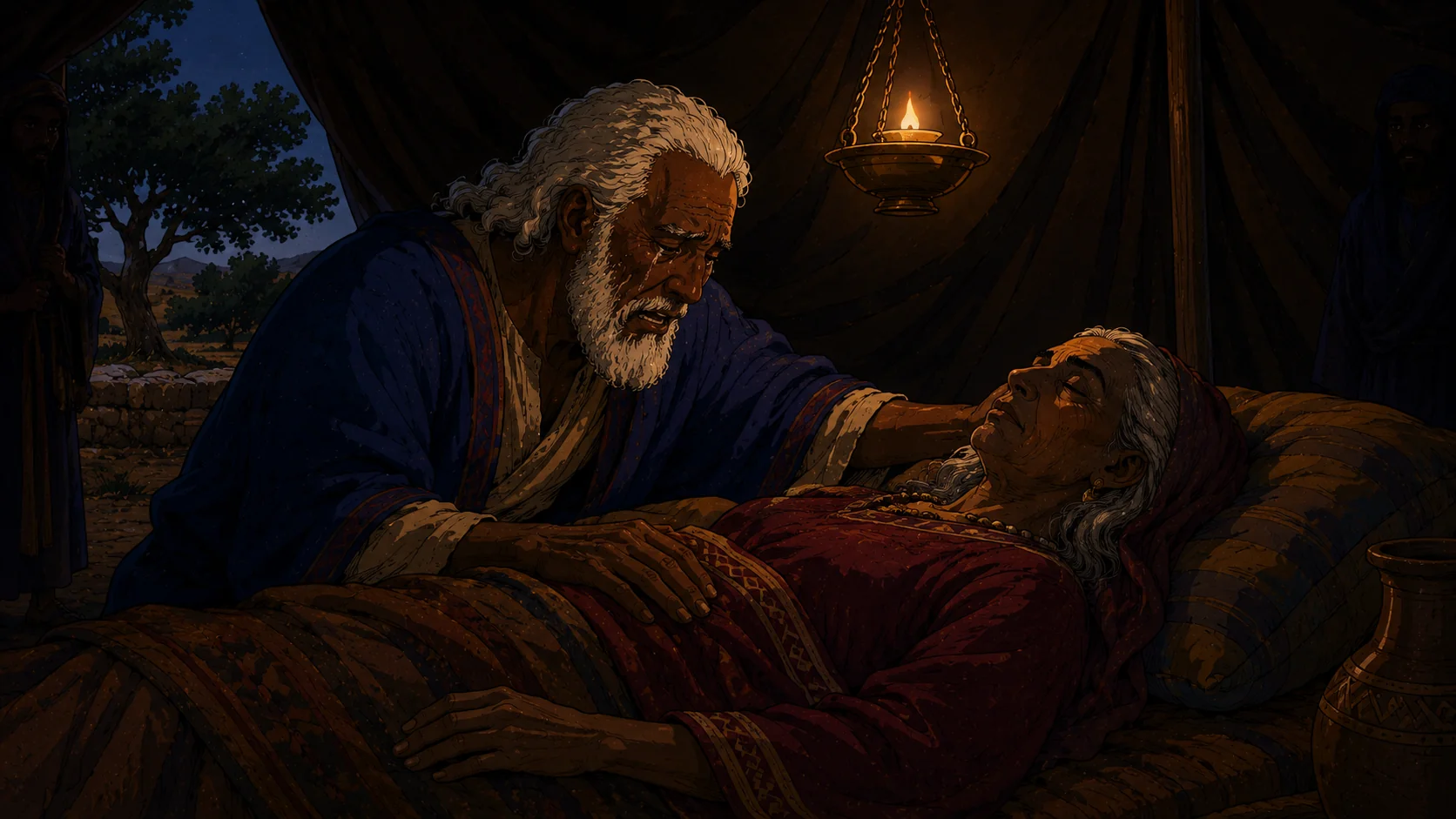
In all of Scripture, Sarah is the only woman for whom a precise age at death is given. The Torah names her years with the same formula used for the patriarchs: the years of the life of Sarah. This is not incidental. Sarah is not a background figure in Abraham’s story — she is a matriarch in her own right, and her death receives a full chapter, the longest negotiation scene in Genesis.
The Hebrew is meticulous: one hundred years, and twenty years, and seven years. The rabbis note that the form avoids giving a single sum in favor of three units — as if to honor each phase of her life separately. At one hundred she was as innocent as at twenty; at twenty as beautiful as at seven. The Torah is not being arithmetically inefficient. It is being theologically precise.
Abraham weeps. The Hebrew וְלִבְכּוֹתָה (v'livkotah — “to weep for her”) uses a small letter kaf, which the Masoretes flagged as unusual. The grief is immense but the text is spare. Abraham has just come down from Moriah. The covenant tests do not end.