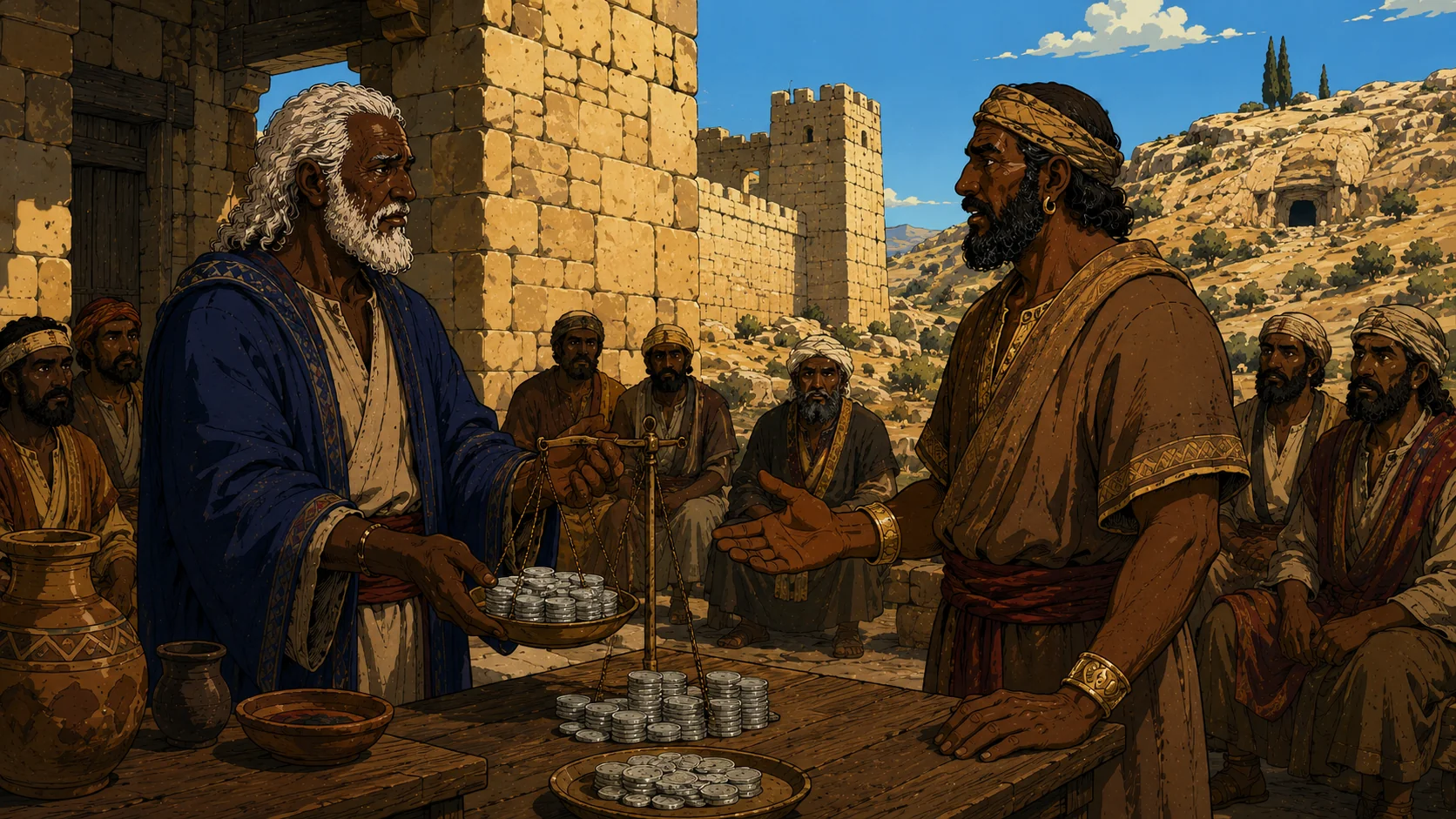
Abraham is a sojourner in Canaan — a resident alien (ger v’toshav, v.4). He has no legal title to the land promised to him. The burial of Sarah becomes the occasion for the first act of legal ownership: a negotiated purchase in the public gate, witnessed by the sons of Heth, at the posted price. The deed is irrevocable.
The negotiation is elaborate. Ephron offers the cave freely; Abraham insists on paying full price. This is not formality. Abraham refuses to receive the land as a gift from anyone but God. He pays four hundred shekels of silver — an enormous sum, likely inflated by Ephron’s public generosity. Abraham pays it without comment. The overpayment is worth the legal clarity.
The cave of Machpelah at Hebron will become the burial site of Abraham, Isaac, Rebekah, Leah, and Jacob. What is purchased here as a tomb becomes the first permanent physical anchor of the covenant people in the promised land. Every later patriarch buried there is buried in soil Abraham bought by weight and deed.
