The opening verse of chapter 24 is a summary and a threshold. Abraham is old. He has survived the Akedah, buried Sarah, purchased Machpelah. The Torah declares that God has blessed him in all things — בַּכֹּל (bakol). This is the word the servant will repeat three times in the chapter. The blessing has been total. Now it must be extended.
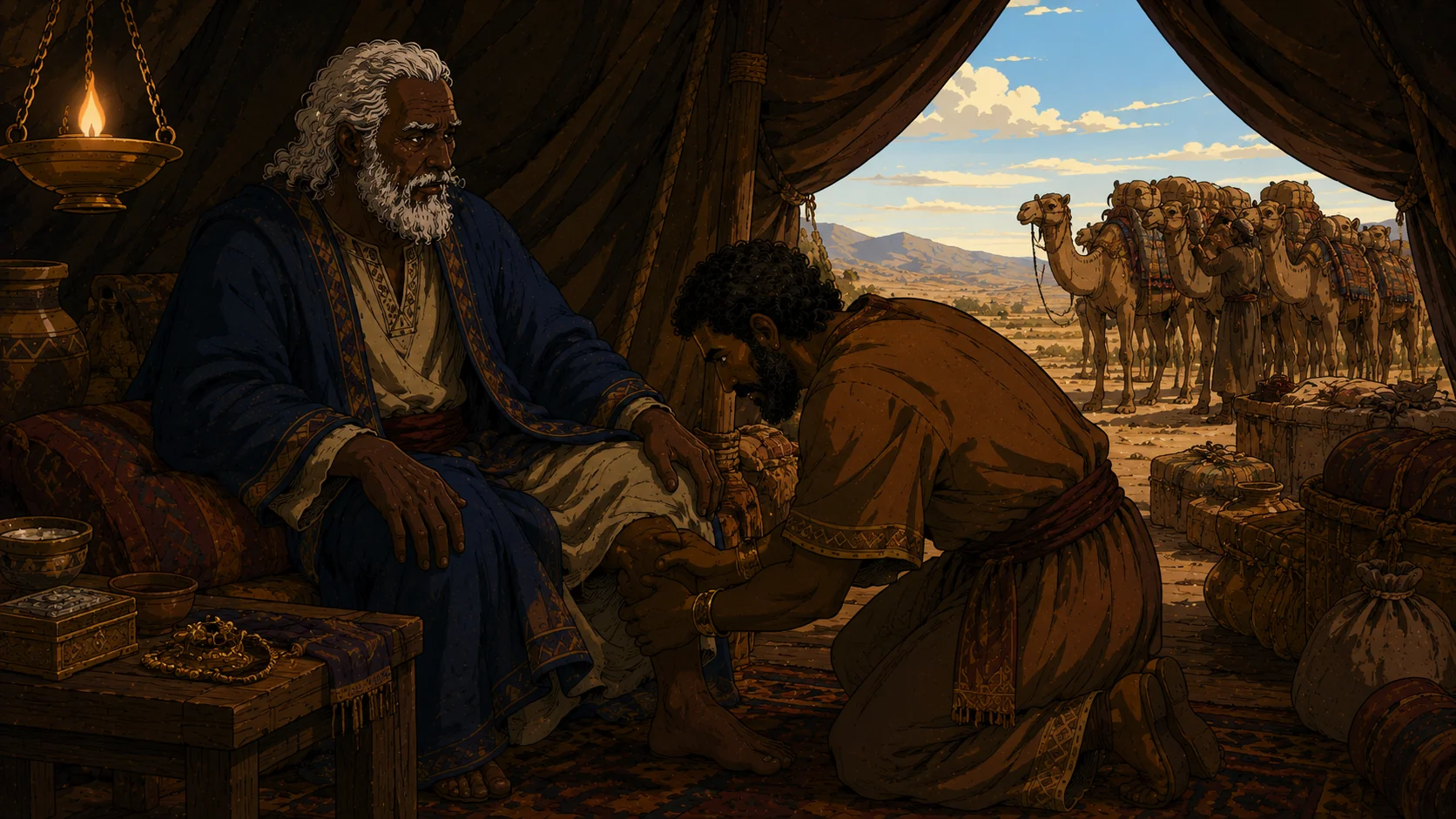
The oath is solemn. The servant places his hand under Abraham’s thigh — the oldest form of oath in the biblical world, sworn by the seat of covenant continuity. Abraham’s requirement is precise: the wife for Isaac must come from his own kindred in Aram-Naharaim. She must not be a Canaanite. And under no circumstances is Isaac to return to the land of origin — the promise is here, in Canaan.
The servant is unnamed throughout the entire chapter — one of the longest chapters in Genesis, 67 verses. Tradition identifies him as Eliezer of Damascus (cf. Genesis 15:2), but the text withholds the name. He is the servant. His identity is swallowed in his mission. He will speak of himself only in relation to his master. This anonymity is the chapter’s first theological statement.
