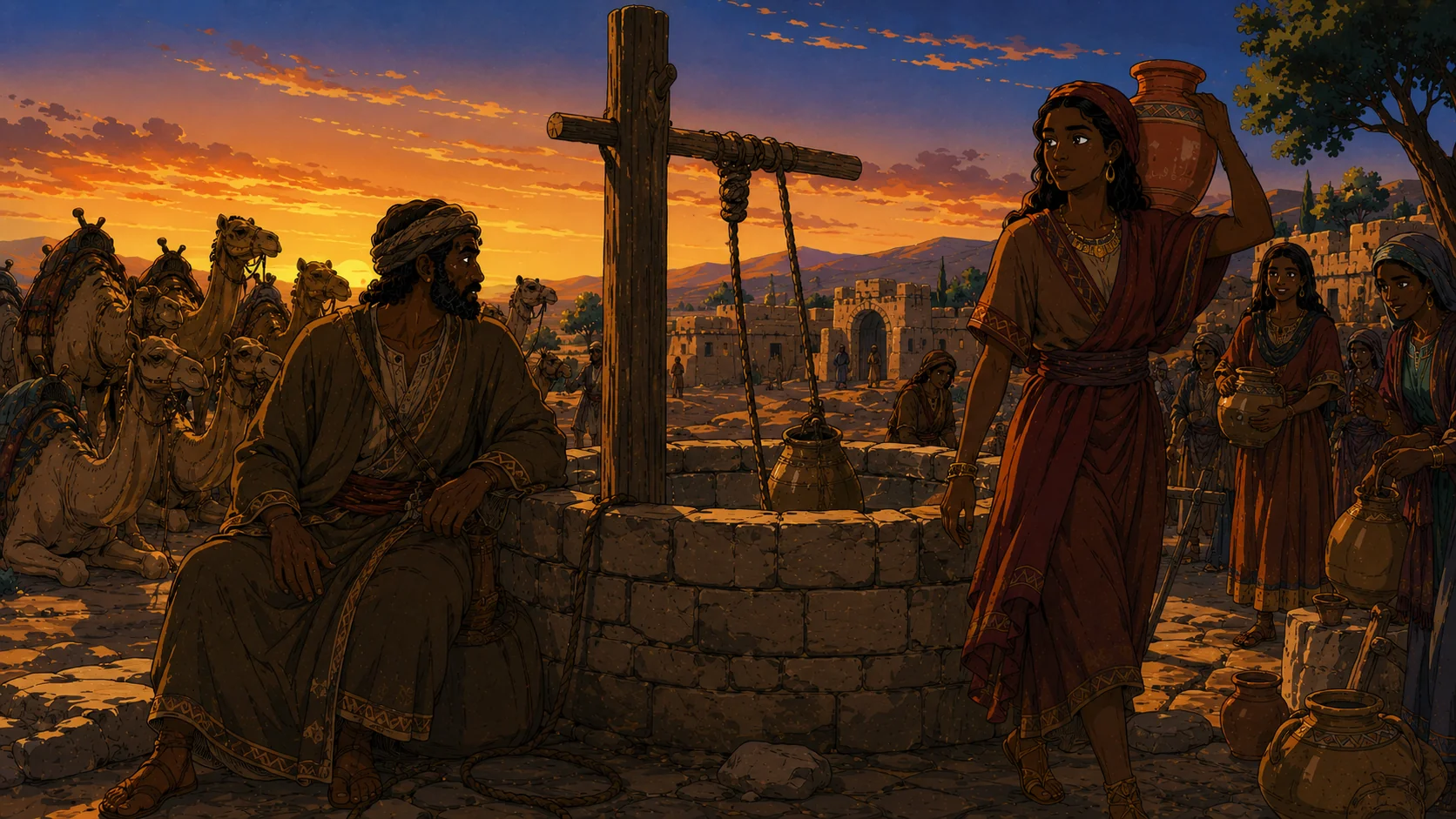
The servant prays with specific terms: let the young woman who offers water not only to me but to my camels be the one you have appointed for Isaac. It is a test of character — generous hospitality above and beyond obligation. Ten camels can drink enormous quantities. The woman who offers to water them all has chosen service over convenience.
The answer arrives before the prayer concludes. וְהִנֵּה רִבְקָה יוֹצֵאת — “and behold, Rebekah was coming out.” The hinneh (behold) marks the servant’s perception: he sees her arrival as a surprise breaking in on his prayer. The text then describes her — beautiful, a virgin, no man had known her — in the same order the servant would need to evaluate.
Rebekah comes from Bethuel, son of Milcah, who bore Nahor’s children — the same family listed in the genealogy of chapter 22. The seed planted there is now germinating. The servant does not yet know this. The reader does.