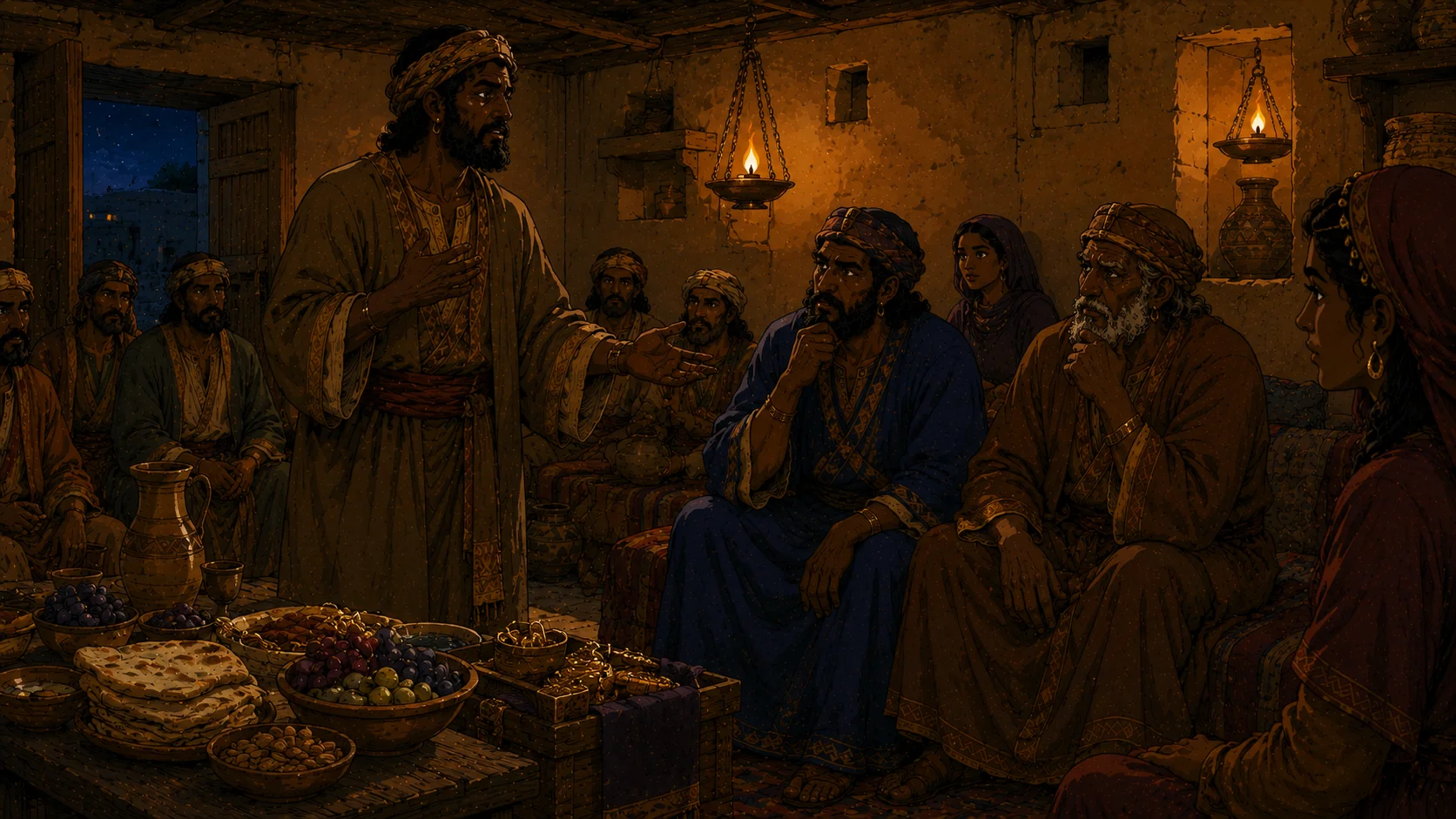
The servant arrives at Nahor’s city, and Laban — who will later prove to be a man of sharp calculation — rushes out when he sees the gold on his sister’s wrists. The servant is offered hospitality. He refuses to eat until he has stated his business. This insistence on mission before comfort is the chapter’s keynote: the servant subordinates everything to the task.
He then retells the entire story: Abraham’s blessing, the oath, the prayer at the well, Rebekah’s actions, the gold. The retelling occupies seventeen verses — nearly a third of the chapter. The Torah allows this repetition deliberately. The servant’s story is the reader’s confirmation: what we witnessed actually happened as described.
Laban and Bethuel’s response is remarkable for men who will later prove difficult. They say: Me’YHVH yatza ha-davar — “From the LORD this thing has come.” They do not negotiate. They cannot say yes or no. The divine hand is visible even to them. They consent.