Rebekah is the third matriarch in a row whose barrenness precedes covenant birth. Sarah was barren. Rachel will be barren. The pattern is deliberate: the covenant does not continue through natural succession but through divine intervention. Each birth in the main line is a statement that the line belongs to God, not to biology.
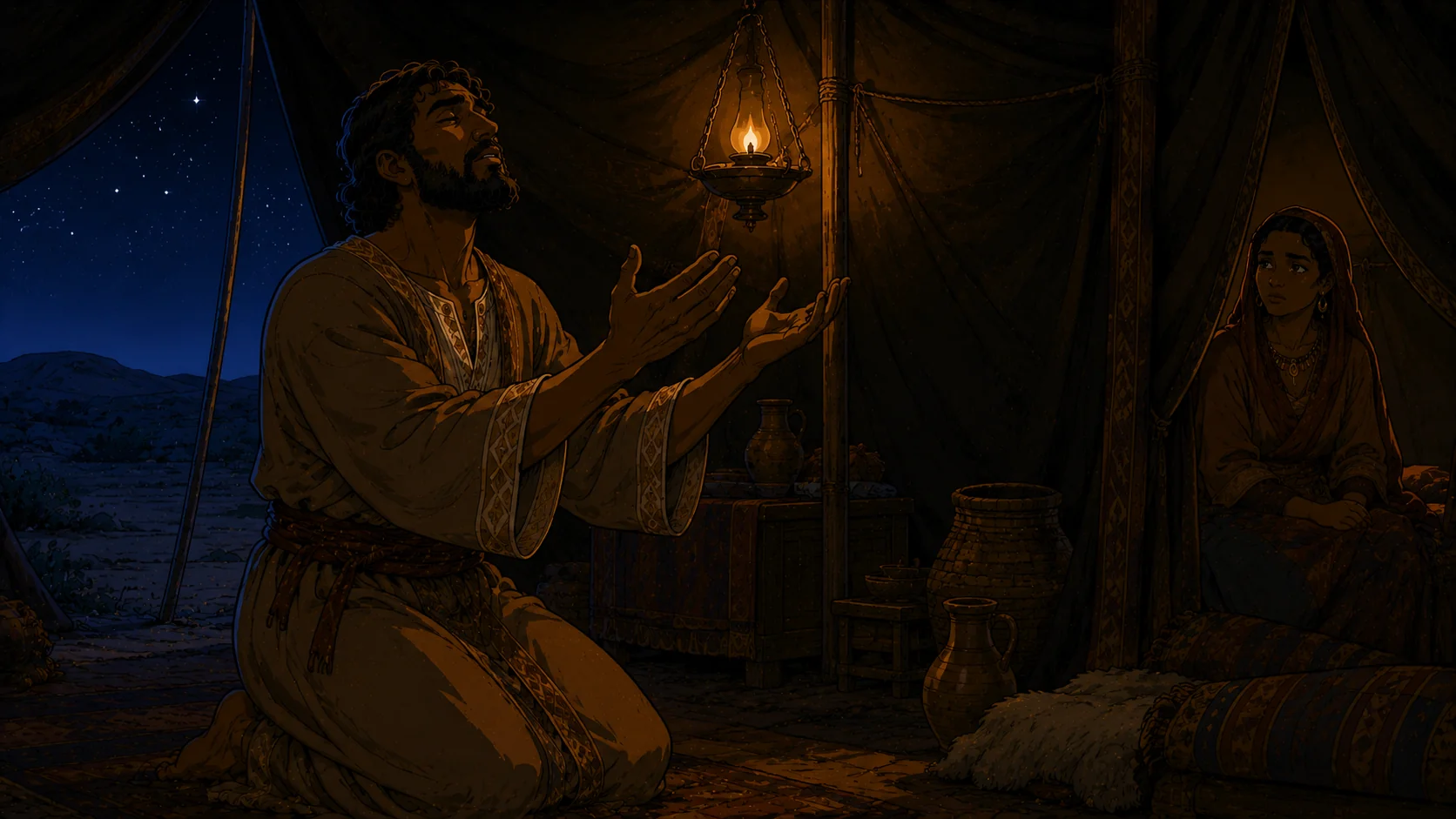
Isaac entreats the LORD לְנֹכַח אִשְׁתּוֹ (l’nokhach ishto, “opposite / in front of his wife”). This unusual phrase suggests he prayed facing her, or on her behalf, or in her presence. Unlike Abraham with Sarah, Isaac does not seek a surrogate. He prays for Rebekah specifically. The Torah records no alternative. He entreats, and is answered.
Twenty years pass between the marriage of Isaac and Rebekah (24:67) and the birth of their sons (25:26). The delay is not noted with complaint or crisis in the text. Isaac prays, God answers, and only then does the narrative provide the twenty-year figure. The waiting was long. The answer was complete.