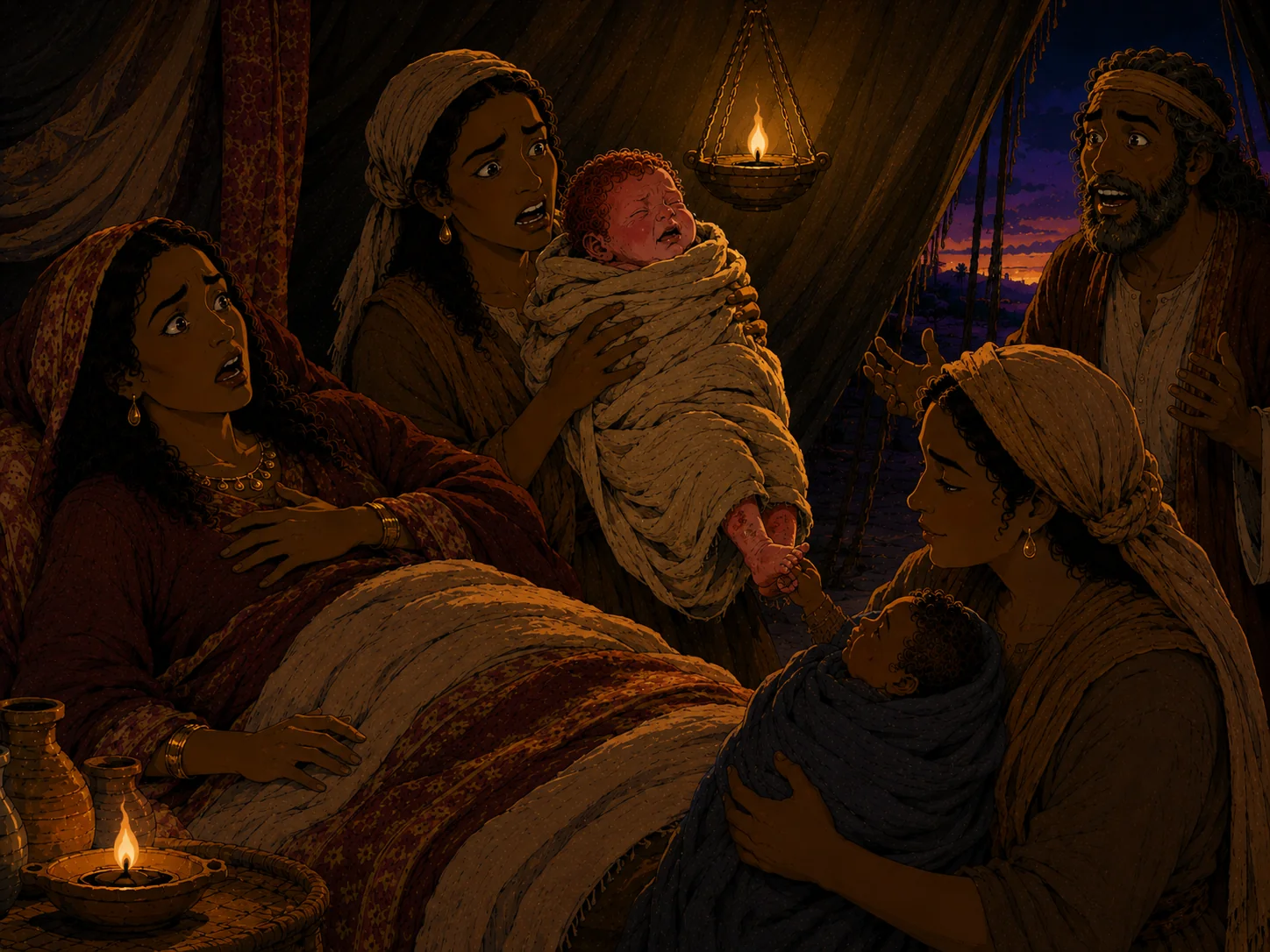
The first son comes out red — אַדְמוֹנִי (admoni) — and covered entirely with hair like a garment. He is called Esav (Esau), a name whose etymology the Torah does not explain here, though later tradition connects it to עָשׂה (’asah, made, done) — he came out fully formed, complete. The description is of someone physical, external, present.
The second comes out holding the heel of the first. וְיָדוֹ אֹחֶזֶת בְּעֲקֵב עֵשָׂו — “and his hand was grasping the heel of Esau.” He is named Ya’akov (Jacob), from עַקֵב (’akev, heel). The name is both descriptive and prophetic. He is a heel-grasper, a supplanter. What he does in the womb he will do his entire life.
Isaac is sixty years old at their birth (v.26). He was forty when he married Rebekah (v.20). Twenty years of waiting, then twins born in the same moment, named for their nature at birth. The oracle given to Rebekah before they were born is now embodied: two peoples, one grasping the other’s heel from the first second.