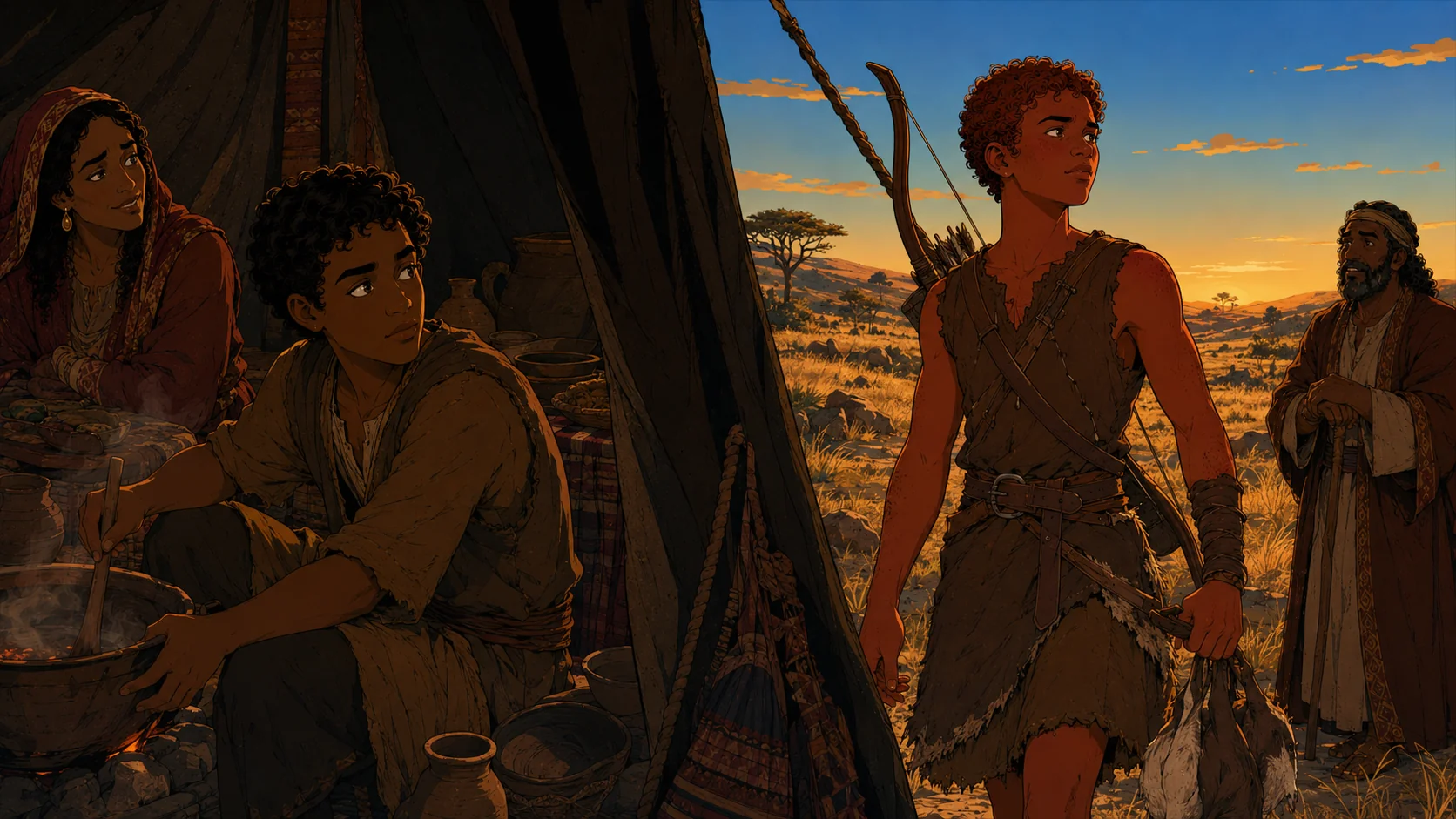
The characterization of the two brothers is compressed into a single verse. Esau: a man skilled in hunting, a man of the open field. Jacob: an אִיש\� תָּם (ish tam) — a man of integrity, a quiet man, a complete man — dwelling in tents. The Hebrew תָּם (tam) is not a weak word. It is the same word used to describe Noah (6:9) and Job (1:1): blameless, whole. The contrast is not between good and bad but between two kinds of human orientation.
The parental loves follow the character split. Isaac loves Esau because of the hunting — literally, “because the hunt was in his mouth” (v.28). The pleasure of the meal mediates the love. Rebekah loves Jacob. The Torah gives no reason for Rebekah’s love. It is stated without qualification.
The pattern is the covenant pattern: the beloved second son, the overlooked firstborn. Abel and Cain. Isaac and Ishmael. Jacob and Esau. Joseph and his brothers. Each time the younger is the carrier of covenant purpose. The Torah does not explain why this is so. It simply establishes the pattern, over and over, until the reader stops asking for the logic and starts watching for the pattern itself.
