A famine hits the land — the second famine in Canaan, the text notes, after the one in Abraham’s day. Isaac moves toward Egypt, following the same instinct his father had a generation earlier. God appears and stops him: do not go down to Egypt. Dwell in the land I will show you. Stay. The land and the seed and the blessing — all of it passes through this soil, through this generation, through Isaac.
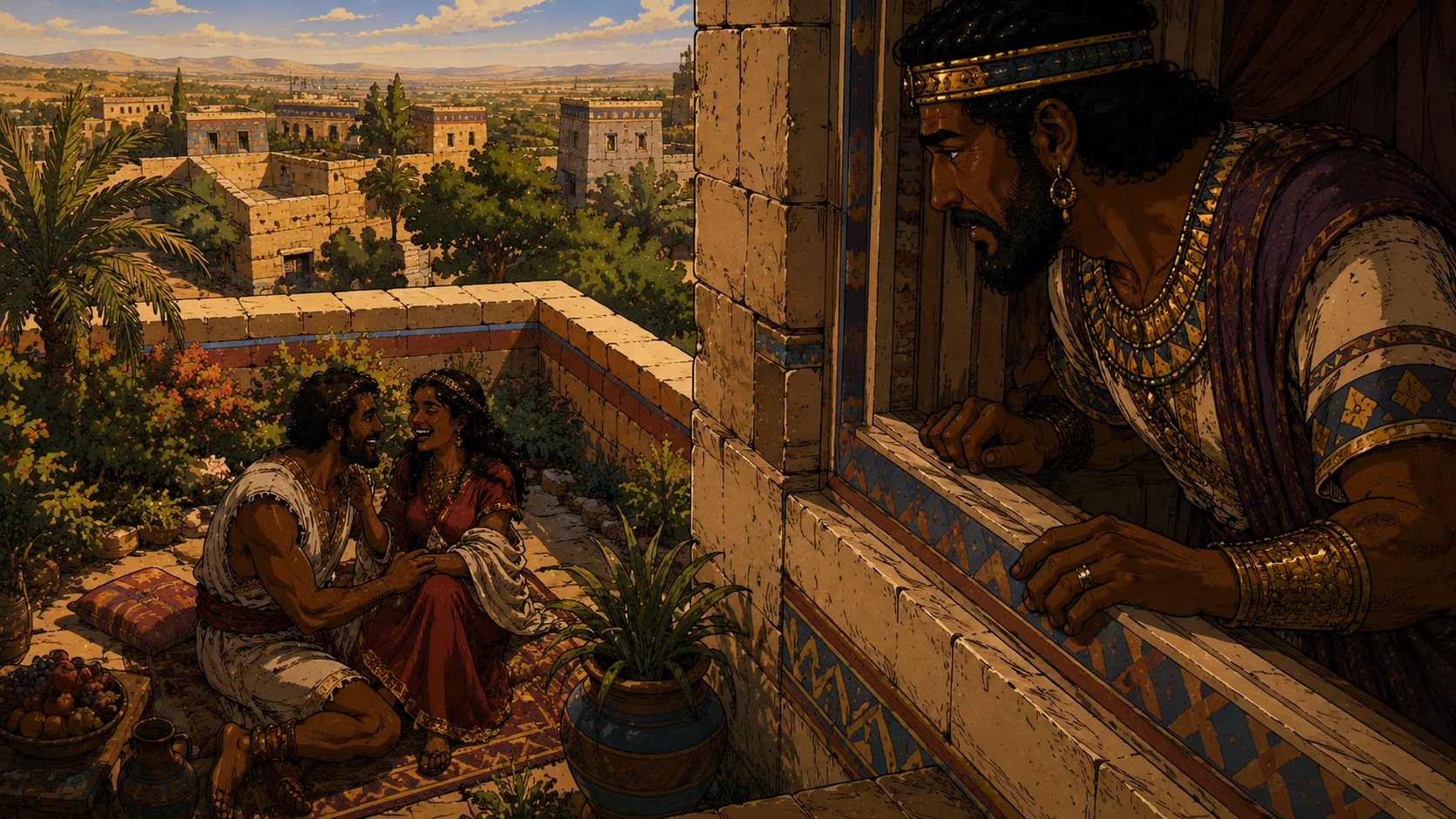
Isaac settles in Gerar among the Philistines and tells the men there about Rebekah: she is my sister. The text records this without editorial comment, just as it recorded Abraham’s identical lie about Sarah. The same city. The same king’s name, Abimelech. The same deception. Abimelech looks out a window and sees Isaac and Rebekah and understands immediately. He confronts Isaac. Isaac answers honestly: I was afraid.
The parallel to Abraham is exact and intentional. Abraham feared for his life because of Sarah’s beauty. Isaac fears for his life because of Rebekah’s. Abimelech gives the same protection both times — an edict that no one touch this man or his wife. The Torah is not praising the deception. It is showing how fear, passed from father to son, produces the same failures. Isaac inherits the promise. He also inherits the anxiety.
