Isaac sows in the land and receives a hundredfold harvest that year. The Lord blesses him and he grows great. The Philistines envy him and stop up all the wells Abraham had dug, filling them with earth. Abimelech asks Isaac to leave: you have become too powerful for us. Isaac moves to the valley of Gerar. He re-digs the wells of his father, calling them by the same names his father had given them.
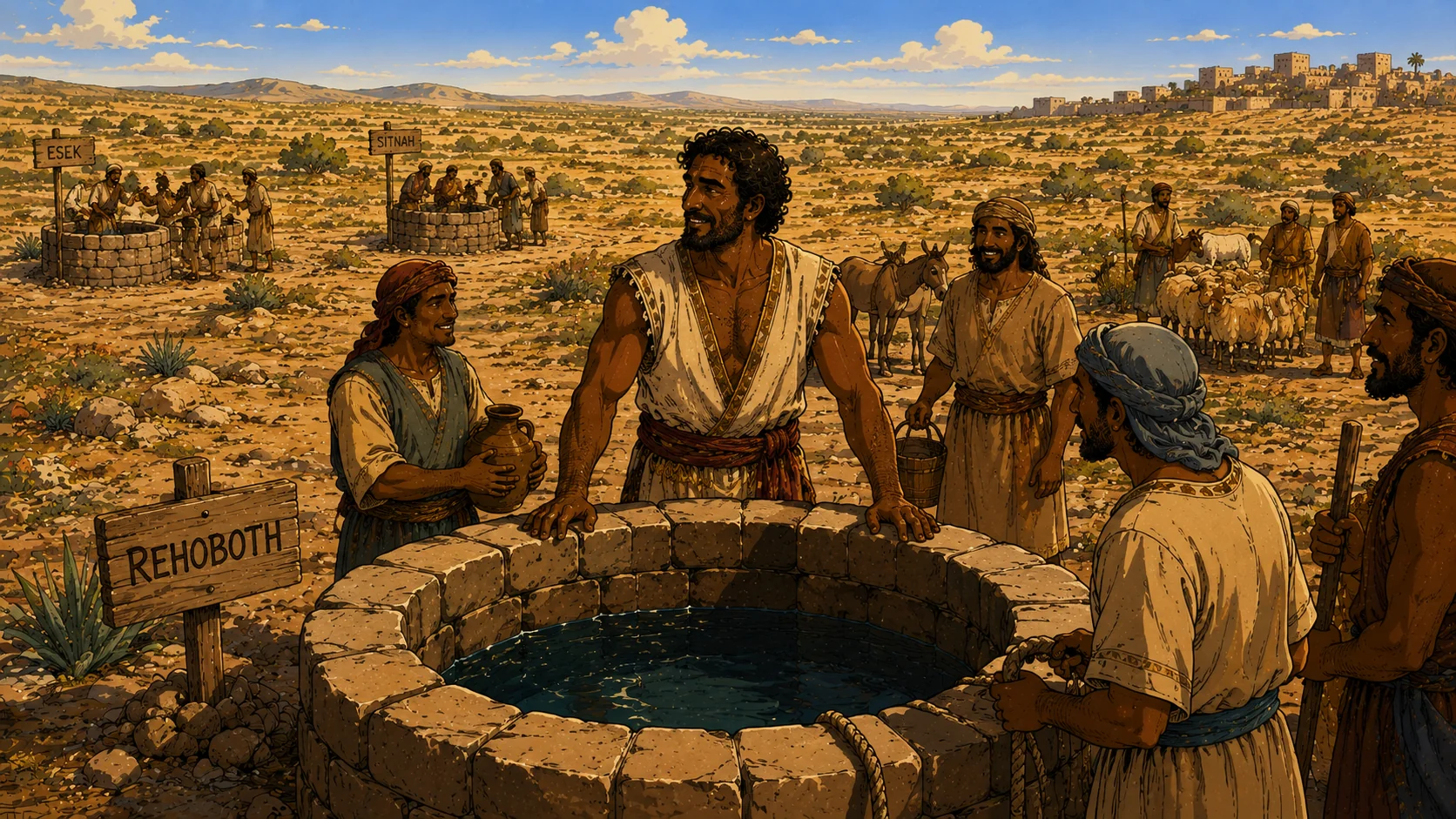
At each new well there is dispute. The first is called Esek — contention. The second is Sitnah — enmity. Isaac does not fight. He moves. The third well he digs goes undisputed. He names it Rehoboth: room. The LORD has made room for us. Three wells, three names, a progression from conflict through yielding to peace. The pattern is not passive. Isaac absorbs each loss and keeps moving. He is the most patient patriarch in the Torah.
God appears to Isaac that night at Beersheba: I am the God of your father Abraham. Do not be afraid — I am with you. The reassurance implies Isaac’s fear was real. He builds an altar and calls on the name of the LORD. Abimelech comes to make a covenant: we have plainly seen that the LORD is with you. The same king who expelled him now seeks a treaty. The blessing is visible even to those who opposed it.