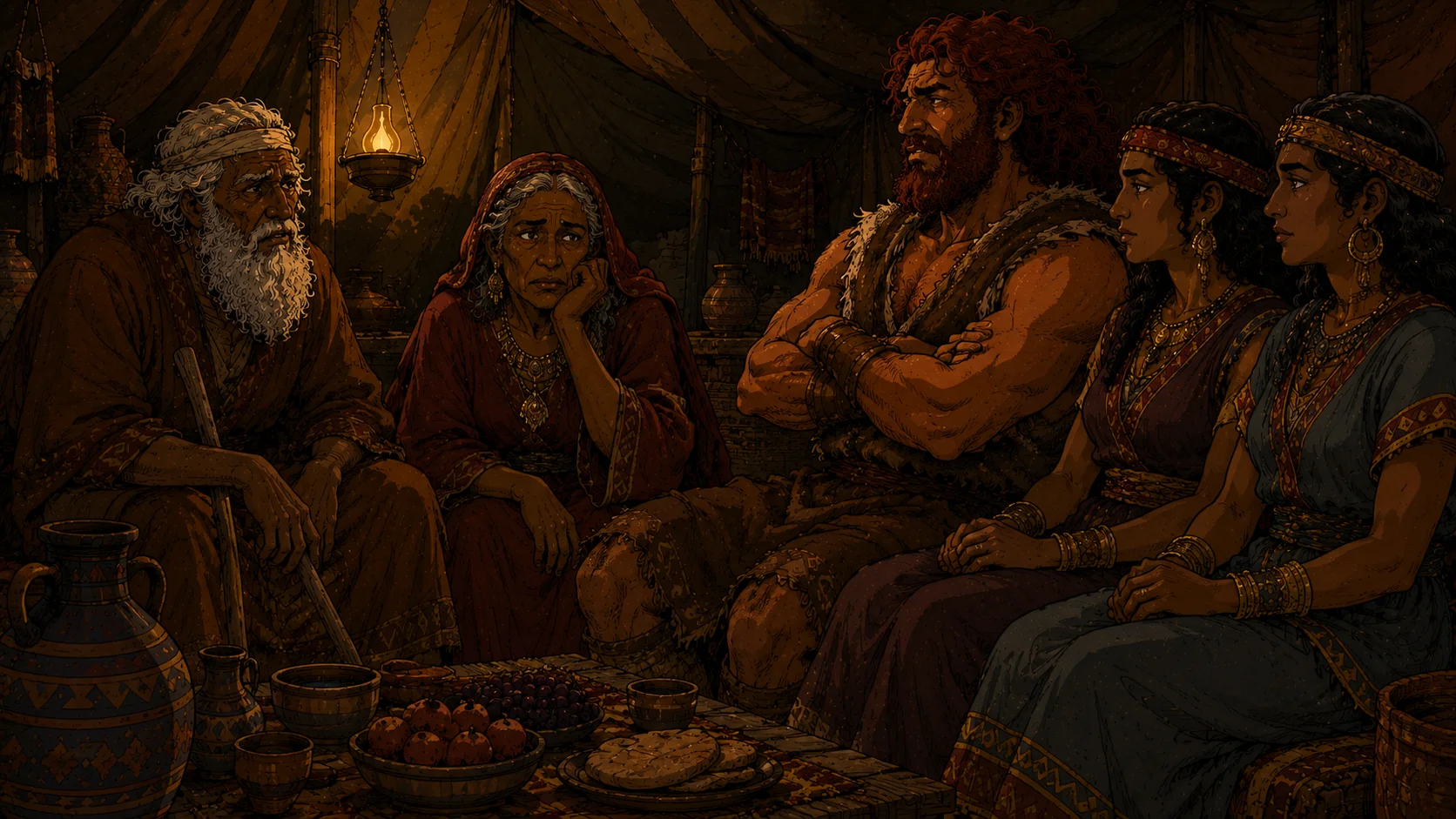
The two verses stand alone at the end of chapter 26, a quiet rupture before the great deception. Esau is forty years old — the same age Isaac was when he married Rebekah. He takes Judith and Basemath, both Hittite women, both outside the covenant line. Abraham made his servant swear not to take a wife for Isaac from the daughters of Canaan. Esau disregards this entirely.
The text does not condemn Esau explicitly. It records what happened: and they were a bitterness of spirit to Isaac and to Rebekah. The Hebrew mòrat ruach — bitterness of spirit — uses the root marah, the same word as the bitter waters at Marah in Exodus. It is not inconvenience. It is a grief that settles into the bones of a household. Isaac, who married once and loved his wife, now watches his son build a home the opposite of everything he received.
Rebekah will use this grief as justification when she sends Jacob away after the blessing. She tells Isaac: I am weary of my life because of the daughters of Heth. But the distress began here, before the blessing, before the deception. The Hittite wives are not the cause of what follows. They are the ground the deception grows in — a home already bitter, a mother already grieving, a father already feeling his son's choices as loss.