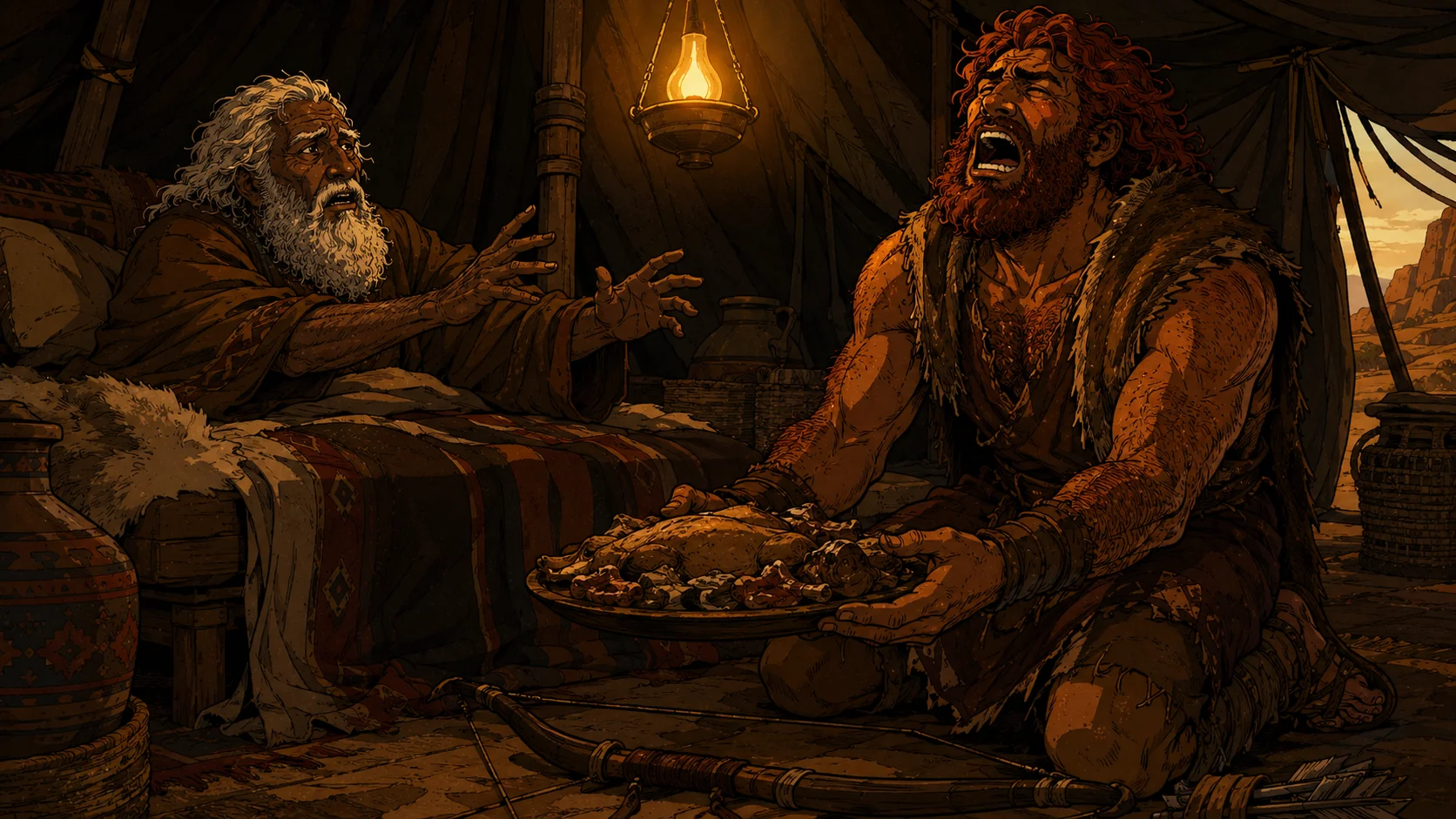
Esau returns from the hunt, the meal prepared, and stands before his father. Isaac trembles with a very great trembling: who then? Who just came and received the blessing? The trembling is not regret — it is recognition. Isaac understands that what just happened was not a mistake he can undo. He has blessed Jacob and Jacob shall be blessed. The words of blessing, once spoken, carry their own weight forward.
When Esau hears this, he cries a great and exceedingly bitter cry. The Hebrew tzakah g'dolah u-marah is heavy with sound and meaning: a cry that is large and bitter. The Torah uses the same root — tzaak — for the cry of the enslaved Israelites in Egypt (Exodus 2:23), for Hagar’s cry in the wilderness, for the widows and orphans who cry to God. This is not complaint. This is a sound that rises from the gut when the irreversible becomes clear.
Esau begs: do you have only one blessing? Bless me too, father. Isaac’s second blessing is what the first was not: no fat of the earth, no dew of heaven. You will live by the sword. You will serve your brother. But: when you grow restless, you will break his yoke from your neck. The blessing is hard and honest. It gives Esau a future that is real, not borrowed. He will never be Jacob. But he is not nothing.