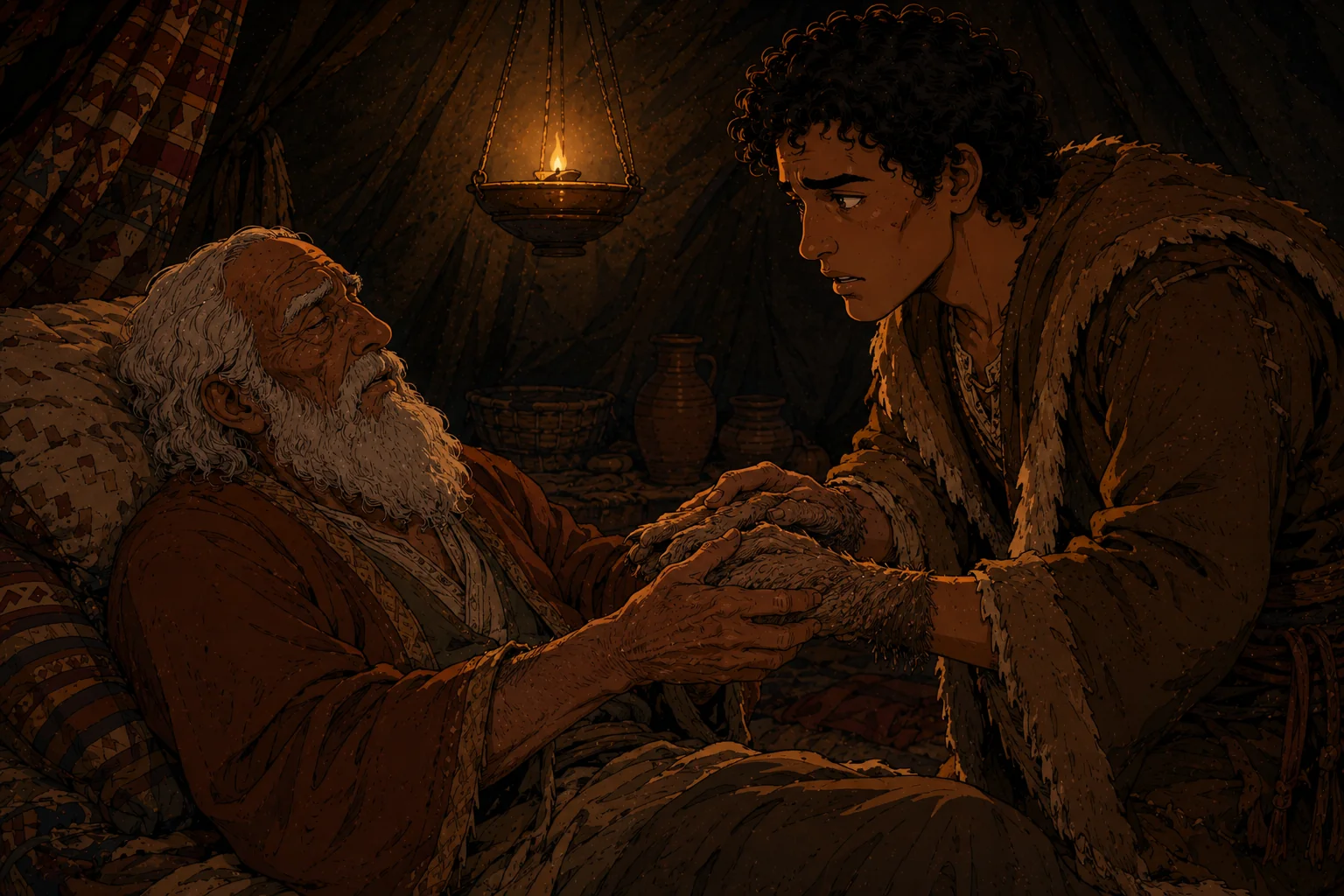
Isaac is blind. He sends for Esau and instead receives Jacob, wearing Esau’s garments, with goatskins on his hands and neck to simulate Esau’s hair. Jacob claims to be Esau four times. Isaac questions him four times. The tension of the scene is unbearable because the reader knows everything Isaac does not.
Isaac’s famous line — הַקֹּל קוֹל יַעֲקֹב וְהַיָּדְיָם יְדֵי עֵשָׂו — is one of the most quoted lines in Genesis. He knows something is wrong. The voice is Jacob’s. But the hands say Esau. He chooses the hands over the voice. The rabbis saw this as an enduring lesson: the hands of Esau disguise the voice of Jacob; physical performance can override what the ear knows to be true.
The blessing Isaac gives is irrevocable. When Esau arrives and the truth is revealed, Isaac trembles exceedingly (וַיִּחְרַד יִצְחָק חֲרָדָה גְדֹלָה עַד־מְאֹד). But he says: the blessed one will be blessed. Isaac does not reverse the blessing. What is spoken over Jacob’s head, however obtained, stands. The irrevocability of blessing is part of the Torah’s theology of speech.