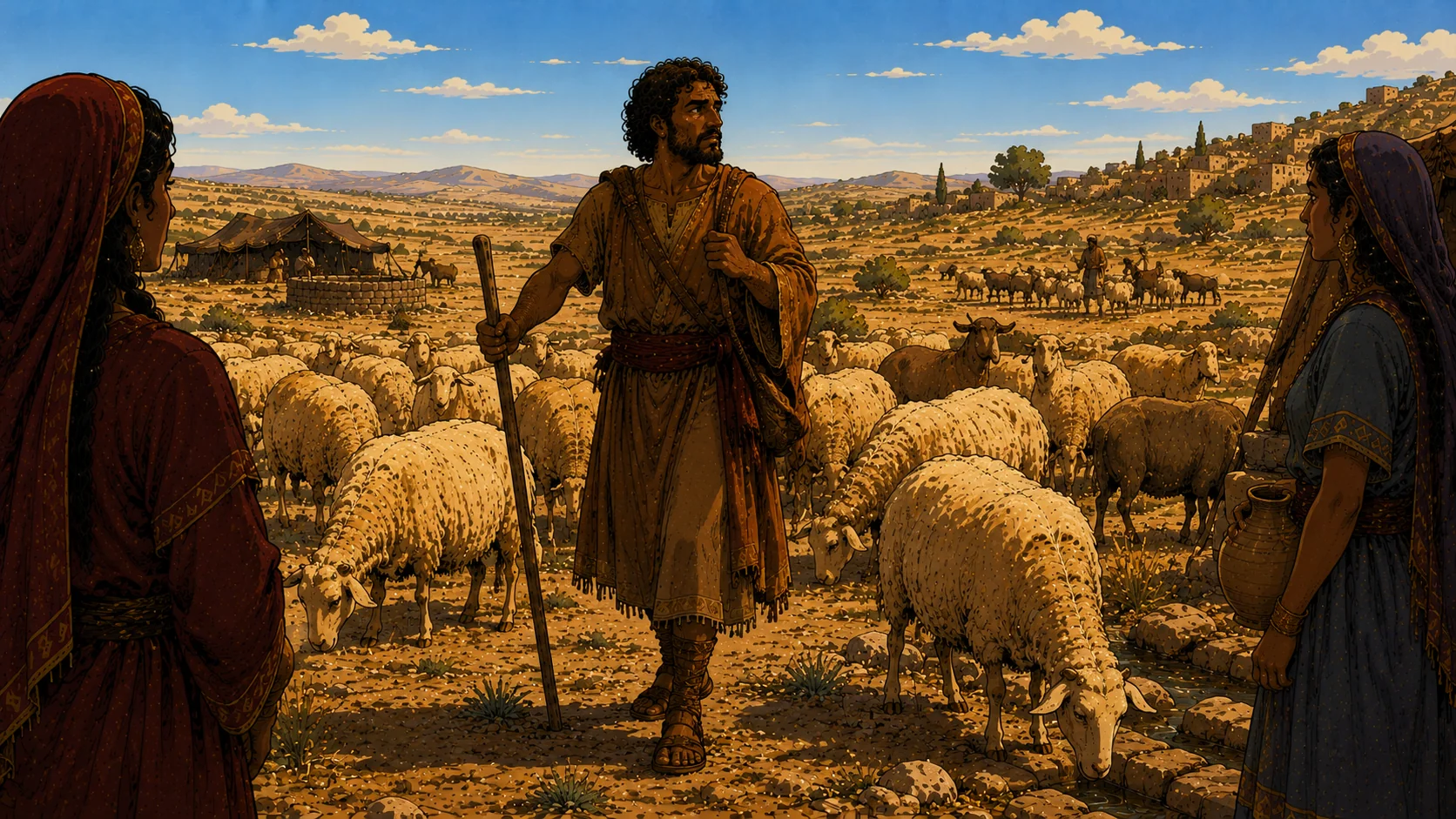
Laban proposes a deal: finish the week of Leah's bridal feast, and he will give Rachel too, in exchange for seven more years of work. Jacob agrees without hesitation. He does not negotiate. He does not protest. He accepts fourteen years of labor for two women as if this is a reasonable price, because for him it is. He takes Rachel at the end of Leah's wedding week and loves her.
The text is precise and unsentimental: he loved also Rachel more than Leah. The comparative — more — does not mean he hated Leah. But the Torah is showing us the architecture of a household that will produce twelve sons and one nation. The love is uneven from the beginning. The next verse will say that God saw Leah was hated — not despised, but unloved in comparison — and opened her womb. The correction begins immediately.
Jacob works seven more years. He now has two wives, two concubines he has not yet met, and no children. He entered Haran with nothing but a staff. He will leave with eleven sons, one daughter, and vast flocks. Everything he has in Haran he will owe to twenty years of Laban's household. The man who came fleeing becomes the man who departs wealthy. But the cost will arrive later, in his sons, in a pit, in a coat of many colors.