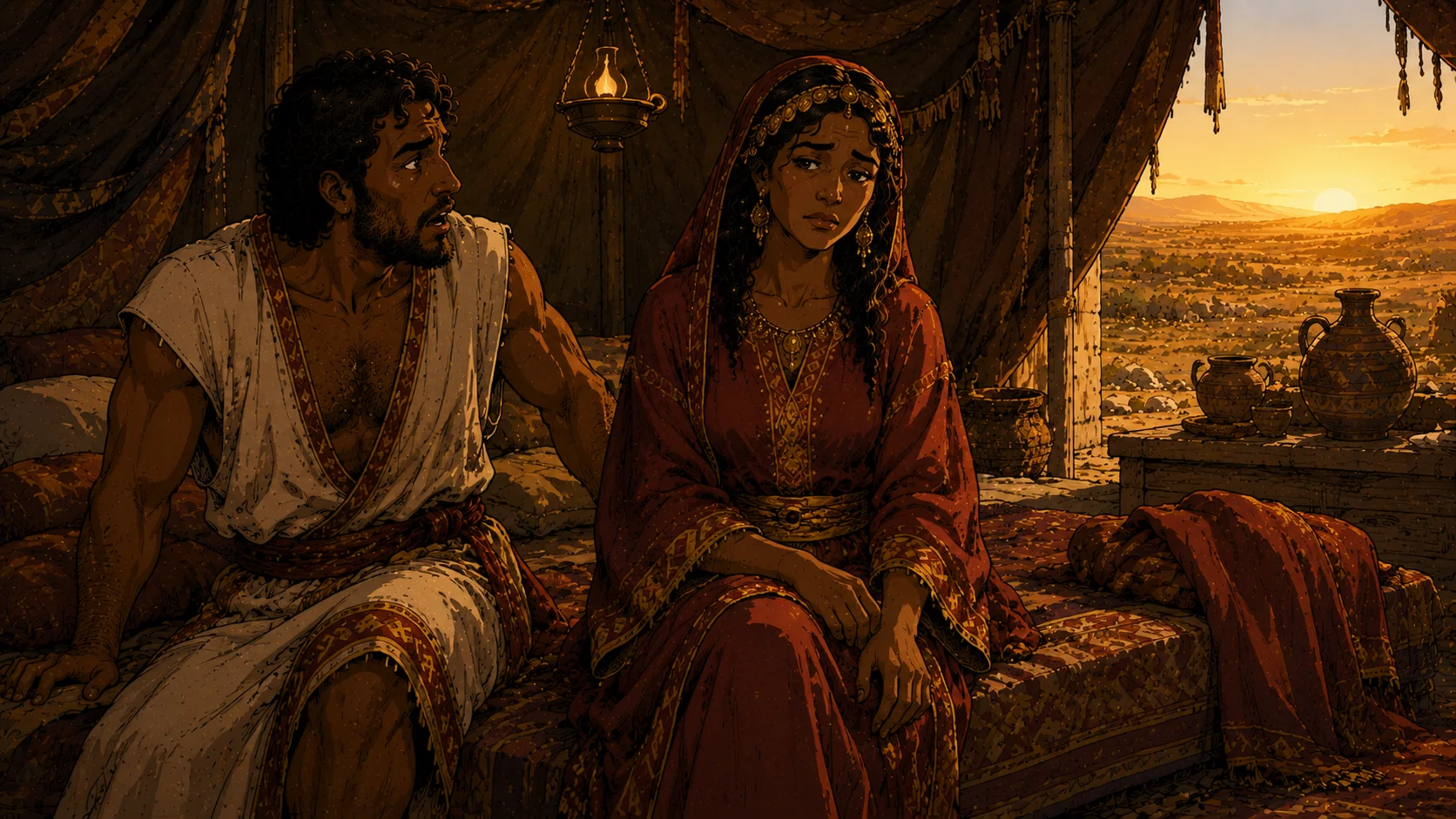
Jacob serves seven years for Rachel. The Torah says the years were like a few days in his eyes because of his love for her. On the evening of the seventh year, he tells Laban: give me my wife. Laban makes a feast, gathers the people, and that night brings Leah to Jacob instead. In the darkness, under the veil, Jacob does not recognize her. He has worked seven years for a woman he cannot see in the dark.
In the morning, he lifts his eyes and sees: it is Leah. The Hebrew v'hineh — behold — is the word the Torah uses when something surprising is suddenly visible. Jacob confronts Laban. Laban's answer is perfectly constructed: it is not done in our place to give the younger before the firstborn. The Hebrew word for firstborn is b'khira — the same root as b'khor, firstborn. Jacob stole his older brother's blessing with a lie. Laban has given him his older daughter with a lie. The mechanism is identical.
Jacob does not reflect on this connection. The text does not force him to. He simply accepts Laban's terms — finish the week of Leah's wedding, then work seven more years for Rachel. He takes Rachel at the end of the week. He loves Rachel more than Leah. The Torah says this plainly: more. Not only. More. The word that begins the tragedy of the twelve tribes is a comparative: more.
