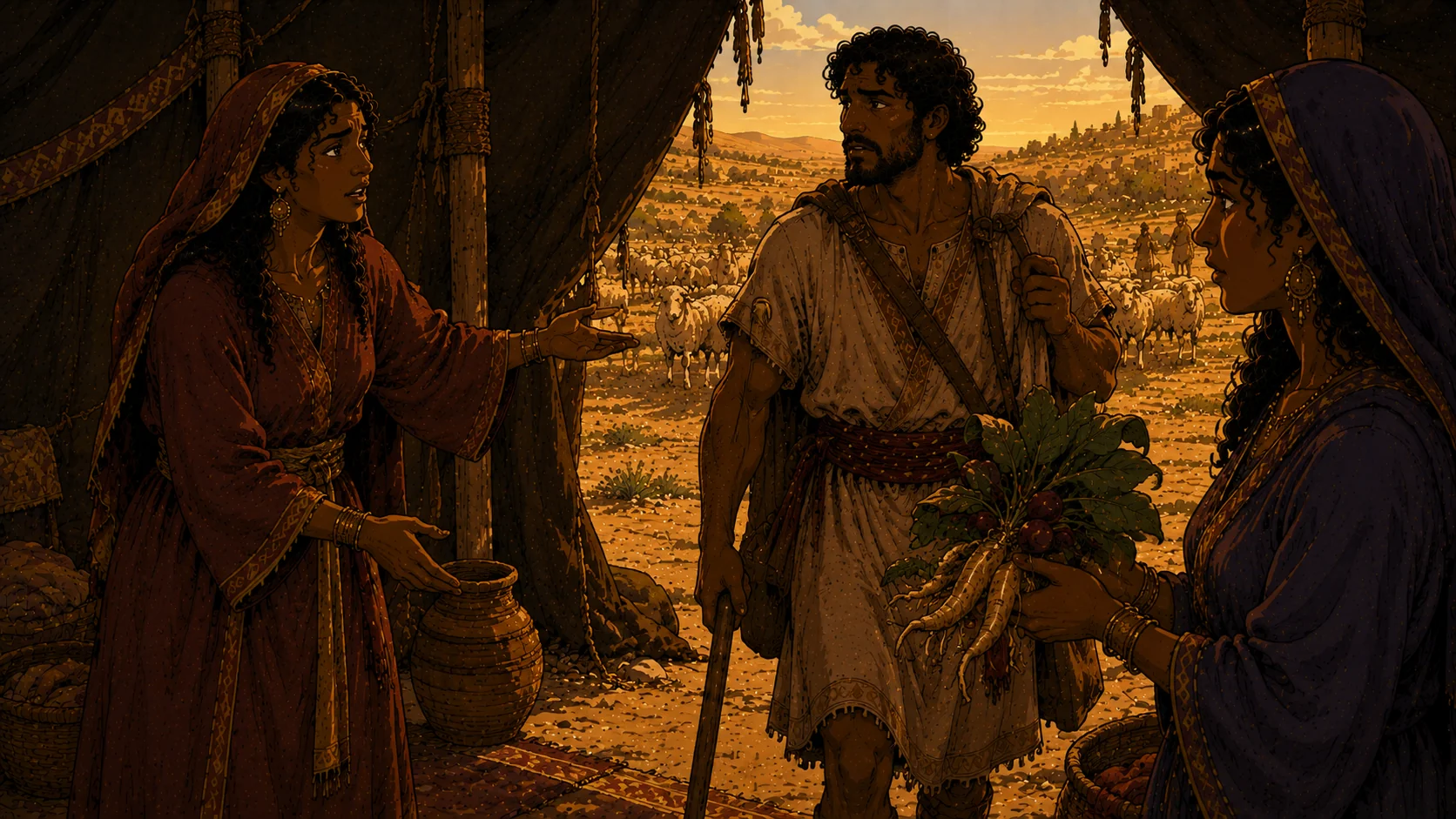
Reuben, Leah's firstborn, finds mandrakes — duda'im in Hebrew, plants associated in ancient Near Eastern tradition with love, fertility, and desire. He brings them to his mother. Rachel asks Leah for them. She has been barren this whole time and wants whatever might help. Leah's response comes immediately and with force: is it a small thing that you have taken my husband? And now you want to take my son's mandrakes too?
Rachel proposes a trade: Leah will give Rachel the mandrakes; Rachel will give Leah her night with Jacob. The transaction is stark. The two sisters are negotiating over the man they share. Rachel values the mandrakes over a night with her husband. Leah values a night with her husband over the mandrakes. Neither exchange gives either woman what she actually wants: to be loved fully and exclusively. They trade the surface and keep the grief.
That evening, when Jacob comes from the field, Leah meets him and says: you must come in to me, for I have hired you with my son's mandrakes. Jacob goes in to her. God hears Leah, and she conceives and bears a fifth son. She names him Issachar — my hire — because she hired her husband. The name is matter-of-fact and a little bruising. A child named for a transaction. The Torah does not editorialize. It only names the boy and records what his name means.
