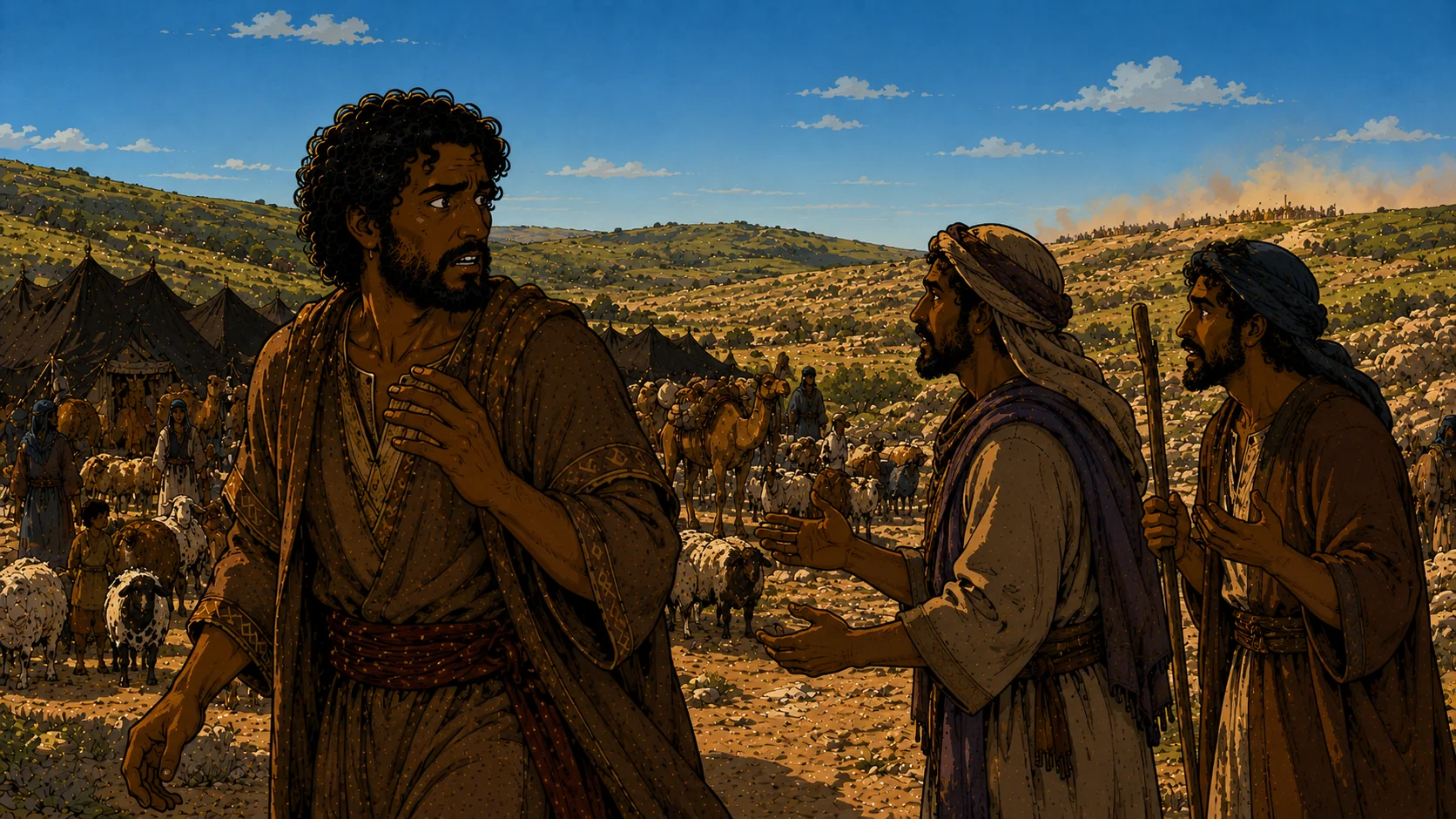
Jacob sends messengers ahead to his brother Esau in the land of Seir, in the country of Edom. The message is carefully deferential: your servant Jacob says — I have been with Laban and sojourned until now. I have oxen, donkeys, flocks, male and female servants. I am sending to tell my lord, hoping to find favor in your sight. He addresses Esau as lord. He calls himself servant. Twenty years ago he stood before his blind father pretending to be Esau. Now he sends ahead as the lesser.
The messengers return with a single piece of information: Esau is coming to meet you, and he has four hundred men with him. The Torah does not tell us what Esau intends with four hundred men. Jacob does not know either. He assumes the worst. He is greatly afraid and distressed — the Hebrew uses two separate words for his inner state, suggesting both emotional and strategic terror. He divides his camp into two groups: if Esau strikes one, the other can escape.
The division of the camp is the act of a man who has planned for every contingency his whole life and now finds that none of his plans are adequate. He cannot buy this. He cannot deceive it. He has sent ahead a message of humility; the response is a brother marching with an army. For the first time in the Jacob narrative, cleverness reaches its limit. What happens next is a prayer and a wrestling match — neither of which Jacob arranged.
