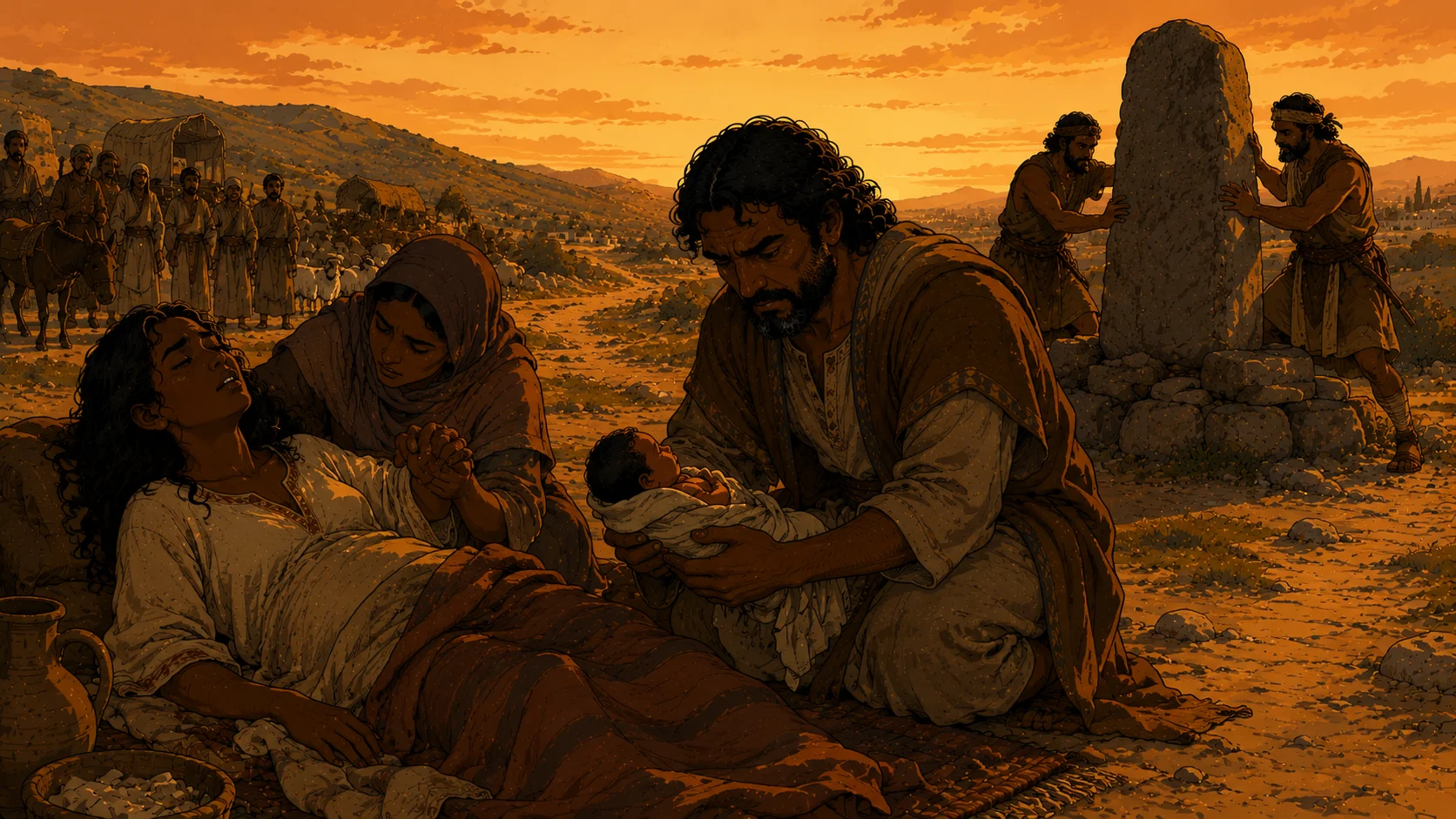
The Torah records Rachel's death with the same economy it uses for everything else: they journeyed from Bethel, there was still some distance to Ephrath, and Rachel went into hard labor. The Hebrew word kashah (קָשָׁה) — hard, severe — is the same root used for Pharaoh's hard heart. Her labor is a suffering the text does not dwell on, but names precisely.
The midwife speaks first: do not fear. This is also a son. She had prayed for a second son. Joseph had come from prayer. This one comes from dying. As her soul goes out — betzet nafsho — she names him. Ben-Oni. Son of my sorrow, or son of my strength — the word avon has both meanings in Hebrew. It is the last act of a woman who has only ever wanted to be seen and to bear children. She names the child her grief.
Then Jacob — the father, the one who lives — calls the child by a different name. Binyamin. Son of the right hand. Son of the south, the place of honor and power. He will not let the child carry his mother's dying breath as his name for his whole life. It is a quiet act of mercy. Jacob sets up a pillar over her grave — the same word matzevah he used at Bethel for the covenant stone. For Rachel it marks a burial place. And the Torah adds: that is the pillar of Rachel's grave to this day.
