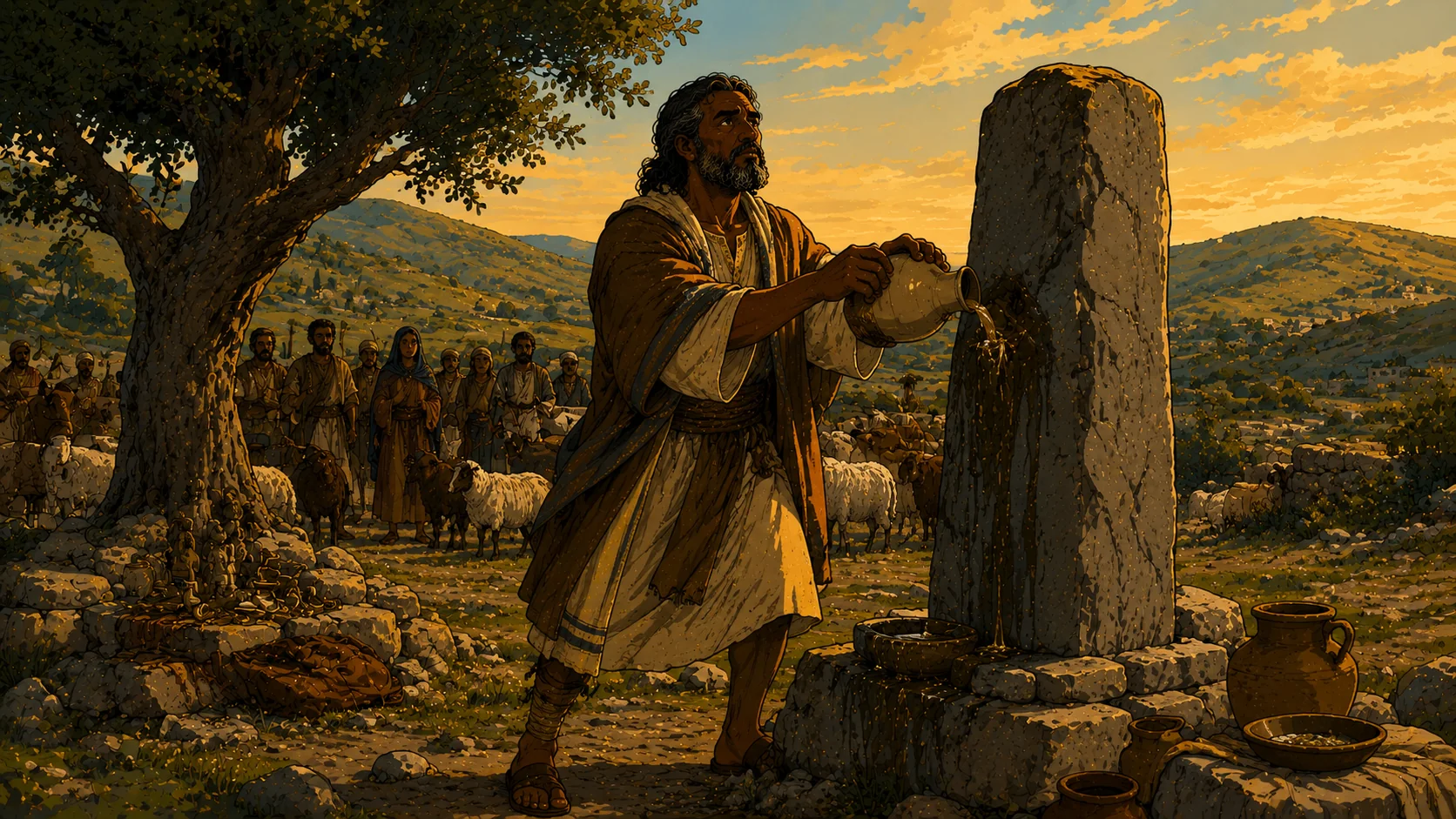
God's first word after the Shechem incident is a command to move. Rise up. Go to Bethel. Build an altar. The timing is direct — what happened at Shechem has made the household radioactive among the Canaanites, and the only way forward is the place where Jacob first met God. The command to go up (aleh) to Bethel echoes Jacob's own vow from Genesis 28: if God brings me back, I will return to this place.
Jacob responds by calling his household to purge. Put away the foreign gods among you. Purify yourselves. Change your garments. We are going to Bethel. The text does not explain where these foreign gods came from — perhaps from the plunder of Shechem, perhaps they had been carried through Laban's house all along. What matters is that Jacob does not tolerate divided loyalty at the threshold of a covenant renewal. They hand everything over — the idols and the earrings — and Jacob buries them under the oak near Shechem. They are not destroyed. They are buried. The text notes the place without explanation.
Then something remarkable: as they journey, a terror from God falls on all the cities around them. No one pursues them. The household that should have been destroyed for the massacre at Shechem travels in divine protection. They arrive at Luz — which is Bethel — and Jacob builds the altar. He calls the place El Bethel: God of the House of God. God appears again, confirms the name Israel, renews the Abrahamic promise of land and nations and kings. Then God goes up from him. And Jacob sets up a stone pillar and pours oil on it, as he did the first time, and names the place Bethel again.