Jacob finally comes home. Genesis 28 opened with him fleeing — his mother sending him away before Esau killed him. Genesis 35 closes the arc: Jacob comes to his father Isaac at Mamre, the place of Abraham. He arrives with twelve sons, four wives, and the name Israel. He arrives at the end of his father's life. The text does not record what they said to each other.
Isaac dies at 180 years — the same number of years Abraham exceeded his son's lifespan. The phrase the Torah uses is zaken usvah yamim: old and full of days. Full. Not depleted. Not cut short. The word sava (שָׂבַע) means satiated, satisfied, complete. Abraham died full of days. Isaac dies with the same phrase. The Torah marks these deaths not with grief but with completion.
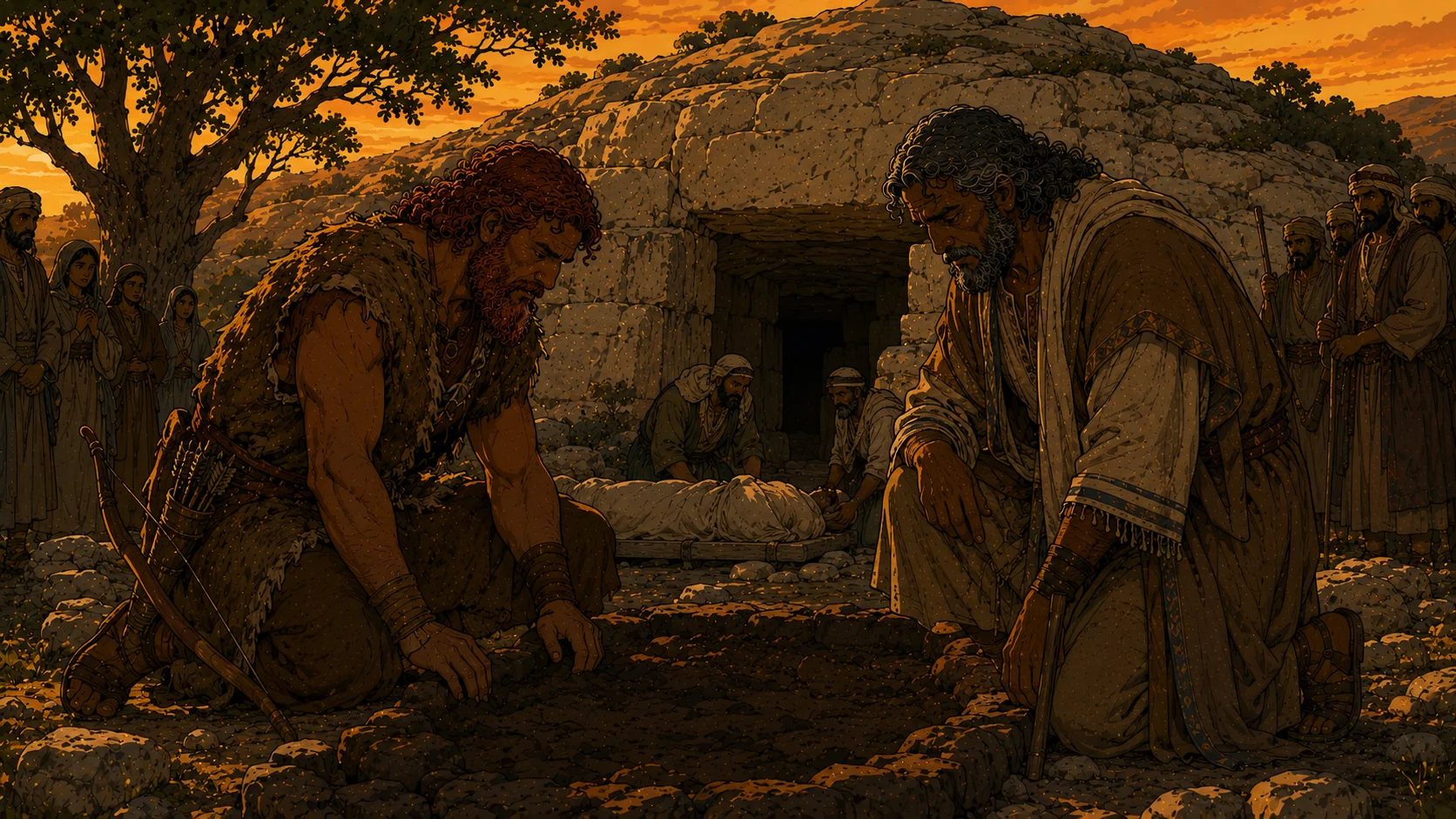
Esau and Jacob bury him together. The two brothers who have not shared a scene since Genesis 33 — when Jacob saw the face of God in Esau's face — are reunited at Machpelah. The same cave where Abraham buried Sarah. Where Abraham himself was laid. Where Isaac will lie beside his wife Rebekah. The Torah records Esau's name first here, as the firstborn. Then Jacob. They do what sons do. They bury their father. Genesis does not tell us whether they spoke. It tells us they came.