Bereshit · בְרֵאשִית · Genesis

Joseph and His Brothers — The Coat

וְיוֹסֵף הֵבִיא אֶת-דִּבָּתָם רָעָה
Genesis 37:2–4
Genesis 37:3
וְיִשְׂרָאֵל אָהַב אֶת-יוֹסֵף מִכָּל-בָּנָיו כִּי-בֶן-זְקֻנִים הוּא לוֹ וְעָשָׂה לוֹ כְּתֹנֶת פַּסִּים
V'Yisrael ahav et-Yosef mikol-banav ki-ven-zkunim hu lo v'asah lo k'tonet passim.
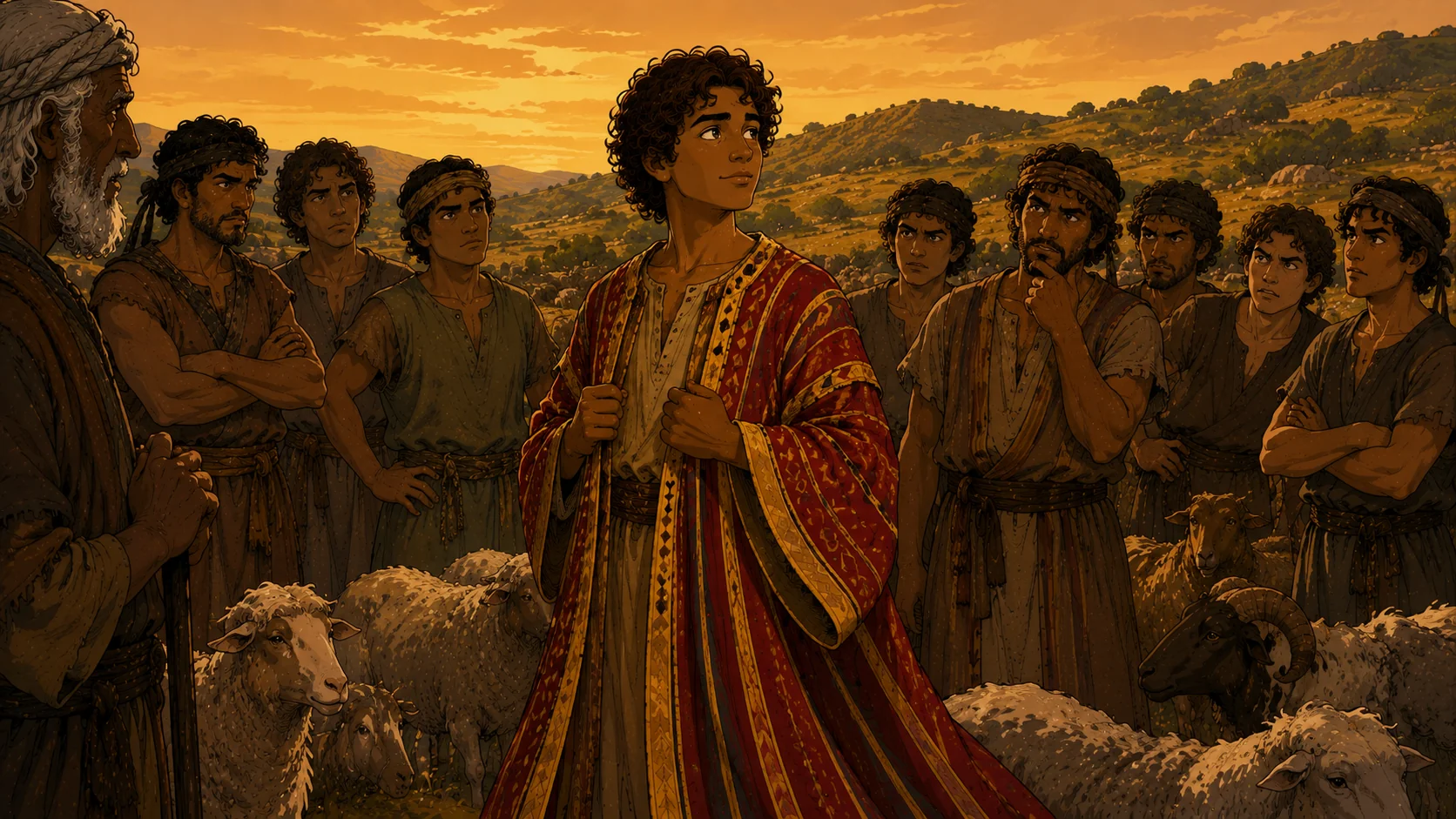
“Now Israel loved Joseph more than all his sons, because he was the son of his old age. And he made him a coat of many colors.”
Joseph and His Brothers — The Coat

The Coat That Started Everything

Joseph is 17. He tends flocks with his brothers and brings a bad report about them to their father (Gen 37:2). Israel — Jacob by his covenant name — loves Joseph above all his sons, the son of his old age, the first son of Rachel whom he loved. He makes him a ketonet passim. The word passim is rare — it appears only here and in 2 Samuel 13:18 for the robe of Tamar, the king's virgin daughter. Some translate it "many colors," some "long sleeves," some "an ornamented tunic." Whatever the design, its meaning was unmistakable: Joseph was set apart.

The brothers saw it. They hated him and could not speak peaceably to him. The Torah does not say the father was unaware. It says he loved one son most, and showed it.

Key Hebrew
כְּתֹנֶת פַּסִּים
Ketonet passim — A tunic of distinction. The exact meaning of passim is debated: "colors," "long sleeves," "pieces," or "palms." The same term is used in 2 Samuel 13:18 for the garment of Tamar, Amnon's sister — only worn by the king's virgin daughters. Whether Joseph's coat was identical or merely in the same category, the garment signaled status: favored child, set apart by the father. It is the first thing the brothers see. It is the first thing they strip from him.
← PreviousIsaac Dies, Esau and Jacob Bury Him