Bereshit · בְרֵאשִית · Genesis

Jacob Receives the Bloody Coat

טָרֹף טֹרַף יוֹסֵף
Genesis 37:29–35
Genesis 37:33
וַיַּכִּירָהּ וַיֹּאמֶר כְּתֹנֶת בְּנִי חַיָּה רָעָה אֲכָלָתְהוּ
Vayakirah vayomer k'tonet beni chayah ra'ah achalathu.
“And he recognized it and said, ‘It is my son’s coat. A fierce animal has devoured him.’”
Jacob Receives the Bloody Coat

The Coat Returns

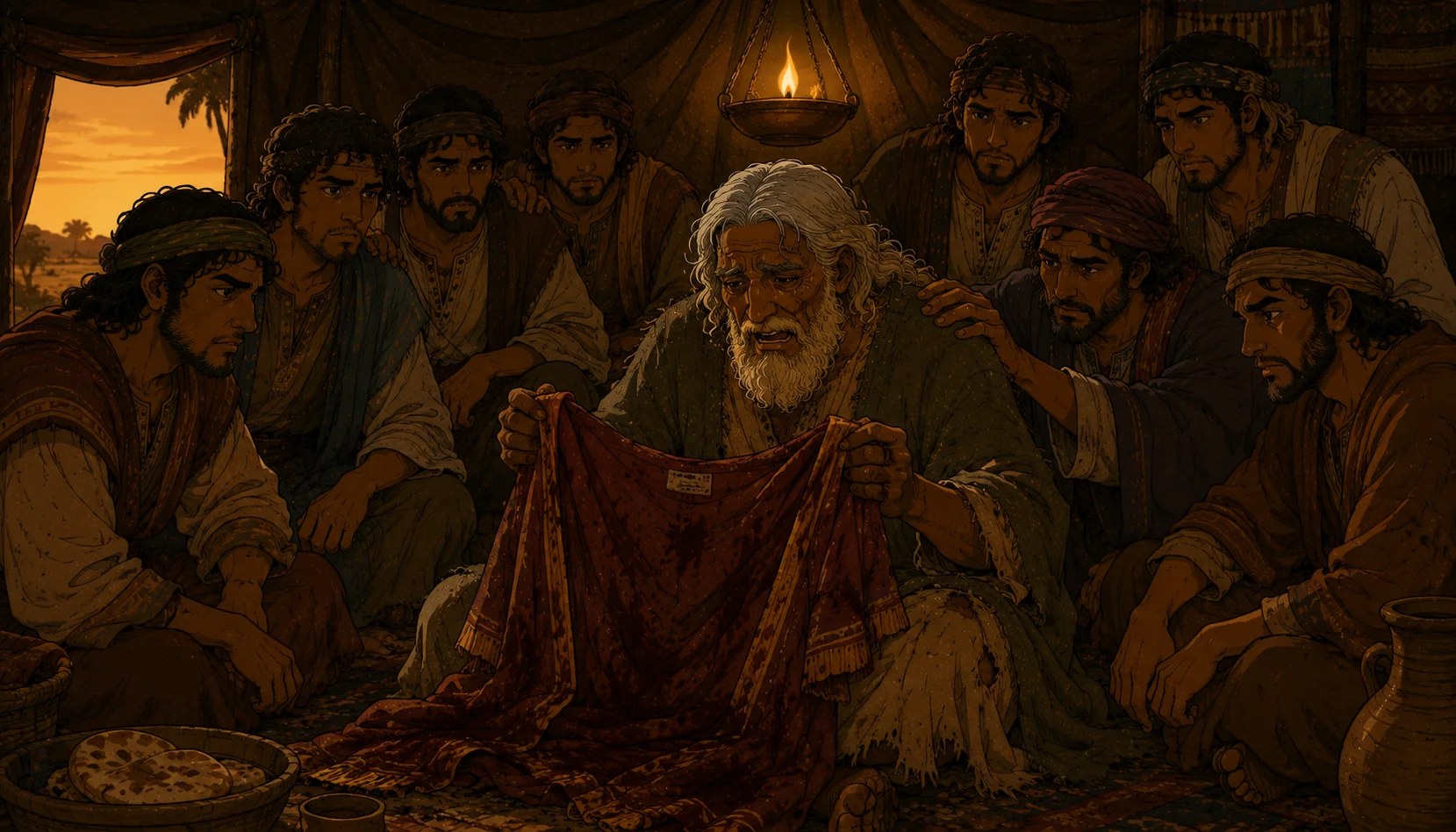
Reuben returns to the pit. Joseph is gone. He tears his clothes (Gen 37:29) — the firstborn's grief, the one who meant to save him. The brothers take Joseph's ketonet passim, slaughter a goat, and dip the coat in the blood. They bring it to their father and ask: "Is this your son's coat or not?"

Jacob looks. He recognizes it. He himself used the same deception of an animal skin on Esau to deceive Isaac; now animal blood deceives him. He mourns intensely — tearing his garments, wearing sackcloth, refusing to be comforted. His children try to comfort him. He refuses. "I will go down to my son into Sheol mourning" (Gen 37:35). He believes Joseph is dead and he will mourn until he joins him in death.
Key Hebrew
וַיַּכִּירָהּ
Vayakirah — And he recognized it. The root nakar (נָכַר) means to recognize, to identify. The same root appears in Genesis 27:23 when Isaac could not recognize (lo hikiru) Jacob because of Esau's hairy hands. Jacob deceived his father using a kid's skin; now his sons use a goat's blood to deceive Jacob. The Torah is precise: measure for measure, the deceiver is deceived by the same mechanism he used on his own father. Jacob recognizes the coat but not the deception.
← PreviousJoseph Sold to the Ishmaelites