Bereshit · בְרֵאשִית · Genesis

Judah and Tamar

וַיַּכֵּר יְהוּדָה וַיֹּאמֶר צָדְקָה מִמֶּנִּי
Genesis 38
Genesis 38:26
וַיַּכֵּר יְהוּדָה וַיֹּאמֶר צָדְקָה מִמֶּנִּי כִּי-עַל-כֵּן לֹא-נְתַתִּיהָ לְשֵׁלָה בְנִי
Vayaker Yehudah vayomar tzadkah mimeni ki al-ken lo-netattiha l'Shelah v'ni.
“Judah recognized them and said, ‘She is more righteous than I, because I did not give her to Shelah my son.’”
Judah and Tamar

The Interruption That Changes Everything

Genesis 38 is the chapter that interrupts Joseph's story. Joseph has just been sold to Egypt. The next chapter should follow him. Instead the Torah pivots to Judah — the brother who proposed the sale, who then leaves his brothers, marries a Canaanite woman, and has three sons: Er, Onan, Shelah. Er marries Tamar and dies — the LORD found him wicked. Onan refuses to fulfill levirate duty and dies. Judah fears for Shelah and sends Tamar back to her father as a widow.

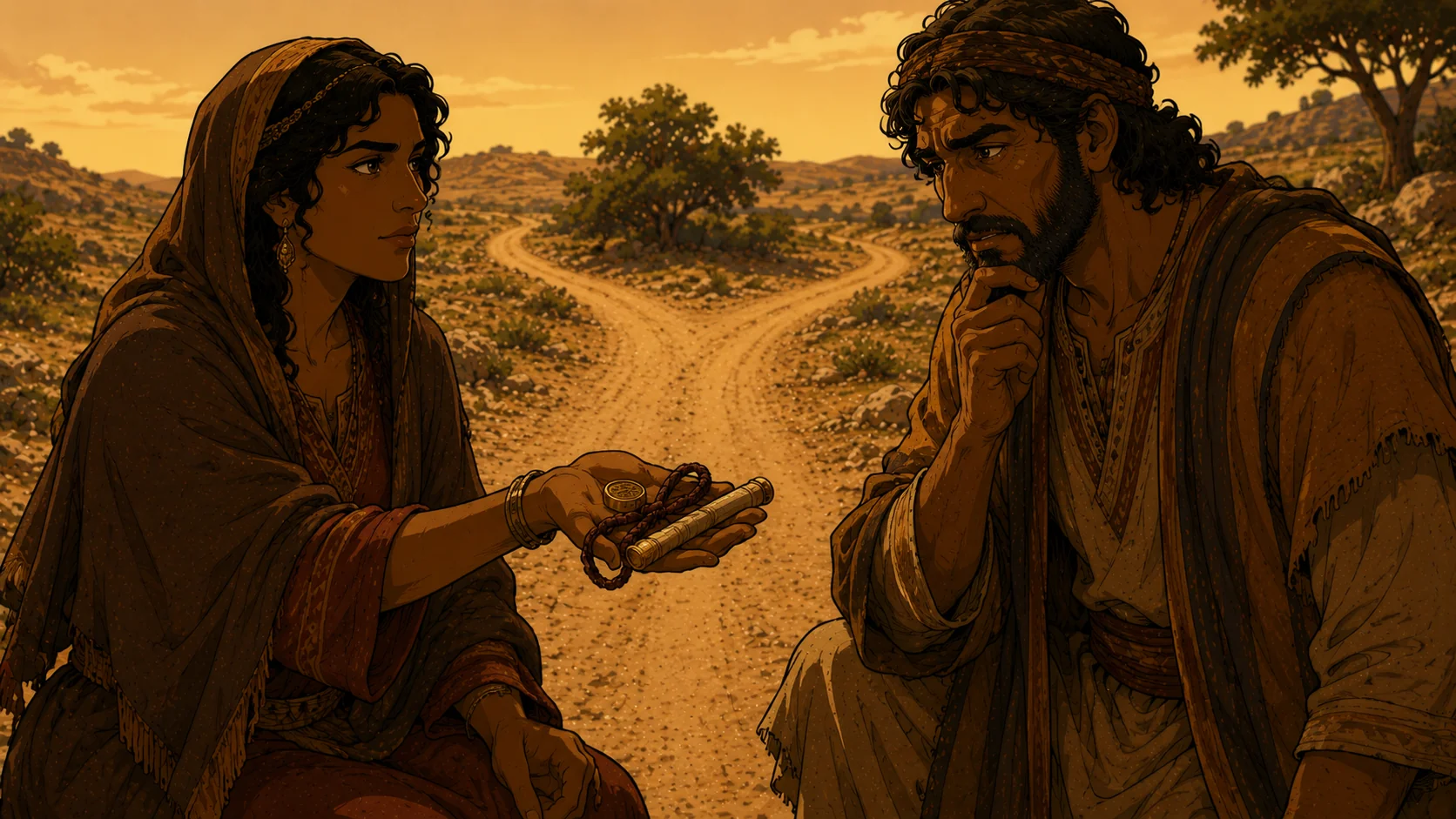
When Judah himself goes to Timnah for sheepshearing, Tamar veils herself and sits at the road. He sleeps with her, pledging his seal, cord, and staff. She conceives. When Judah hears she is pregnant he orders her burned. She produces his seal, cord, and staff: "By the man who owns these I am pregnant." Judah recognizes them.

He says: "She is more righteous than I." This is one of the most dramatic lines in Genesis — a man confronting his own hypocrisy and naming it.

Key Hebrew
צָדְקָה מִמֶּנִּי
Tzadkah mimeni — She is more righteous than I. The word tzadkah comes from tzedek (justice, righteousness). Judah does not say Tamar is innocent — he says she is more righteous than him. The comparative is crucial. He acknowledges she acted within her rights under levirate custom, which he had denied her. This single sentence is Judah's first step toward the moral transformation that will climax in Genesis 44 when he offers himself as a slave for Benjamin. The man who sold his brother now begins to own what he has done.
← PreviousJacob Receives the Bloody Coat