Bereshit · בְרֵאשִית · Genesis

Joseph Interprets the Two Dreams

זְכַרְתַּנִי אִתְּךָ כִּי-אִם-זְכַרְתַּנִי
Genesis 40:9–23
Genesis 40:14
כִּי אִם-זְכַרְתַּנִי אִתְּךָ כַּאֲשֶׁר יִיטַב לָךְ וְעָשִׂיתָ-נָּא עִמָּדִי חָסֶד
Ki im-zechartani itcha ka'asher yitav lach v'asita-na imadi chesed.
“But remember me when it is well with you, and please do me the kindness to mention me to Pharaoh.”
Joseph Interprets the Two Dreams

Remember Me

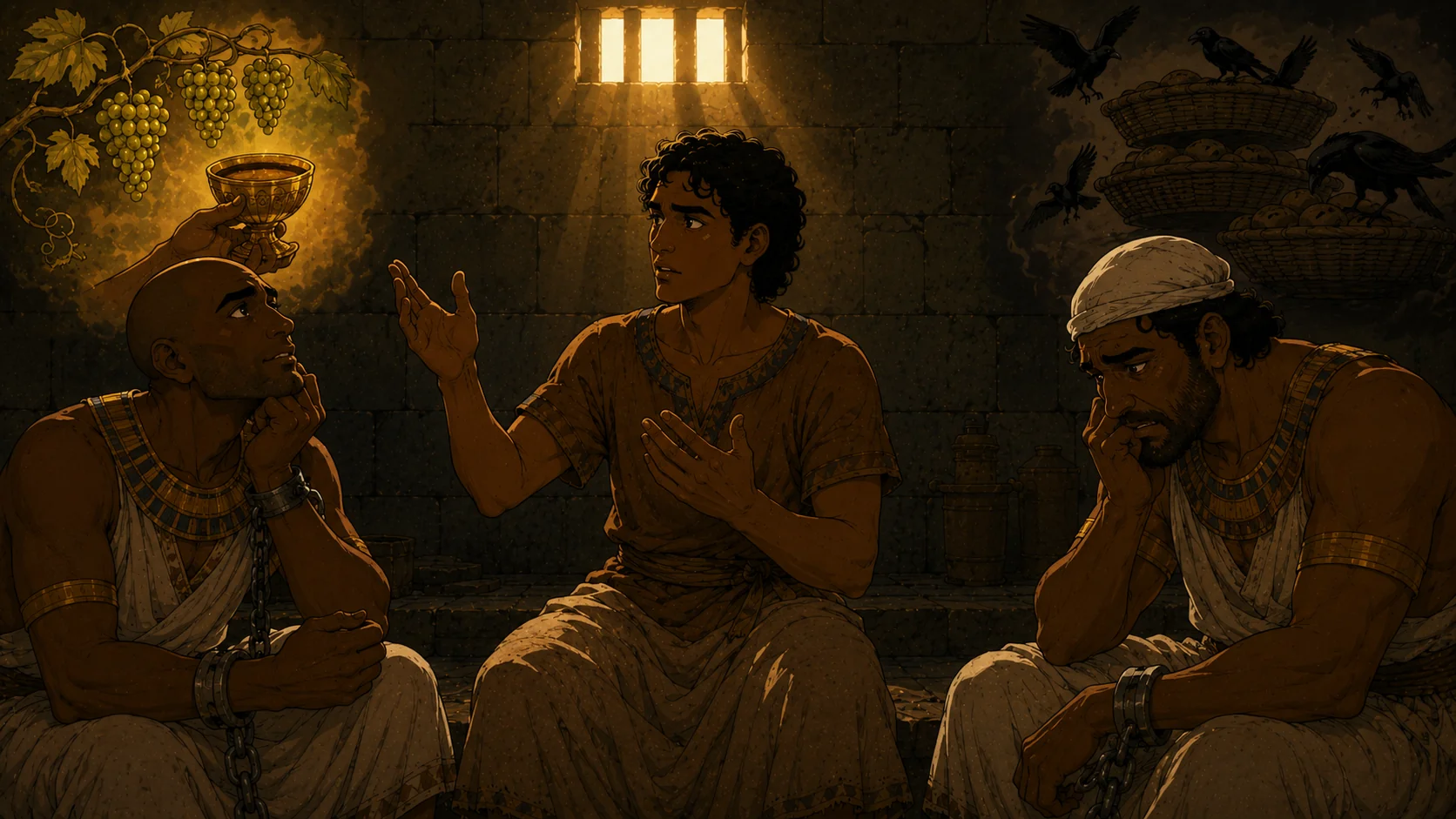
The cupbearer tells his dream: a vine with three branches budded, blossomed, and produced ripe grapes. He pressed them into Pharaoh's cup. Joseph interprets: three branches are three days. In three days Pharaoh will lift up your head and restore you to your position. Then Joseph asks: remember me when it goes well, mention me to Pharaoh, get me out of this place. I was taken from the land of the Hebrews. I have done nothing to deserve this pit.

The baker, heartened, tells his dream: three baskets of bread on his head, and birds eating from the top basket. Joseph interprets: three baskets are three days. In three days Pharaoh will lift up your head — from you — and hang you on a tree. The birds will eat your flesh.

It happens exactly. On the third day — Pharaoh's birthday — both men's fates are fulfilled precisely as Joseph said. And the chief cupbearer did not remember Joseph. He forgot him.

Key Hebrew
וְלֹא-זָכַר
V'lo zachar — And he did not remember. The same verb zachar (to remember, to keep in mind) used when Joseph asks "remember me" appears in the crushing reversal: and he did not remember him. He forgot him. The Torah does not tell us why. It states it plainly. Two more years will pass. Joseph will remain in prison. The waiting is not a mistake — it is the architecture of a story that requires Pharaoh to dream.
← PreviousThe Butler and the Baker — Two Dreams