Bereshit · בְרֵאשִית · Genesis

The Butler and the Baker — Two Dreams

וַיִּשְׁאֲלוּ אֶת-יוֹסֵף לֵאמֹר הֲלוֹא לֵאלֹהִים פִּתְרֹנִים
Genesis 40:1–8
Genesis 40:8
וַיֹּאמֶר אֲלֵהֶם יוֹסֵף הֲלוֹא לֵאלֹהִים פִּתְרֹנִים
Vayomer aleihem Yosef halo l'Elohim pitronim.
“And Joseph said to them, ‘Do not interpretations belong to God?’”
The Butler and the Baker — Two Dreams

The Interpreter

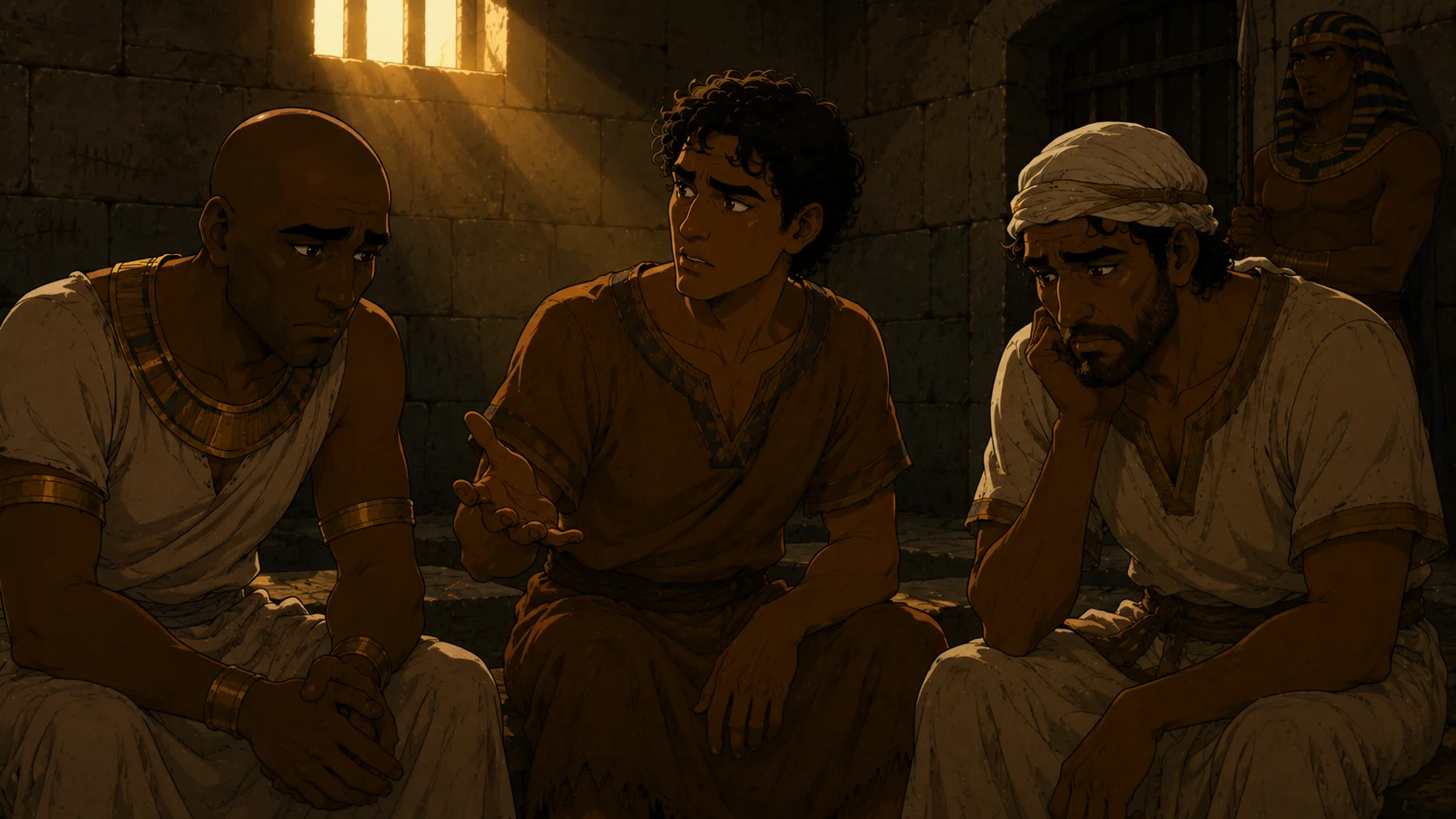
Pharaoh becomes angry with his chief cupbearer and chief baker and puts them in the same prison where Joseph is. Time passes. One morning Joseph comes to them and finds their faces troubled. "Why do your faces look sad today?" (Gen 40:7). They tell him: each had a dream and there is no interpreter.

Joseph's response is one of the most extraordinary moments in the narrative: "Do not interpretations belong to God? Please tell me your dreams." Joseph is in prison, forgotten, falsely accused. He has been there for years. And he approaches two strangers with a troubled face and offers to help them understand what God has given them.

The dreamer has become the interpreter. The man with two unresolved dreams of his own now holds the key to the dreams of others.

Key Hebrew
פִּתְרֹן
Pitron — Interpretation. The word pitron appears only in the Joseph story in the entire Torah. It comes from the root pathar — to loosen, to unravel, to open. An interpretation of a dream is literally an unraveling — taking something sealed and opening it. Joseph attributes the unraveling to God: "Do not interpretations belong to God?" He does not claim the ability as his own. He is the channel, not the source. This attribution becomes his identity: not the dream-speaker of his youth, but the dream-unraveler who credits the Giver.
← PreviousPotiphar's Wife — The False Accusation