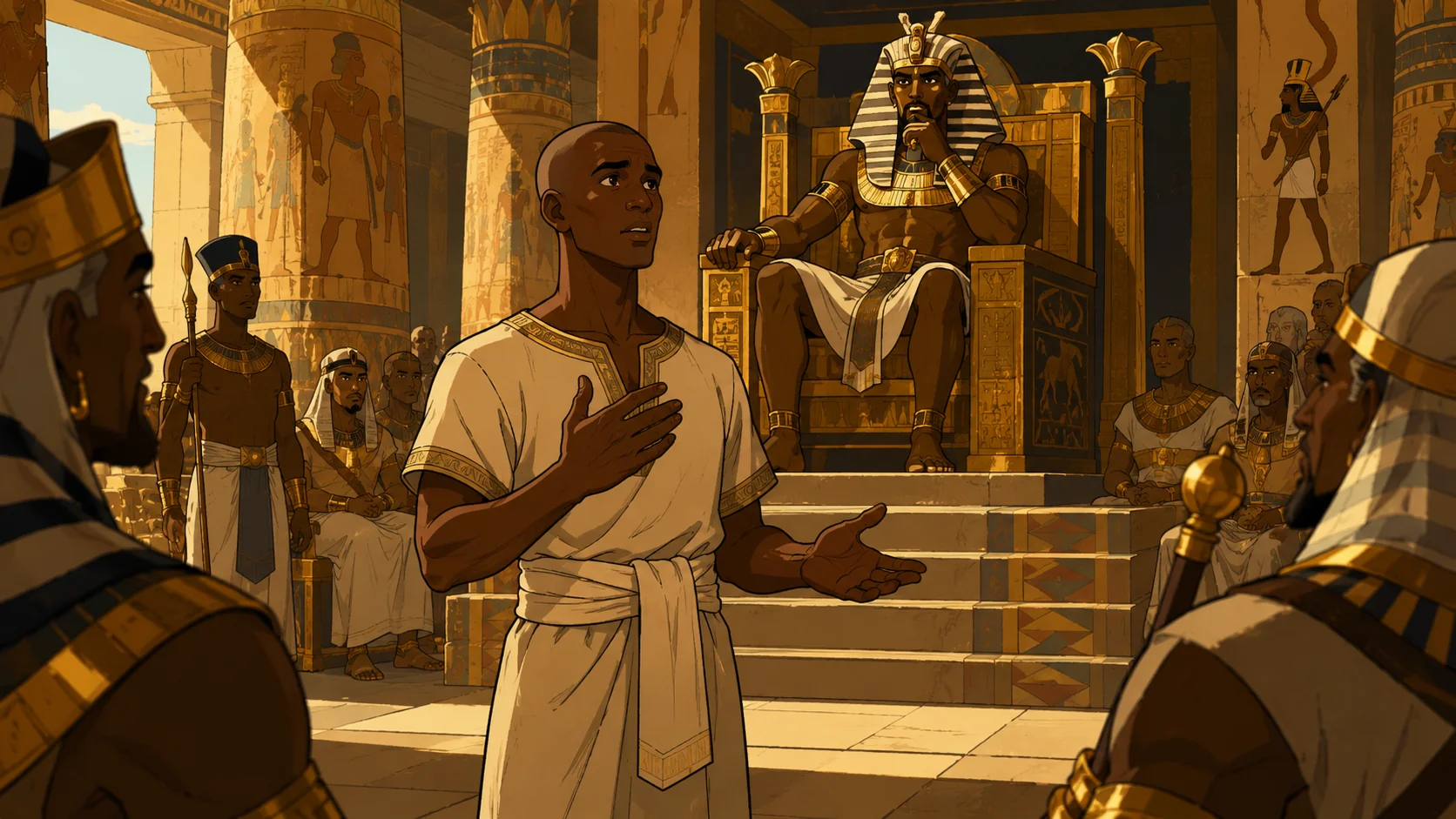
Joseph has been in prison for years. Pharaoh's messengers run to the pit and bring him out quickly. The Hebrew word for quickly — מְהֵרָה (meherah) — signals urgency. Pharaoh's dreams have disturbed all of Egypt's wise men. None could interpret them. Now a Hebrew prisoner is being summoned to the throne room.
Before he enters, Joseph shaves and changes his clothes. These two acts are not cosmetic details. Hebrew prisoners did not shave — Egyptian custom required it. The shave is Joseph leaving behind the identity of the pit and crossing the threshold into a different world. The change of clothes echoes the coat stripped from him in Genesis 37 — the first garment taken was the mark of his father's favor; the new garment is Joseph choosing to become the man this moment requires.
When Pharaoh says "I have heard it said of you that you can hear a dream and interpret it," Joseph answers immediately: "It is not in me. God will give Pharaoh a favorable answer." Not a calculation — a reflex. Thirteen years of being forgotten in Egypt and Joseph's first words before the most powerful man in the world are a declaration that the interpretation belongs to God. The answer sets the entire tone of what follows.
