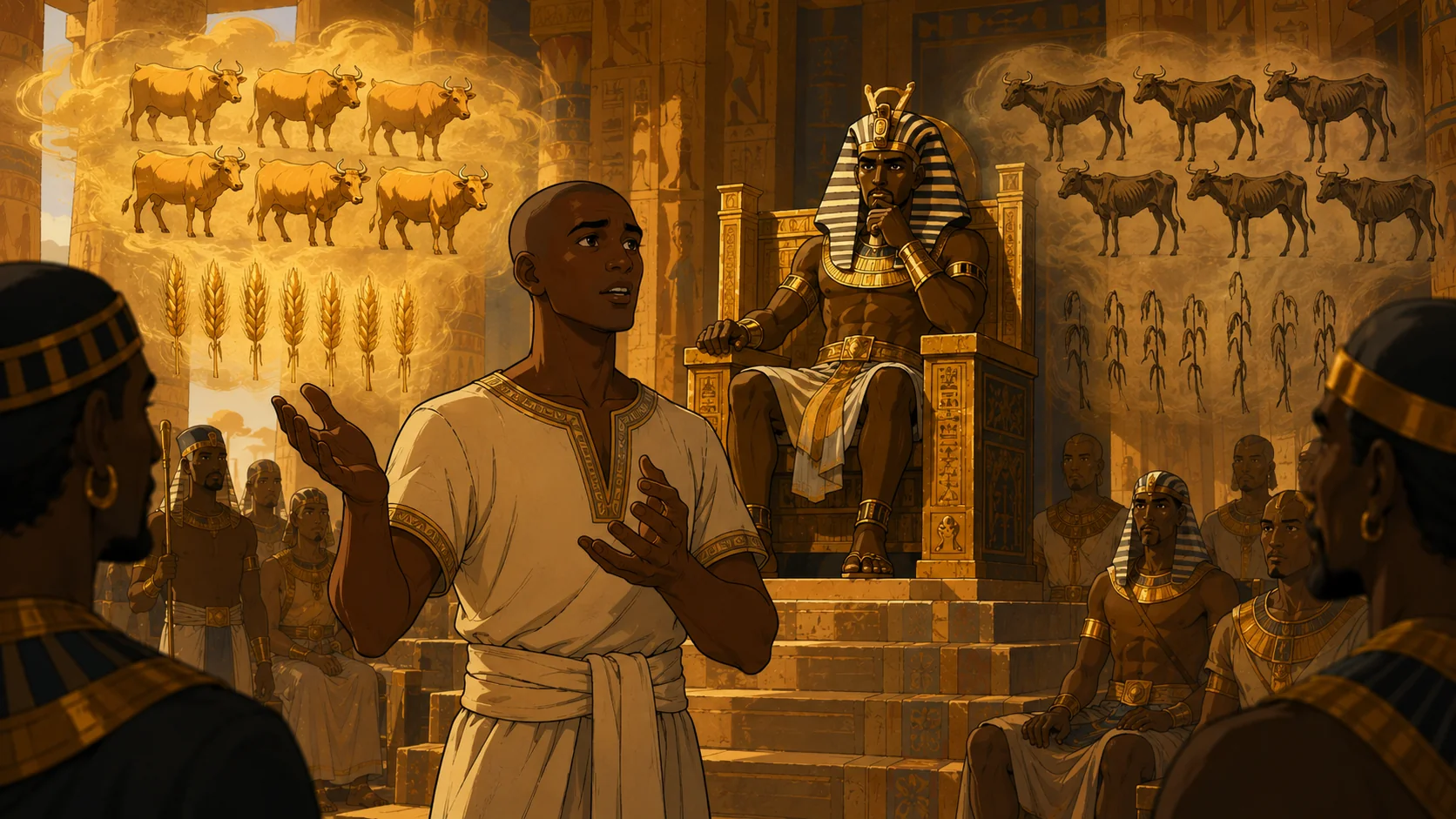
Pharaoh retells both dreams to Joseph in full. Then Joseph speaks without hesitation: "Pharaoh's dream is one." Egypt's magicians saw two separate dreams needing two interpretations. Joseph sees what they missed — both dreams are the same divine message delivered twice. The doubling is not multiplicity but emphasis. When God doubles a dream, it means the thing is fixed — decided — and it will happen soon.
The interpretation comes in layers. Seven fat cows, seven plump ears: seven years of great abundance across all Egypt. Seven lean cows, seven scorched ears: seven years of famine so severe the abundance will be forgotten. Joseph not only interprets — he builds a policy recommendation on top of the interpretation. Appoint a discerning and wise man. Set overseers over the land. Gather one-fifth of Egypt's harvest in the good years and store it. The famine is coming and it will be severe. You need someone to administer this now.
Commentators note the audacity of the moment: a Hebrew prisoner in chains standing before Pharaoh, not just interpreting his dream but telling the king of the most powerful nation on earth what to do with his country. Joseph is not performing survival. He is doing what he was shaped to do. The pit, Potiphar's house, the prison — every stopped door had been preparing the man who could stand in this room and not flinch.
