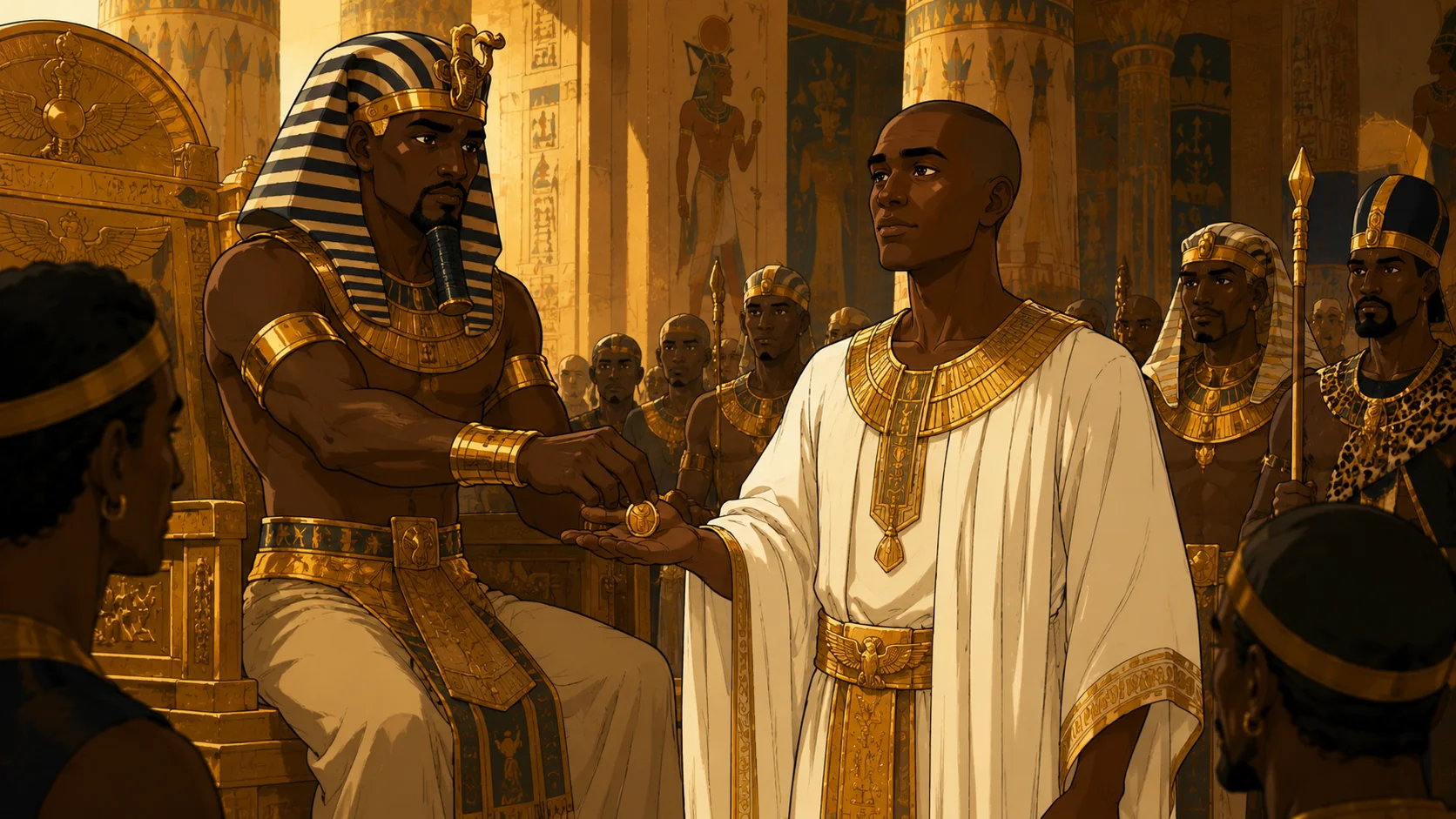
The proposal pleases Pharaoh and all his servants. He says what the entire court is thinking: "Can we find a man like this, in whom is the Spirit of God?" Pharaoh is a polytheist acknowledging what he cannot explain. He does not name which god. He recognizes the presence of something his magicians do not carry, and he names it. Then he turns to Joseph: "Since God has shown you all this, there is none so discerning and wise as you. You shall be over my house, and all my people shall order themselves as you command."
Three objects transfer authority. The signet ring moves from Pharaoh's hand to Joseph's — from this moment Joseph can authorize documents and actions in Pharaoh's name. Fine linen robes replace the prison clothes — the third garment change in the Joseph narrative, each one marking a crossing. The gold chain around his neck is the public mark of the second chariot. When Joseph rides out, all Egypt cries: "Abrech!" — the meaning disputed (bow the knee, or a title of honor), but the effect clear. Egypt bows.
Joseph is given an Egyptian name — Zaphenath-paneah — and an Egyptian wife, Asenath, daughter of the priest of On. He is 30 years old. He was 17 when he was sold. Thirteen years — pit, Potiphar's house, prison. The text does not editorialize. It simply states his age now and the age of his commission. The reader does the arithmetic. The wait was long. The elevation is complete.
