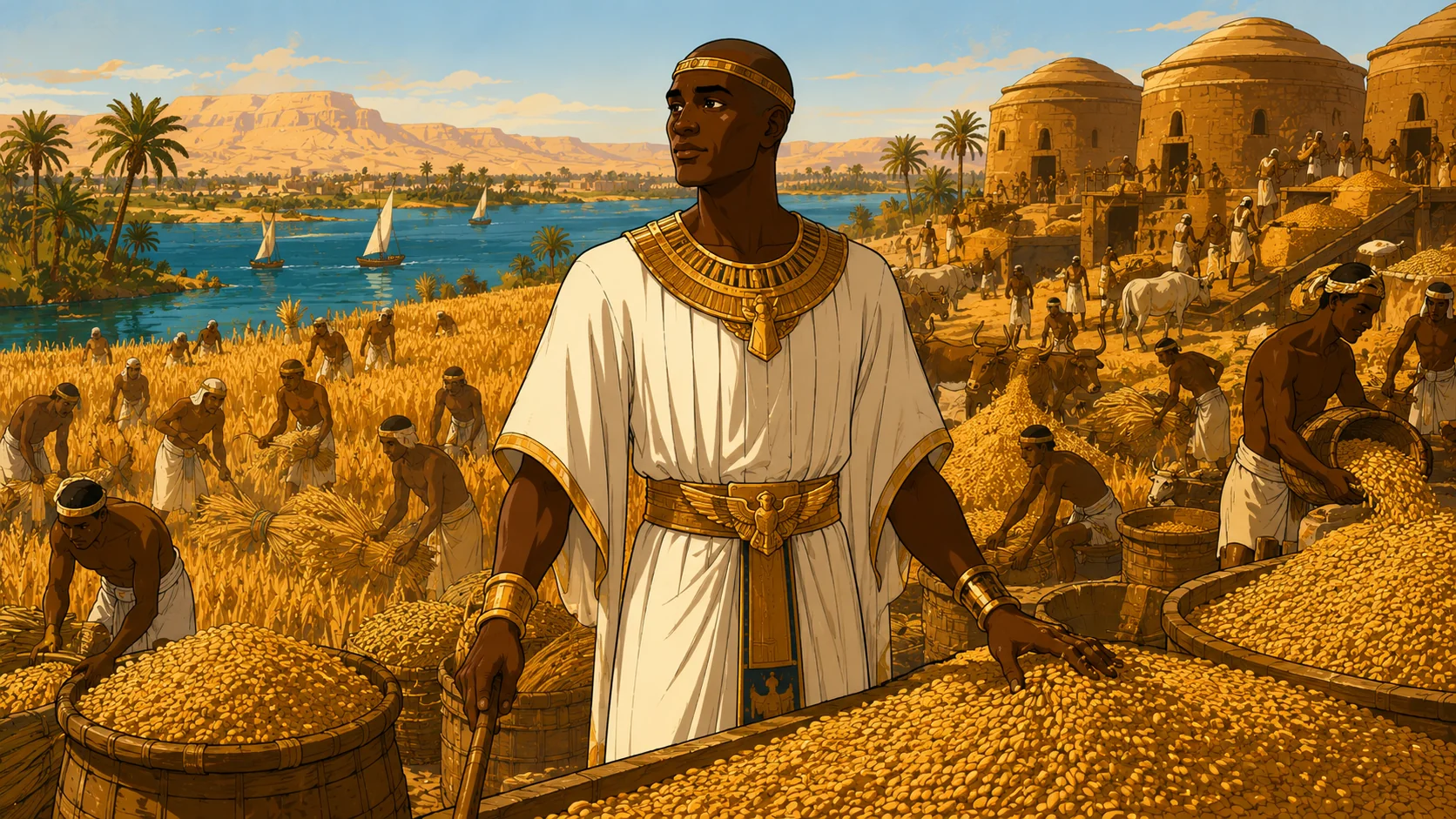
Joseph is thirty years old and he goes out over all the land of Egypt. During the seven plentiful years he travels, gathering grain like sand of the sea — so much that he stops counting because it is beyond measure. He has two sons with Asenath. The firstborn he names Manasseh: "God has made me forget all my hardship and all my father's house." The second he names Ephraim: "God has made me fruitful in the land of my affliction." Both names look backward before they look forward. The prosperity is real. The wound is still there.
Then the seven years of plenty end and the seven years of famine begin. The famine spreads across all the earth. When Egypt's people cry to Pharaoh for bread, he says: "Go to Joseph. What he says to you, do." The same instruction Pharaoh gave when he elevated Joseph — now it passes through the whole population. Joseph opens the storehouses. All the earth comes to Egypt to buy grain, because the famine is severe over all the earth. The nations are beginning to converge on the place where Joseph is.
These 12 verses are the hinge of the entire arc. Joseph's administrative faithfulness during the years of plenty is the reason anyone survives the years of famine. His dream — binding sheaves, the sun and moon and stars bowing — is now playing out not as family drama but as geopolitical reality. The whole earth comes to him. The arc is not finished: his brothers are among the ones who will come.
