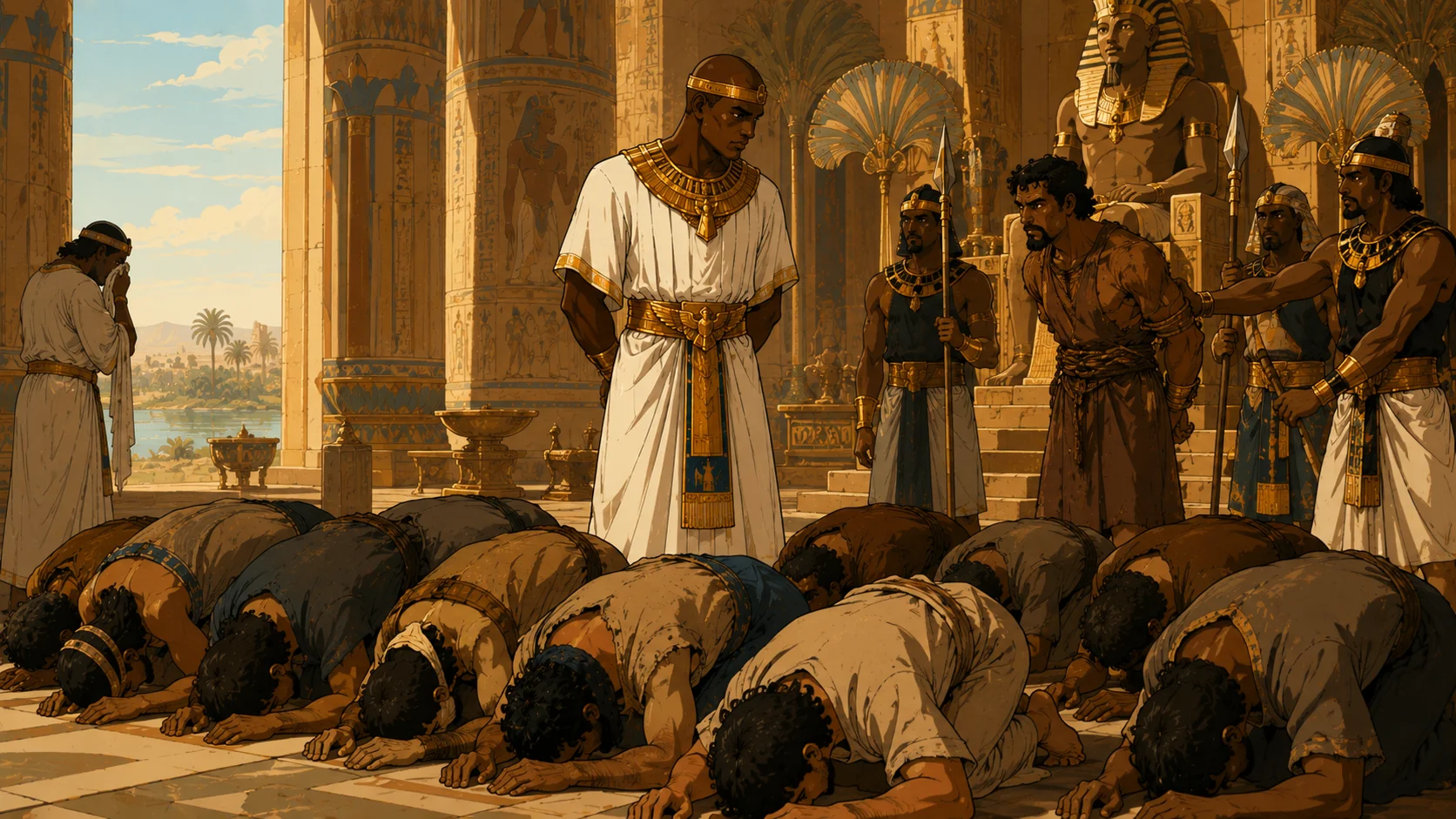
Jacob hears there is grain in Egypt and sends ten of his sons down. Benjamin he keeps home — "lest harm befall him." The ten brothers arrive and bow before Joseph with their faces to the ground. Joseph's first dream: the sheaves bowing. It is happening. He recognizes them immediately. He speaks roughly and accuses them: "You are spies." They protest: we are twelve brothers, one is no more, the youngest is with our father. Joseph already knows all of this. He is not gathering information. He is watching them. He is learning who they have become.
He puts them in custody for three days. On the third day he releases all but Simeon — Simeon will be held until they return with Benjamin. As Joseph gives the orders, the brothers begin speaking among themselves: "In truth we are guilty concerning our brother. We saw the distress of his soul when he begged us and we did not listen. That is why this distress has come upon us." They do not know that Joseph understands them, for there was an interpreter between them. He turns away from them and weeps. Then he turns back and speaks to them and takes Simeon from them.
The scene is one of the most psychologically dense in the Torah. Joseph is simultaneously the brother they sold and the governor they are begging. He holds Simeon's fate. He holds their fate. He hears them acknowledge guilt for the first time — and he weeps alone where they cannot see. The test is not cruelty. It is surgery. He needs to know whether the men who sold him would abandon another brother or whether they have changed.