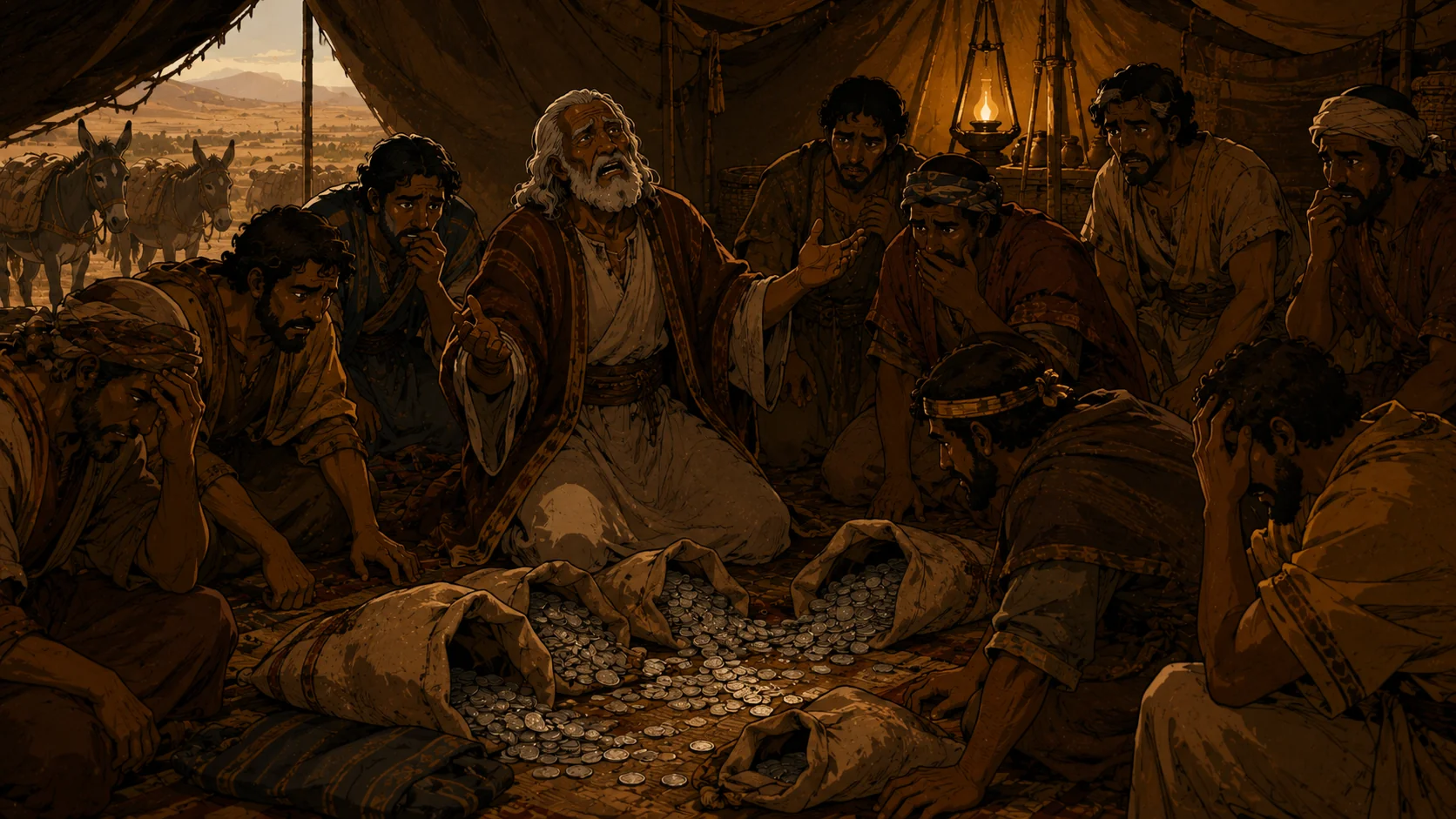
Joseph secretly commands his servants to return each man's silver into his sack along with his grain, and to give them provisions for the journey. One brother opens his sack at the inn and finds his silver at the mouth of the bag. Their hearts failed them — the Hebrew is vivid: לִבָּם יָצָא, "their heart went out," meaning it left them, failed, fell. They look at each other trembling and ask: "What is this that God has done to us?" The question reveals the state of their conscience. Finding returned silver is not obviously a threat — unless you are carrying guilt and already suspect that the world is closing in.
They return to their father Jacob in Canaan and report everything: the accusation of spying, Simeon held, the demand for Benjamin. Then as they empty their sacks, each man finds his bundle of silver. They are terrified. Jacob responds: "You have bereaved me. Joseph is no more, and Simeon is no more, and now you would take Benjamin. All this has come against me." The grief of the father is total. He has already lost two sons in his accounting. He refuses to send Benjamin.
Reuben makes an offer: take my two sons as pledges — if I do not bring Benjamin back, kill them. Jacob refuses. "My son shall not go down with you, for his brother is dead and he is the only one left. If harm should happen to him on the journey, you would bring down my gray hairs with sorrow to Sheol." The chapter ends without resolution. Simeon is in Egypt. The famine is ongoing. Jacob refuses. The situation is a closed fist. Something will have to give.
