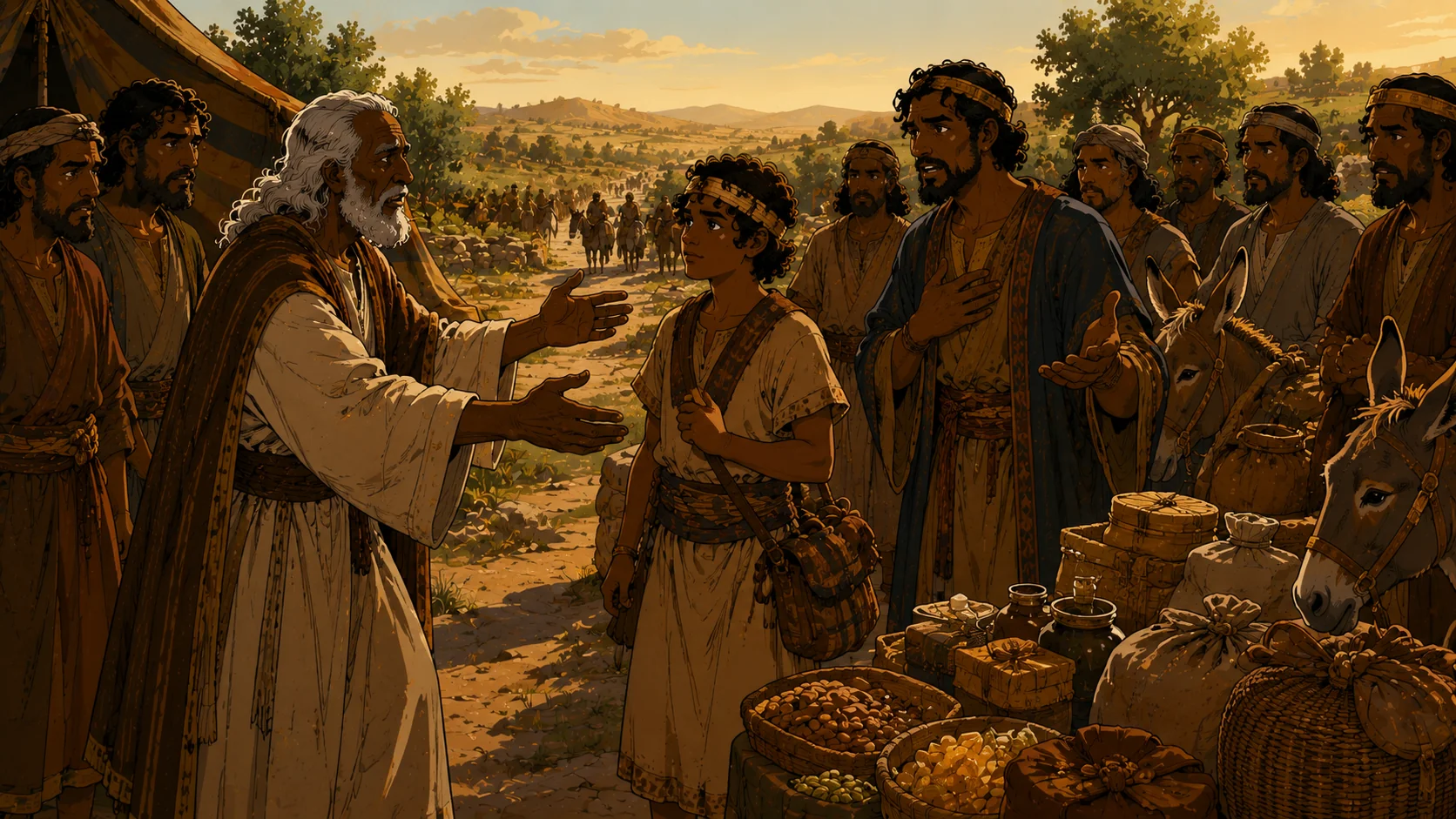
The famine grows heavy in the land. Jacob's household has consumed all the grain from Egypt. Jacob tells his sons to go down and buy more food. Judah speaks: we cannot go unless Benjamin goes with us. The man was explicit — we will not see his face unless our brother is with us. Jacob rebukes them for even telling the man about a younger brother. They say they could not have known he would ask for him. The argument has played before in this family.
Then Judah makes his offer — and it is different from Reuben's. Reuben had offered his sons. Judah offers himself: "I will be a pledge of his safety. From my hand you shall require him. If I do not bring him back and set him before you, then let me bear the blame forever." The word אֶעֶרְבֶנּוּ (e'ervenu) is the surety pledge — the same root used in Proverbs for someone who puts up their own life as guarantee. Judah is not offering his children. He is offering himself. If Benjamin does not return, Judah does not return.
Jacob relents. He instructs them to take double silver (to return what was found in the sacks), spices, balm, nuts, almonds — the gifts a man sends to an Egyptian official. Take your brother. May El Shaddai grant you mercy before the man. And if I am bereaved, I am bereaved. The Hebrew phrase is resigned, not resigned: אִם-כֵּן שְׁכֹל שָׁכָלְתִּי — "If it must be so, I have lost." Jacob releases Benjamin because Judah pledged himself. Judah's transformation has begun. The man who once said "What profit is it if we kill our brother?" now stakes his own life on his youngest brother's safety.