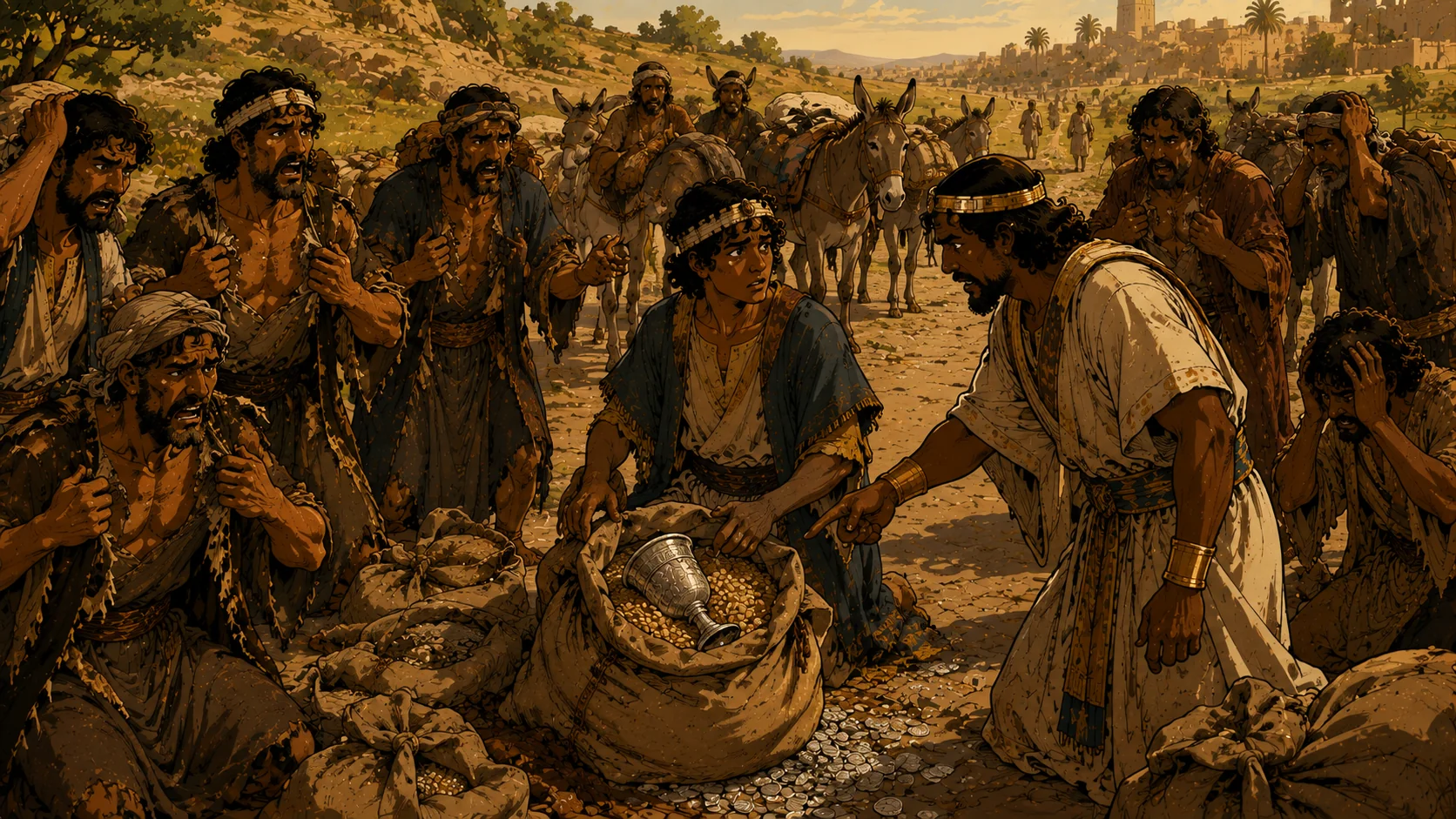
Joseph instructs his steward: fill the men's sacks with grain, return each man's silver as before, and put his silver cup in the mouth of the youngest one's sack. In the morning the brothers leave. They have not gone far when Joseph sends his steward after them: "Why have you repaid evil for good? Is it not from this that my lord drinks, and by this that he practices divination? You have done evil in doing this." The brothers are stunned. They insist: with whichever one of your servants it is found, let him die, and the rest of us will be my lord's servants.
The steward searches from the oldest to the youngest. The cup is found in Benjamin's sack. They tear their garments. Every man loads his donkey and returns to the city. The tearing of garments is the biblical sign of grief so total it requires an outward act. These same men once looked at a coat dipped in blood and brought it to their father. Now they tear their own. The scene is a mirror. What they did to Joseph is being done — or seems to be done — to Benjamin.
This is the final test. Joseph has given his brothers every possible reason to abandon Benjamin and return to Canaan without him. Benjamin is now condemned. Simeon is already held. They could go home, tell Jacob it was Benjamin who was caught with stolen property, and wash their hands of it. The question of the entire arc is: will they? The answer comes in the next scene. But first — they all turn back.