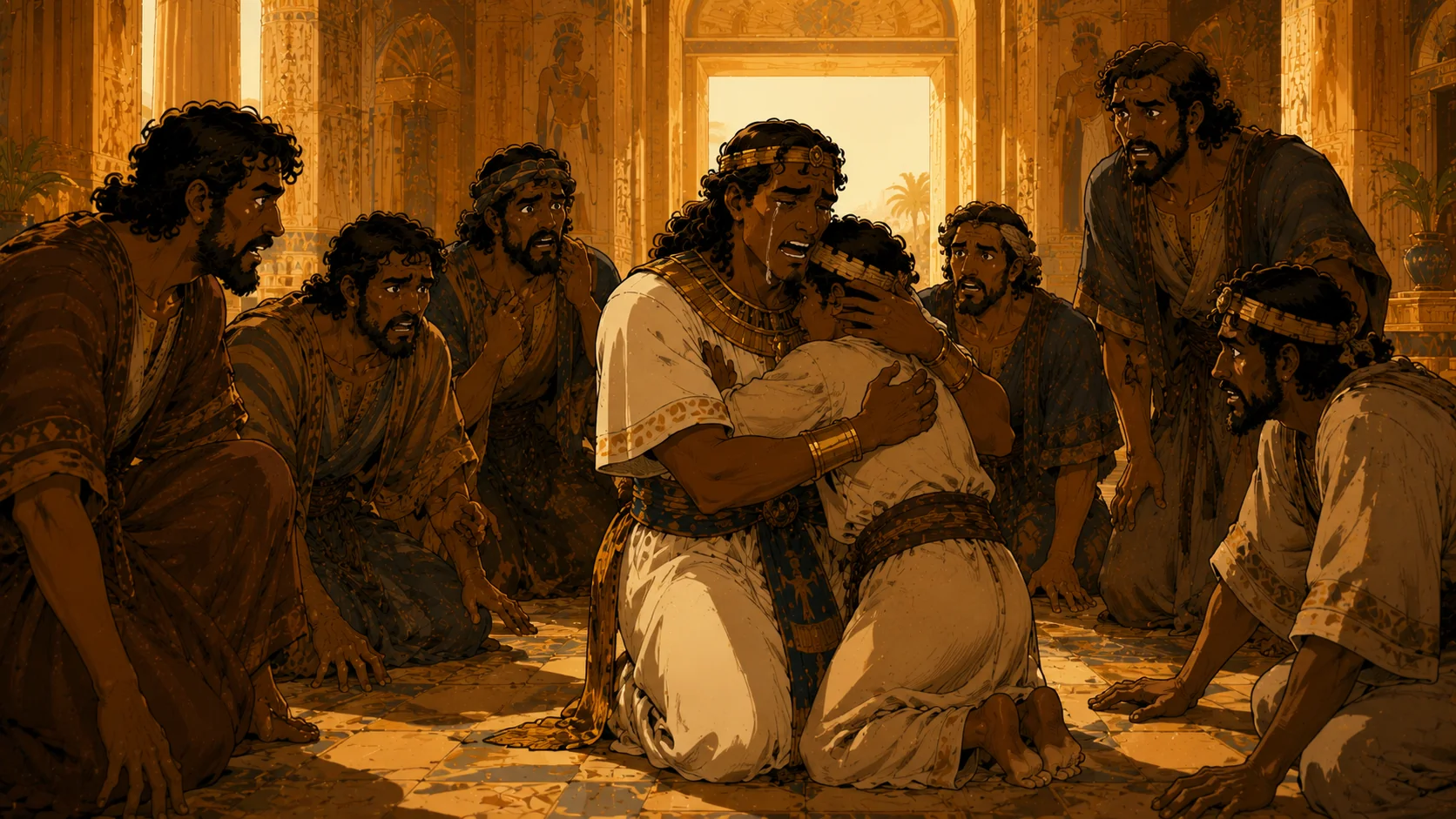
Joseph cannot restrain himself. He orders all the Egyptians out of the room. He is alone with his brothers and he weeps — wept so loudly that the Egyptians heard him and the house of Pharaoh heard him. Then he says: "I am Joseph. Is my father still alive?" The brothers cannot answer him because they are terrified before him. Twenty years of distance. The face of the governor. The voice of the brother. The same man. They are standing in the room with the one they sold.
Joseph tells them: come near to me. They come near. He says: I am Joseph your brother whom you sold into Egypt. Now do not be distressed or angry with yourselves because you sold me here, for God sent me before you to preserve life. The famine has been two years and there are five more to come. God sent me before you to preserve for you a remnant on earth and to keep alive for you many survivors. So it was not you who sent me here but God. He has made me a father to Pharaoh and ruler of all Egypt.
Three times he says God sent me — not "you sold me." He does not minimize what happened. He says you sold me. And then he says God sent me. Both are true. This is not theological avoidance of the crime. It is the larger frame inside which the crime was held. The Talmud (Sotah 10b) records that when Joseph said "I am Joseph," his brothers' souls left them — the same expression used when the money was found in the sacks. The same terror. The same recognition that God had been watching the whole time.