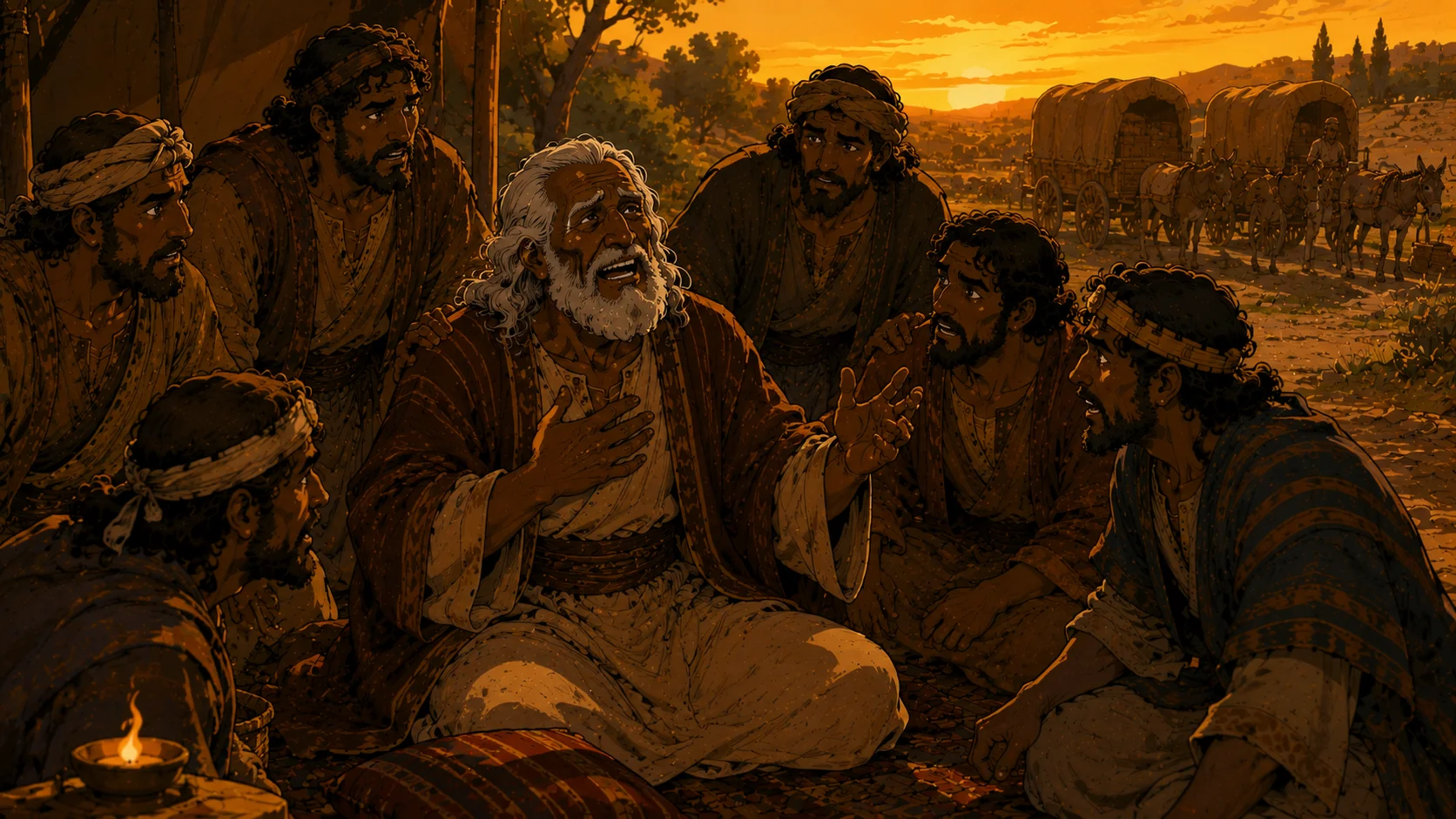
The brothers return to Canaan and tell Jacob: Joseph is still alive. He is the ruler of all Egypt. Jacob's heart went numb — the Hebrew: וַיָּפָג לִבּוֹ, his heart became cold, ceased to feel — because he did not believe them. Then they tell him all the words Joseph had spoken to them, and when he saw the wagons Joseph had sent to carry him, the spirit of Jacob their father revived.
The wagons are the evidence his words cannot produce. Joseph sent the wagons not only for practical transport but as proof — Egyptian royal wagons carrying a message that could not be faked. Midrash (Bereshit Rabbah 94) records that Joseph and Jacob had been studying the law of the heifer (eglah in Hebrew — same root as agalot, wagons) just before Joseph was sent out to his brothers. Jacob, seeing the wagons, immediately understood who had chosen this word. It was a private signal between a father and son. The last word they studied together became the vehicle of reunion.
Jacob says: "It is enough. My son Joseph is still alive. I will go and see him before I die." The Hebrew behind "enough" — רַב — can mean great, much, overwhelming. It is enough. It is more than enough. The man who tore his garments and refused to be comforted for twenty years has nothing more to say except: I will go. The spirit that went out — his heart that became cold — revived. The Hebrew word וַתְּחִי (vatchi) is from the root חָיָה — to live. The spirit of Jacob lived again.
