Judah is sent ahead as guide to Goshen. Joseph harnesses his chariot and rides up to meet his father. Joseph falls on his neck and weeps for a long time. Jacob says: "Now I can die — since I have seen your face and you are still alive." Joseph settles the family in the district of Rameses and provides food for all. He selects five of his brothers and presents them before Pharaoh. Pharaoh asks their occupation; they say: shepherds, as our fathers were. They ask to dwell in Goshen. Shepherds were an abomination to Egyptians — which is exactly why Goshen is given. Separation was not a humiliation. It was the providential mechanism that kept Israel distinct.
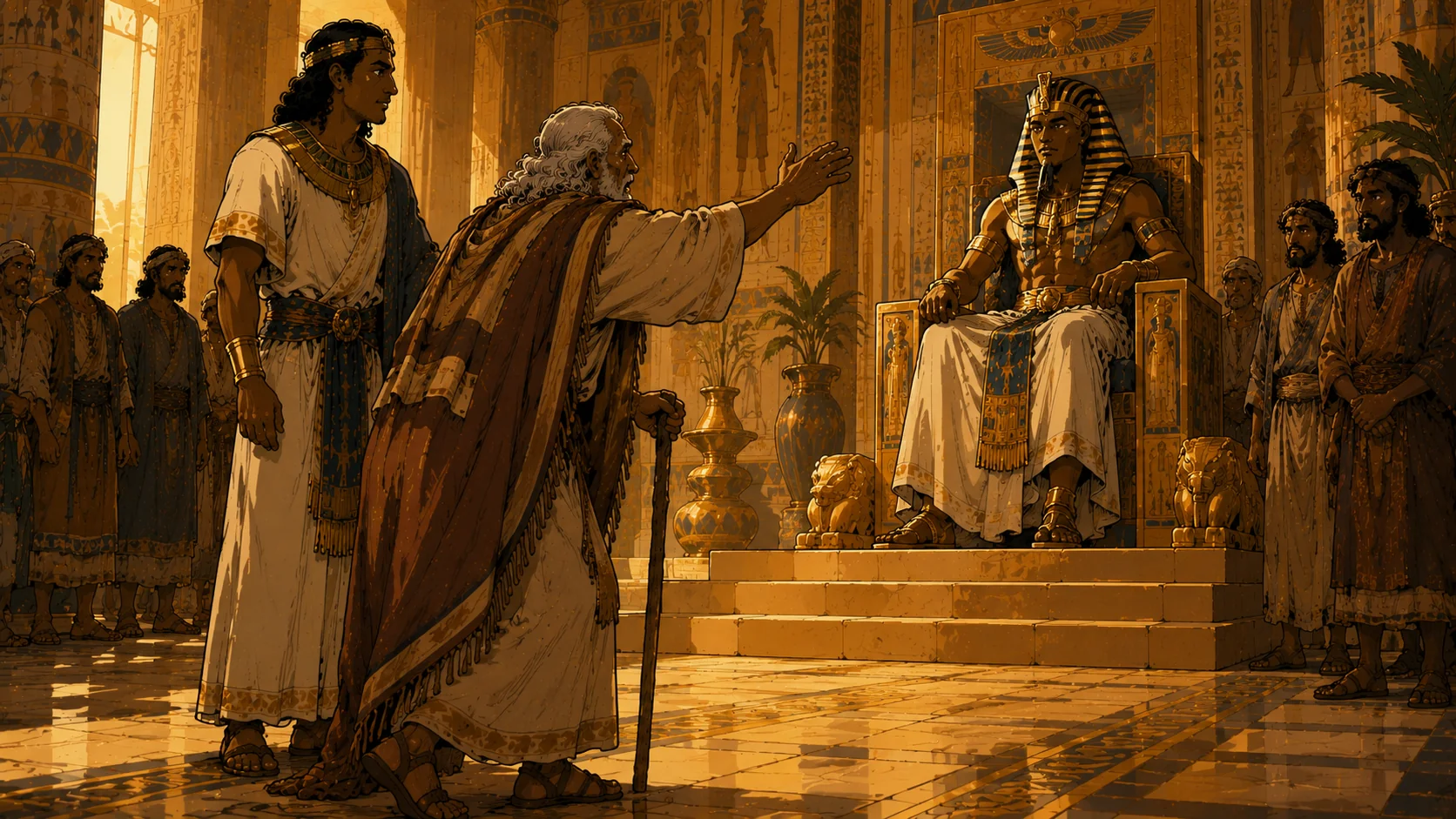
Then Joseph brings Jacob before Pharaoh. Jacob blesses him — twice, at entry and departure. The patriarch blesses the king. Pharaoh asks: "How old are you?" Jacob answers: 130. Then says: "Few and evil have been the days of the years of my life, and they have not attained to the years of my fathers in the days of their sojourning." This is not self-pity. It is a 130-year-old man's honest accounting: the loss of Rachel, twenty years under Laban, the trauma of Dinah and Shechem, twenty-two years believing Joseph was dead. Standing in the palace of the world's most powerful ruler, having just been reunited with his son, Jacob describes his life as few and evil.
The structure is unmistakable: Israel is the one doing the blessing, and Egypt's king is the one receiving it. At the moment when Israel is most dependent on Egypt — starving, displaced, foreign — the patriarch is still the one with the covenant authority. The lesser is blessed by the greater.
