At midnight God strikes every firstborn in Egypt — from the firstborn of Pharaoh on his throne to the firstborn of the prisoner in the dungeon to the firstborn of every animal. There is no house without a death.
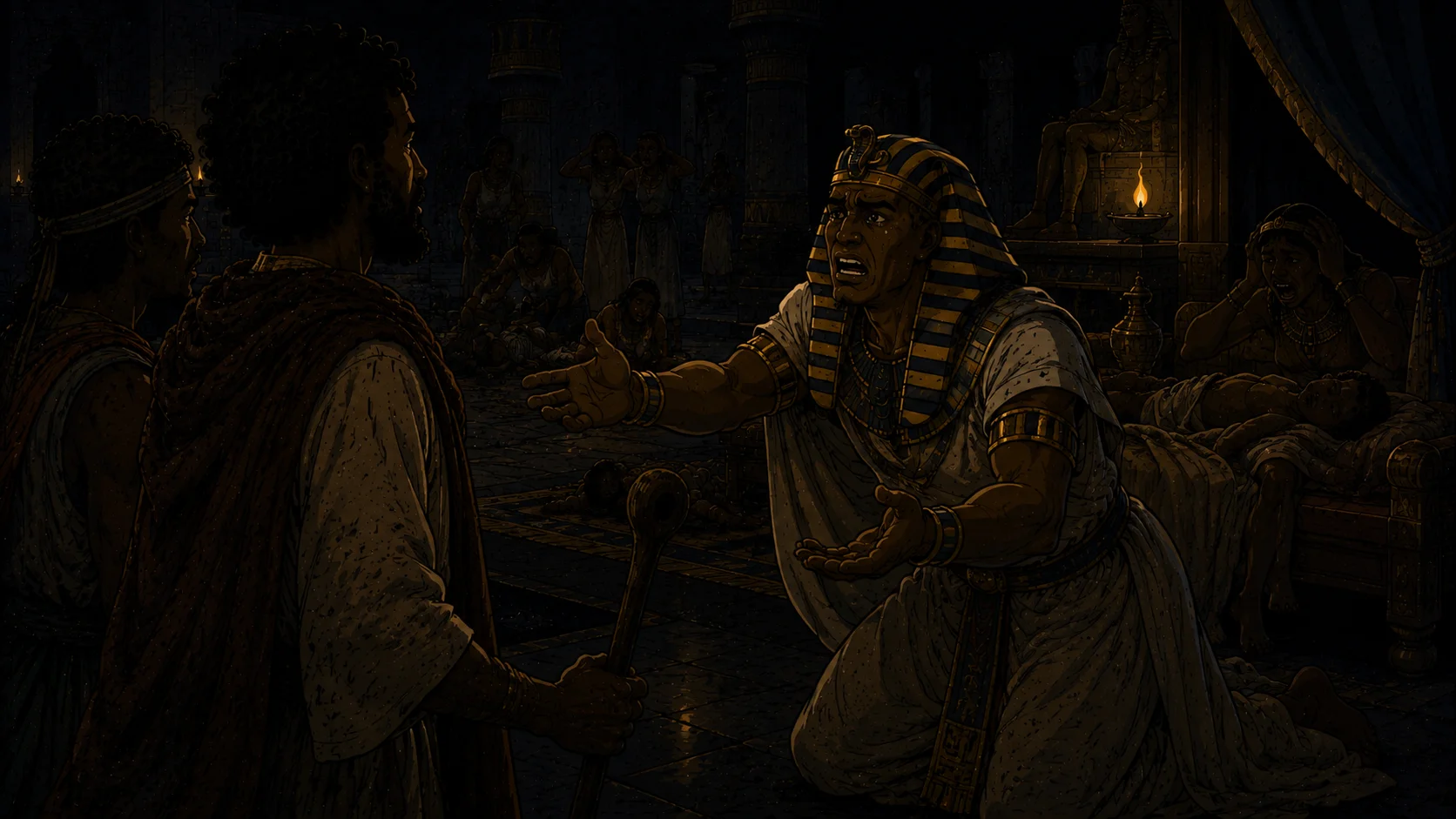
Pharaoh rises in the night. This is the man who would not rise from his throne for Moses, who sent him away with threats. Now he rises at midnight, in grief and terror, and the Torah says "he and all his servants and all Egypt." The whole kingdom is awake, weeping.
He calls for Moses and Aaron himself. Not through messengers, not through intermediaries. He summons them at midnight and speaks the words of release: "Rise up, go out from among my people — you and the children of Israel. Go, serve the LORD as you have said. Take your flocks and your herds as you have said. And bless me also."
That last phrase — "bless me also" — is striking. The man who enslaved Israel and murdered their sons is now asking for a blessing from the God of Israel through Moses. It is capitulation and supplication at once. He who hardened his heart ten times now reaches out in the dark asking to be remembered favorably.
The Egyptians urge Israel to go quickly — "for we are all dying." The pressure is reversed. For ten plagues, Pharaoh delayed and denied. Now Egypt itself is pushing Israel out the door. God's word to Abraham in Bereshit 15 — "they shall come out with great possessions" — is being fulfilled in real time.