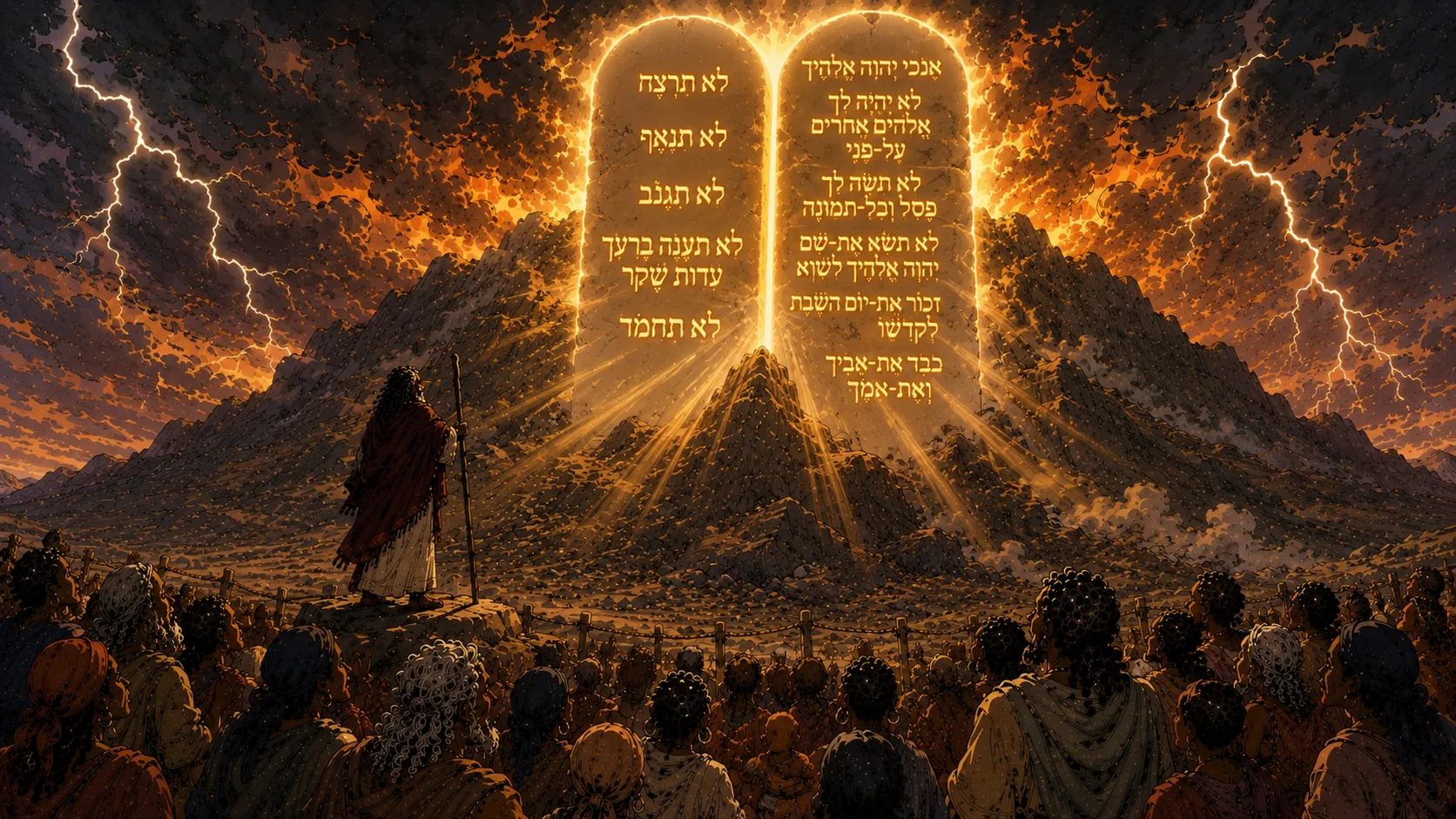
The text says: God spoke all these words, saying. Not "God spoke to Moses" — directly, to all Israel, assembled at the foot of the mountain in the thunder and fire. The עֲשֶׂרֶת הַדְּבָרִים (aseret hadibrot — the Ten Words) are the only portion of the Torah the entire nation hears from YHWH without a human intermediary. Every other commandment, statute, and ordinance comes through Moses. These ten come without a mediator. This fact is not incidental — it is the measure of their weight.
The opening word is not a prohibition but an identity: אָנֹכִי יְהוָה אֱלֹהֶיךָ אֲשֶׁר הוֹצֵאתִיךָ מֵאֶרֶץ מִצְרַיִם מִבֵּית עֲבָדִים — I am YHWH your God who brought you out of the land of Egypt, out of the house of slaves. What follows is not the foundation for the relationship; it describes a relationship already established. The commands do not create the covenant; they express it. The first word is not obey, but know who I am and what I have already done.
The first five words define Israel's relationship with YHWH: no other gods, no carved images, no taking the Name in vain, remember the Sabbath and keep it holy, honor father and mother. The second five define Israel's relationship with one another: no murder, no adultery, no stealing, no false witness against your neighbor, no coveting what belongs to your neighbor. Together they are the complete architecture of covenant life — vertical toward God and horizontal toward the human community. Neither half stands alone.
The Sabbath commandment is the longest — more words than any of the other nine. It carries the most theological freight: it connects Israel's weekly rest to YHWH's rest on the seventh day of creation (בְּרֵאשִׁית 2:2–3), and it extends the rest not only to Israelites but to servants, animals, and the stranger within the gates. The Sabbath is communal, not just personal. Observing it is Israel's weekly testimony that the world was spoken into being and that its creator rested — and that human beings participate in that rhythm by ceasing their labor and receiving time as a gift rather than a resource.
The tenth word stands apart from all the others. No murder, no adultery, no stealing — these prohibit acts. The tenth prohibits a state of mind: you shall not covet. You shall not desire your neighbor's house, wife, servants, ox, donkey, or anything that belongs to your neighbor. The other nine deal with what the hand does or fails to do. The tenth reaches beneath action to the desire that precedes it — the interior coveting from which every transgression originates. The Torah does not merely regulate behavior; it aims at the transformation of want.