The people see that Moses is delayed in coming down from the mountain. The Hebrew is exact: בֹּשֵׁשׁ (boshesh) — he is taking too long, he is late. Forty days without him, forty days without visible access to the voice that spoke from the fire. The people gather to Aaron and demand: Arise! Make us gods who will go before us. As for this Moses, the man who brought us up from the land of Egypt — we do not know what has become of him. Moses is dismissed in one phrase: that man. He has become a distant figure in their reckoning, and his absence feels like abandonment.
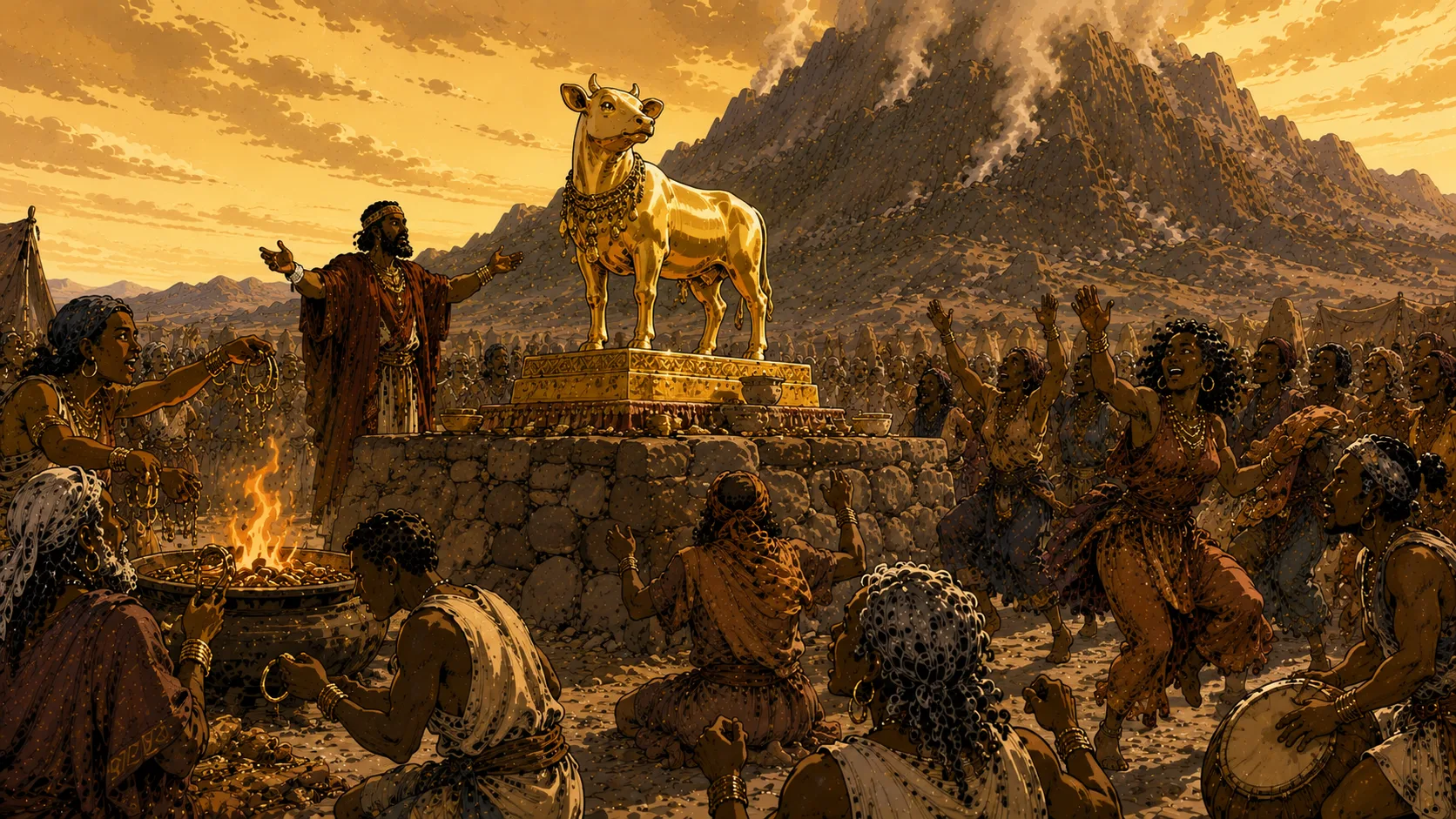
Aaron does not resist. He instructs them: tear off the gold earrings from your wives, your sons, your daughters, and bring them to me. They bring the gold. Aaron receives it, shapes it with an engraving tool (חֶרֶט, cheret), and casts a molten calf. The people's response is immediate: אֵלֶּה אֱלֹהֶיךָ יִשְׂרָאֵל אֲשֶׁר הֶעֱלוּךָ מֵאֶרֶץ מִצְרָיִם — these are your gods, O Israel, who brought you up from the land of Egypt. They use nearly the exact phrase with which YHWH introduced himself at Sinai — "I am YHWH your God who brought you out of Egypt" — but apply it to the calf. The formula of identity is transferred from the living God to a cast image.
Aaron sees the response and builds an altar before it. He declares: חַג לַיהוָה מָחָר — tomorrow is a feast to YHWH. This detail is the most revealing line in the chapter. Aaron is not presenting the calf as a foreign deity. He is attempting to direct the worship of YHWH through the form of a familiar sacred image. The people are not abandoning their God; they are domesticating him — giving him a visible, manageable form they can approach without a mountain on fire and a cloud of thick darkness. The second commandment prohibits exactly this: not because images are inherently evil, but because any image of YHWH inevitably diminishes and distorts the One who cannot be contained by form.
The gold used to make the calf is the gold Israel received from the Egyptians as they left — Egypt's plunder, the spoils of the exodus, which YHWH had promised (Exodus 3:22; 12:35–36). The very material that was a sign of YHWH's deliverance is now the material of the idol that claims to represent it. This is the depth of the irony the text preserves: they fashion an image of their liberator from the evidence of their liberation.
The next morning the people rise early and offer burnt offerings and peace offerings and sit to eat and drink and then rise up to play. The same sacrificial forms used at the covenant ceremony (burnt offerings and peace offerings at the foot of the mountain, 24:5) are now offered to the calf. The covenant pattern is being replicated in the wrong direction — at the wrong altar, toward the wrong object. Above on the mountain, Moses holds two tablets written by God's own hand. Below in the camp, Israel celebrates what they have made with their own hands.