Moses assembles all the congregation of Israel. He opens with the Sabbath command — no fire on the Sabbath, even for the tabernacle's construction — and then turns to the task before them: take from yourselves a contribution to YHWH. The word is תְּרוּמָה (terumah), a lifted offering, something elevated from the general mass and set apart. What follows is the most detailed list of building materials in Exodus: gold, silver, and bronze; blue, purple, and crimson thread; fine twisted linen; goat hair; reddened ram skins and tachash skins; acacia wood; oil for the light; spices for the anointing oil and for the fragrant incense; onyx stones and setting-stones for the ephod and the breastplate. The list is specific, physical, material.
The key phrase is the qualification for who should bring: כָּל-נְדִיב לִבּוֹ — every generous-hearted person, literally every one whose heart is willing. Moses does not say: every person. He says: whoever has a willing heart. This is not a tax. It is not a compulsory levy. YHWH has no need of silver or goat hair; the invitation is to those whose hearts move them toward it. The same is true for the craftsmen: וְכָל-חֲכַם-לֵב בָּכֶם — every wise-hearted person among you shall come and make all that YHWH commanded. The builders are those whose heart carries wisdom, not merely those with technical skill. In Hebrew thought, חֲכַם לֵב (chakham lev — wise of heart) is a unified gift: the wisdom that comes from the heart's orientation, not just the hands' training.
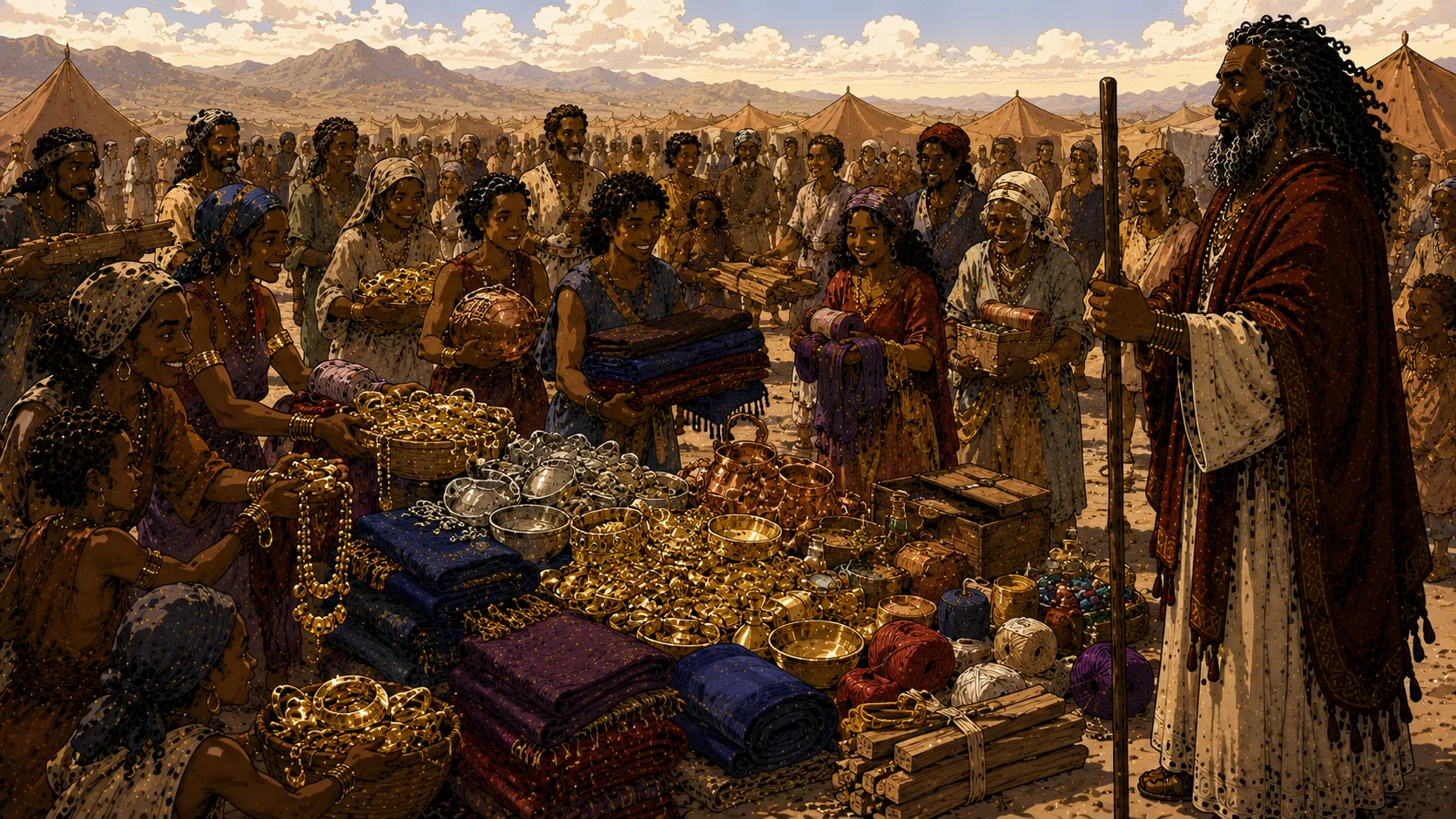
Then the people go. And the text shifts from command to response with a word that the Hebrew Bible reserves for movement: וַיָּבֹאוּ — and they came. Men and women — the text names both — whose hearts lifted them up: כֹּל אֲשֶׁר נְשָׂאוֹ לִבּוֹ. The phrase is remarkable: not "who chose to bring" or "who decided to give" but whose heart lifted them. The heart is the agent. Israel's giving is portrayed not as a decision made by the will but as a motion initiated by the heart — the person is carried toward the giving, not the other way around. They bring brooches, rings, earrings, and necklaces, every golden article. They bring blue, purple, and crimson thread; fine linen; goat hair; red ram skins; tachash skins; silver and bronze. Every person who possessed acacia wood brought it.
The shadow of the calf falls across this passage, and the text seems to know it. The gold given here — the brooches, the earrings, the rings — is drawn from the same plunder of Egypt that Aaron's earring-collection produced the calf. Every woman who was wise-hearted spun with her hands (35:25). The skilled-hearted women who spun the goat hair (35:26) — the text will return to them. The gold of liberation, which had been melted into an image of betrayal, is now being woven into an image of YHWH's dwelling. The same material, the same hands, but the heart has been turned.
The response becomes so great that Moses will eventually have to tell them to stop. In chapter 36, the craftsmen come to Moses with an extraordinary report: the people are bringing far too much, more than enough for all the work. Moses sends a proclamation through the camp: no more. Let no man or woman bring any more for the contribution of the sanctuary. And the people were restrained from bringing (36:6). There is only one other moment in Torah where Israel gives too much — and it is here, to build the place where YHWH will dwell among them.