Verse 33 ends with five Hebrew words: וַיְכַל מֹשֶׁה אֶת-הַמְּלָאכָה — Moses finished the work. The same construction — "finished the work" — appears in Genesis 2:2 when YHWH finished his work of creation. The parallel is not accidental. The Torah presents the completion of the Mishkan as a work parallel to the creation of the world: both are finished works, both are declared good, both result in a sanctification and a rest. The craftsmen lay down their tools. The assembly is complete. And then, in the very next verse, the cloud moves.
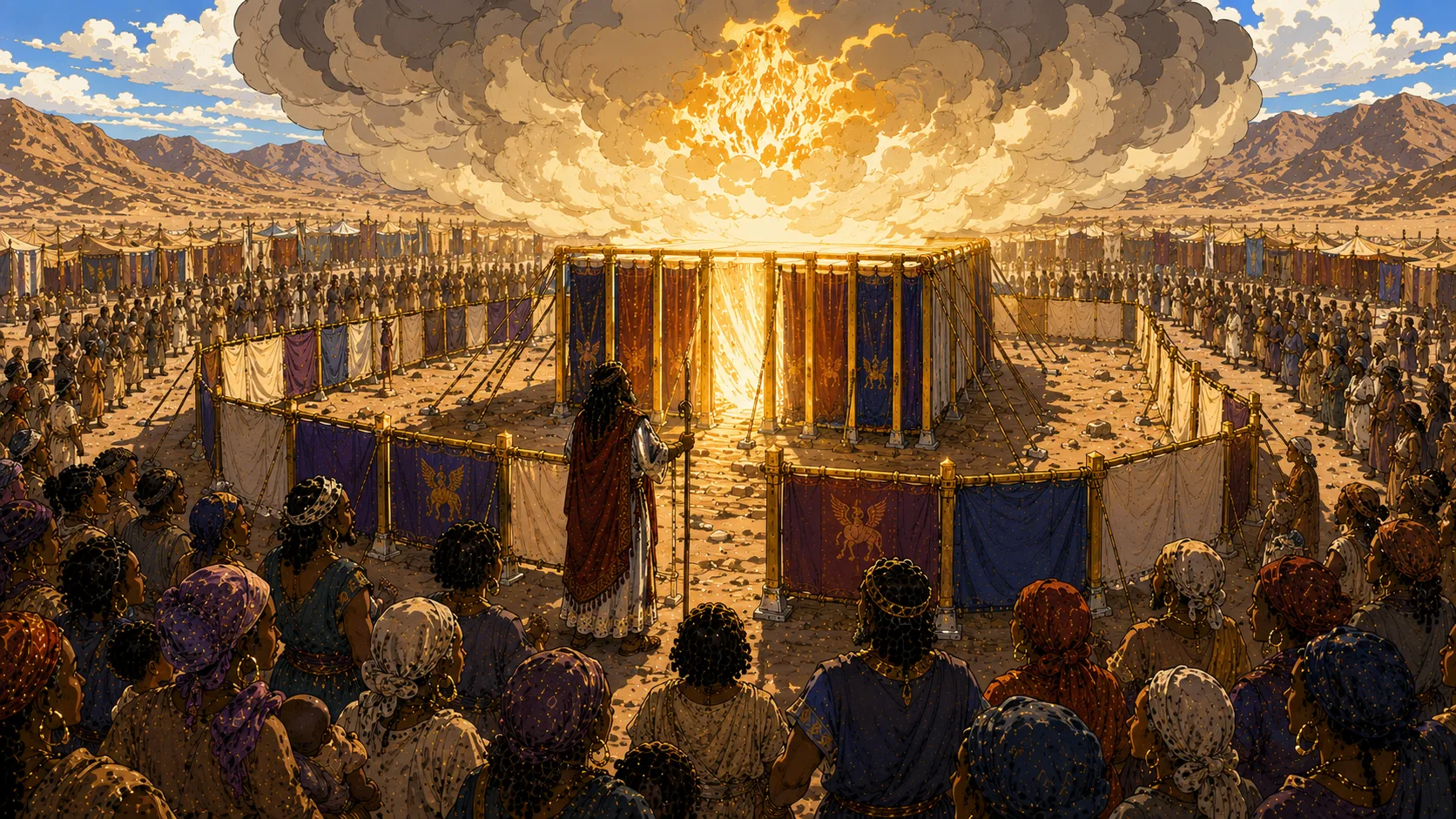
וַיְכַס הֶעָנָן אֶת-אֹהֶל מוֹעֵד — the cloud covered the Tent of Meeting. The same cloud that led Israel out of Egypt, that stood between them and Pharaoh's army at the sea, that descended on the mountain at Sinai, that stood at the door of the provisional tent in the camp — this cloud now comes to rest on the completed structure. It does not drift by; it covers. וּכְבוֹד יְהוָה מָלֵא אֶת-הַמִּשְׁכָּן — the glory of YHWH filled the Mishkan. The glory that Moses asked to see on the mountain — that passed before him in the cleft of the rock, that he saw only from behind — is now inside the structure that was built in response to that encounter.
Moses was not able to enter the Tent of Meeting — כִּי-שָׁכַן עָלָיו הֶעָנָן — because the cloud rested on it, and the glory of YHWH filled the Mishkan (40:35). This is an extraordinary reversal. The man who went up the mountain and stood in the presence of YHWH face-to-face, who interceded for Israel, who carried the tablets, who transmitted the covenant — Moses cannot enter his own structure because it is too full. The holiness that descended into the tent leaves no room for human entry in that moment. The Mishkan is complete, and the presence that made it necessary has taken residence in it so fully that the builder stands outside.
Then the final description of how the Mishkan will function in the wilderness journey (40:36–38): whenever the cloud lifted from over the Mishkan, the people of Israel would set out on their journey. If the cloud did not lift, they did not set out — not until the day it lifted. The cloud of YHWH was over the Mishkan by day, and fire was in the cloud by night, before the eyes of all the house of Israel throughout all their journeys. Israel does not decide when to move. The presence decides. The freedom from Egypt was not freedom to self-direct; it was freedom to be directed by the One who freed them. The God who said in Exodus 3 that he would bring them out is now dwelling among them, and every movement of the camp follows the movement of the cloud.
This is where the Book of Exodus ends — not with Israel's arrival in Canaan, not with a coronation, not even with a speech. It ends with a cloud. The story that began in darkness — a new Pharaoh, a people in slavery, a forgotten covenant — ends with light so great that the mediator cannot enter the place where it rests. The slavery that extracted labor from Israel's bodies is answered by the Mishkan that received the labor of their hearts. The God who said I have seen the affliction of my people has kept his word. He came down. He led them out. He made covenant with them at the mountain. And now he dwells among them — visible by day, alight at night — going where they go, stopping when they stop, present in the center of the camp in the house his people built for him.