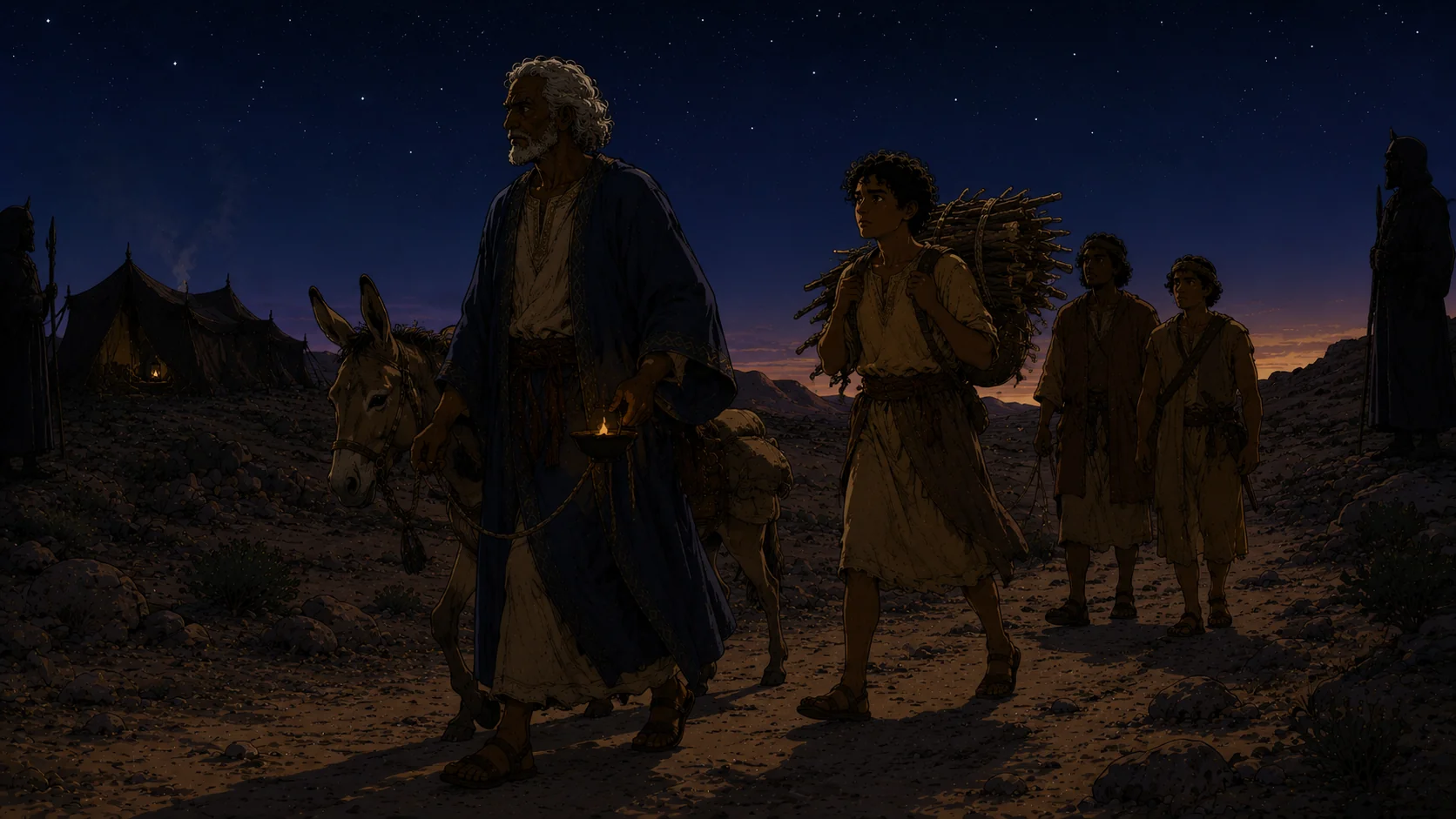
The third early morning of Abraham. In 19:27, he rose early after Sodom to go to the place where he had stood. In 21:14, he rose early to send Hagar and Ishmael into the wilderness. Now, in 22:3, he rises early to ascend to Moriah. These mornings do not comment on each other. The text simply opens the same way, each time, for a different unbearable day.
The verse is a sequence of actions without pause: rose early, saddled, took, split, set out, went. There is no hesitation visible in the grammar. There is no recorded prayer, no argument, no delay. Abraham answered God in chapter 18 with long sustained intercession for Sodom. Here, he answers with action. Some interpreters find this disturbing. The rabbis and the tradition work hard to explain it. The plain text does not explain it.
He splits the wood for the burnt offering himself — וַיְבַקַּע עֲצֵי עֹלָה. The verb בִּקַּע (bika) means to split or cleave. This is the preparation Abraham makes in advance, before knowing exactly where the altar will be. The wood is ready. Isaac is present. The lad named in the last verse of chapter 21 as growing up in the wilderness is now carrying split wood up a mountain with his father. The contrast with Isaac’s birth — the impossible child, the child of laughter — and this journey is something the text holds silently.