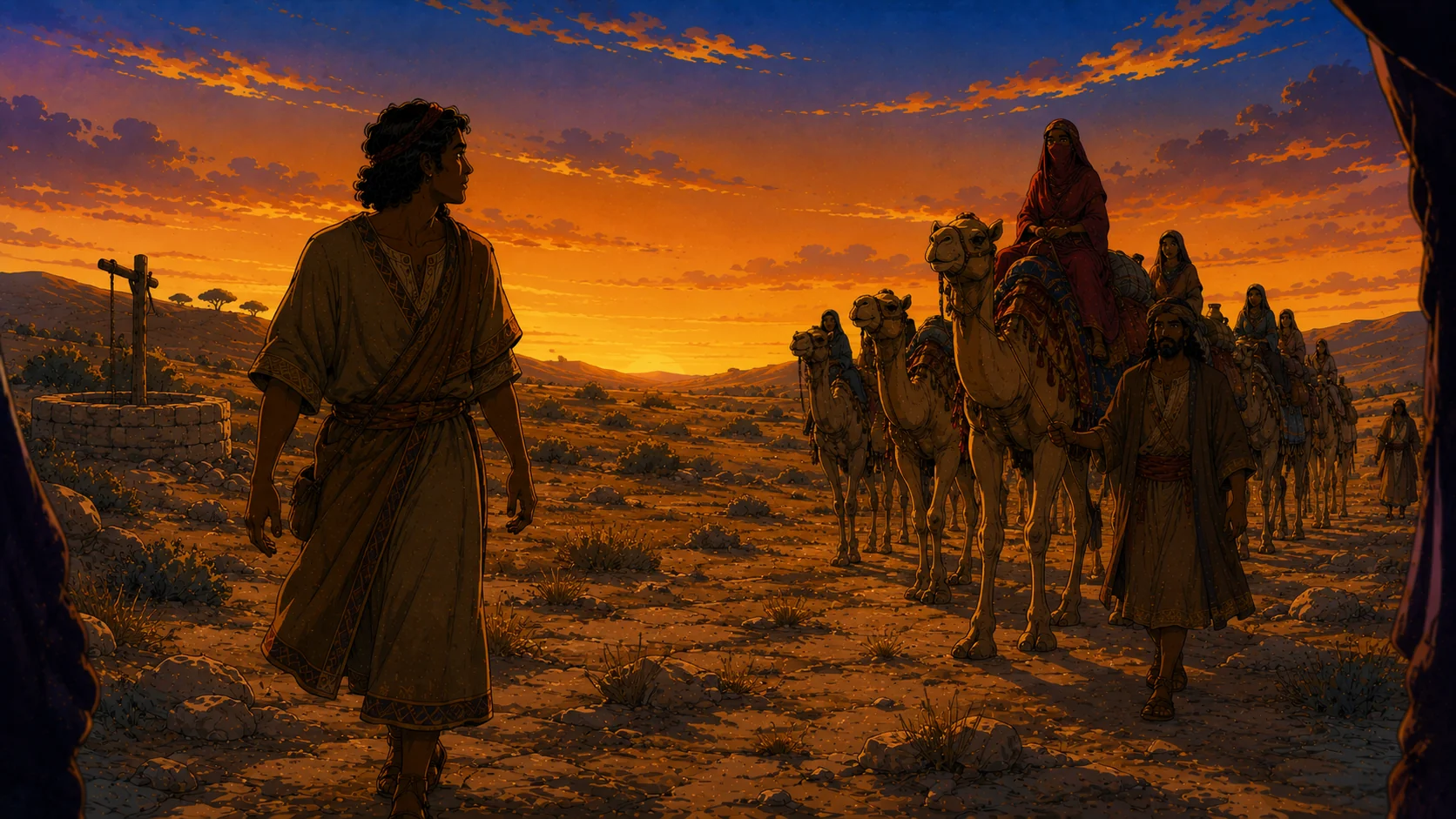
Isaac is returning from Beer-lahai-roi — the well where the angel appeared to Hagar, where Ishmael grew up (Genesis 21:21). He has been in the Negev, likely meditating (לָשְׂוּחַ, lasuach, v.63, a word for reflection or prayer). He lifts his eyes and sees the camels coming. Rebekah lifts her eyes and sees Isaac. She dismounts and asks: who is this man? When she hears it is Isaac, she covers her face with a veil.
Isaac brings her into his mother Sarah’s tent. This is the first action of consequence in the verse: not the marriage, but the tent. He is restoring the tent’s purpose. Sarah has been dead. The tent has been empty. Rebekah enters it, and it becomes inhabited again. The chapter that began with Sarah’s death and the search for a wife ends here.
The final clause is the Torah’s rare statement of emotion: וְאַהֲבָהּ וַיִּנָּחֵם יִצְחָק אַחֲרֵי אִמּוֹ — “and he loved her, and Isaac was comforted after his mother.” Love appears here before comfort. And comfort is the last word of the longest chapter in Genesis. After the Akedah, after the burial, after the search — this is the resolution.