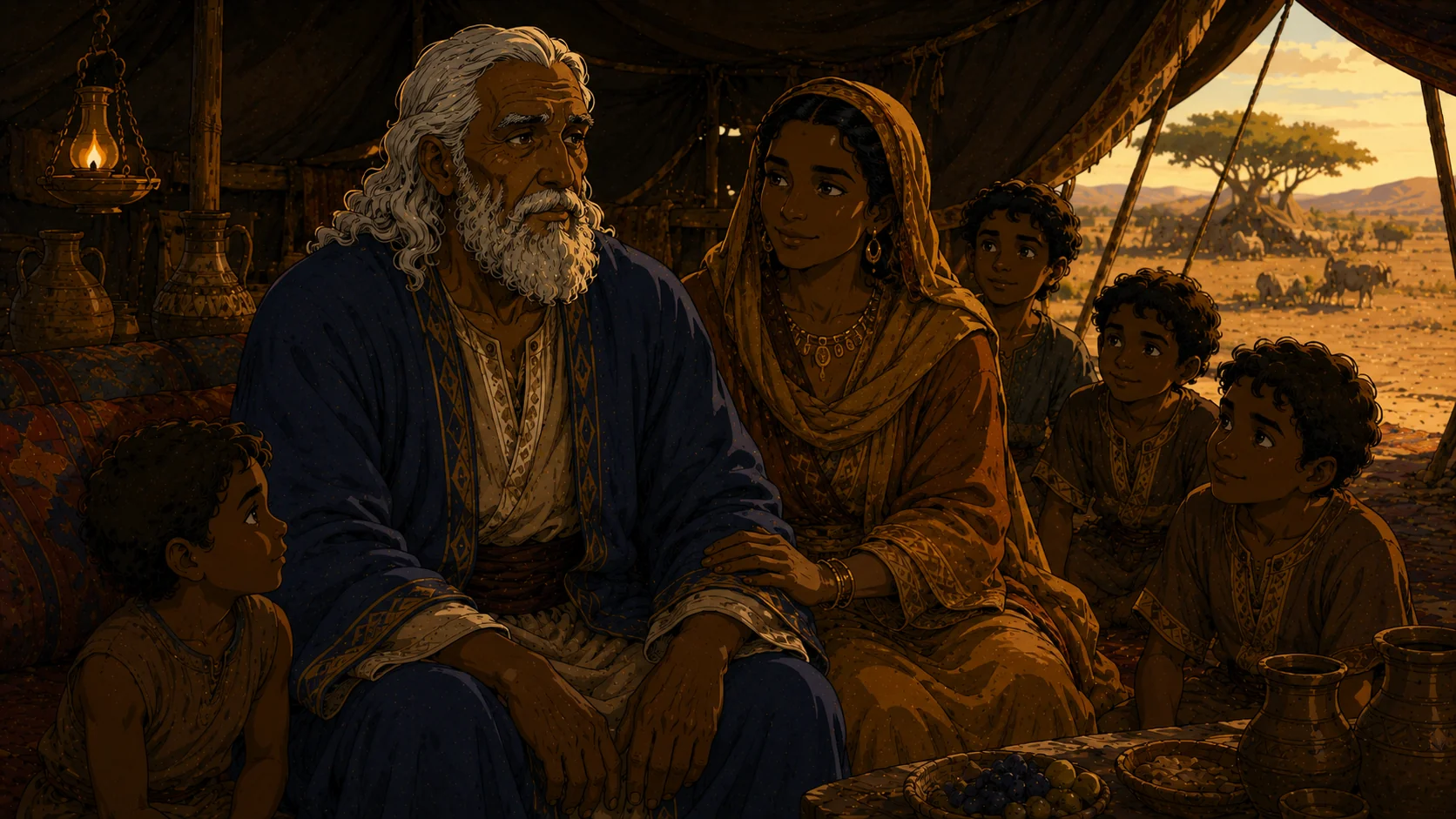
After Isaac is settled with Rebekah, and after Sarah’s burial, Abraham takes another wife: Keturah. She bears him six sons, who father twelve peoples in total. Many of these nations can be traced historically: Midian (whose priest Jethro will be Moses’ father-in-law), Shuah, Sheba, Dedan. Abraham’s fatherhood of many nations (Genesis 17:5) is literal, not only symbolic.
But the covenant narrows. Verse 5 is unambiguous: וַיִּתֵּן אַבְרָהָם אֶת־כָּל־אֲשֶׁר־לוֹ לְיִצְחָק — “Abraham gave all that he had to Isaac.” The sons of the concubines receive gifts and are sent east, away from Isaac. This is the same pattern as Ishmael: acknowledged, blessed, sent away. The covenant line runs through Isaac alone.
Keturah is identified in 1 Chronicles 1:32 as a concubine. The rabbis debated whether Keturah was Hagar returned under another name. The text does not resolve this. What it does resolve is the inheritance: everything to Isaac. Keturah’s sons receive gifts. Isaac receives the covenant.
